
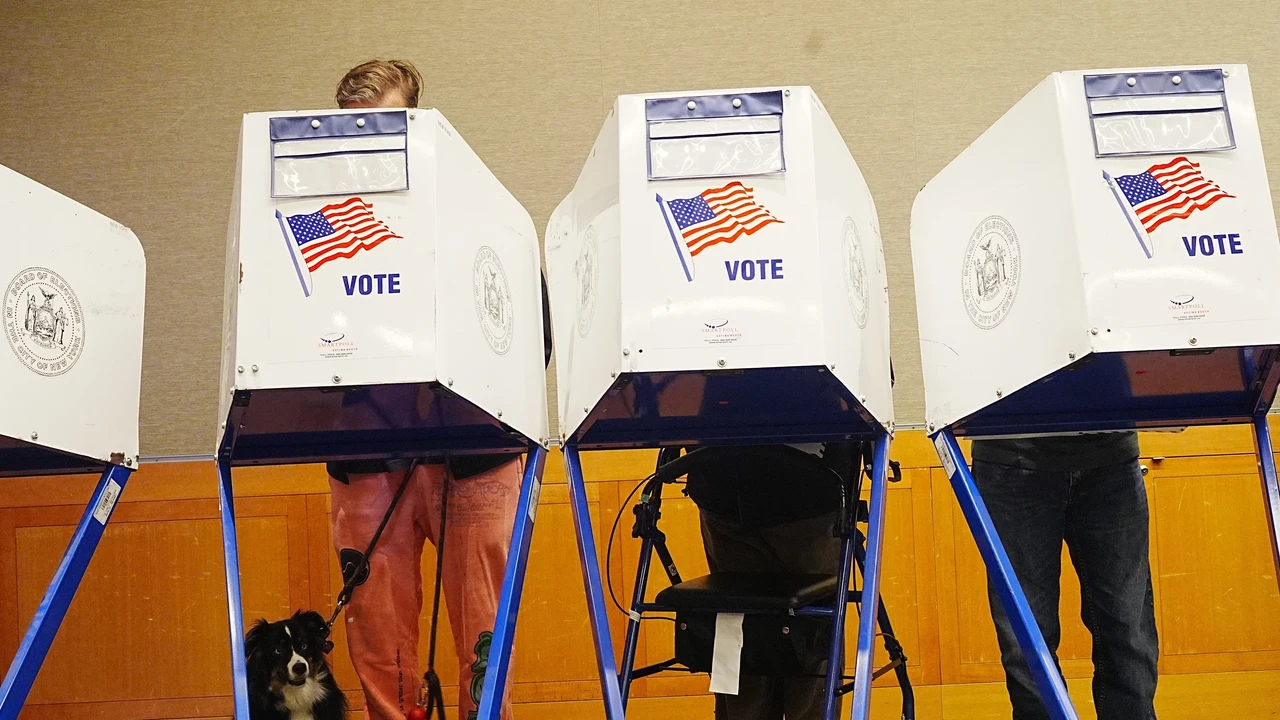
The United States celebrates this Tuesday, November 3, the midterm elections, known as midterms, a decisive event for the political future of Donald Trump. Although the president does not go to the polls, the results could change the balance of power in Washington and determine the last two years of his term.
The Republicans are risking their slim majorities in Congress against Democrats who aspire to regain control of one or both chambers. In addition, the results will serve to measure the wear and tear of the president and the support of Americans for his policies.
What is voted on in the midterm elections?
Midterm elections are held every two years, right in the middle of the presidential term. On this occasion, Americans will decide the composition of both houses of Congress for the next two years, in addition to electing governors in up to 36 states.
Americans will have to elect all 435 members of the House of Representatives and 35 of the 100 senators.
The Republican Party currently has a slim majority in both chambers. Democrats need to gain four net seats to take control of both the House of Representatives and the Senate. Polls suggest that the Republican Party could lose control of the Lower House and possibly also the Senate to the Democratic Party.
For his part, Trump declared on Fox News his strategy in a hypothetical scenario in which the opposition controls the legislative chambers: “I guess I’ll become ‘Mr. Veto.'”
As he explained, his initial plan would consist of systematically blocking the legislative initiatives promoted by a Democratic majority, to later force them to negotiate agreements. “It wouldn’t be the first time. You have a president who doesn’t have the House of Representatives or the Senate; they send proposals, they veto them, and finally, after a month or two of vetoing everything, they come around and you close a deal.”
The seven keys to a decisive election for Trump
- Control of Congress: Republicans could lose their majority, which would make it difficult for Trump to pass laws and advance his main initiatives.
- The House of Representatives: It is the chamber where Democrats have the best chance of regaining control and increasing parliamentary pressure on the president.
- The battle for the Senate: Republicans are also risking their majority in this chamber, essential for approving judicial appointments and high positions.
- Trump’s popularity: the results will measure citizen support for his management and will allow us to verify the wear and tear of his political figure.
- The cost of living: Inflation, house prices and gasoline have become some of the main concerns of voters.
- Immigration and foreign policy: deportations, border control and international conflicts have also marked the electoral campaign.
- The horizon of 2028: the result may determine Trump’s ability to govern during the last two years of his mandate and condition the future of the Republican Party in the face of the next presidential elections.
A Democratic victory in either chamber would be a major setback for Trump, as the opposition could block legislative initiatives, control parliamentary committees and promote investigations into his Administration’s decisions.
On the contrary, if the Republicans retain their majorities, the president would have more room to develop his political program. In any case, the midterms will be a thermometer of support for Trump and a first sign about the political scenario that will open until 2028.
