
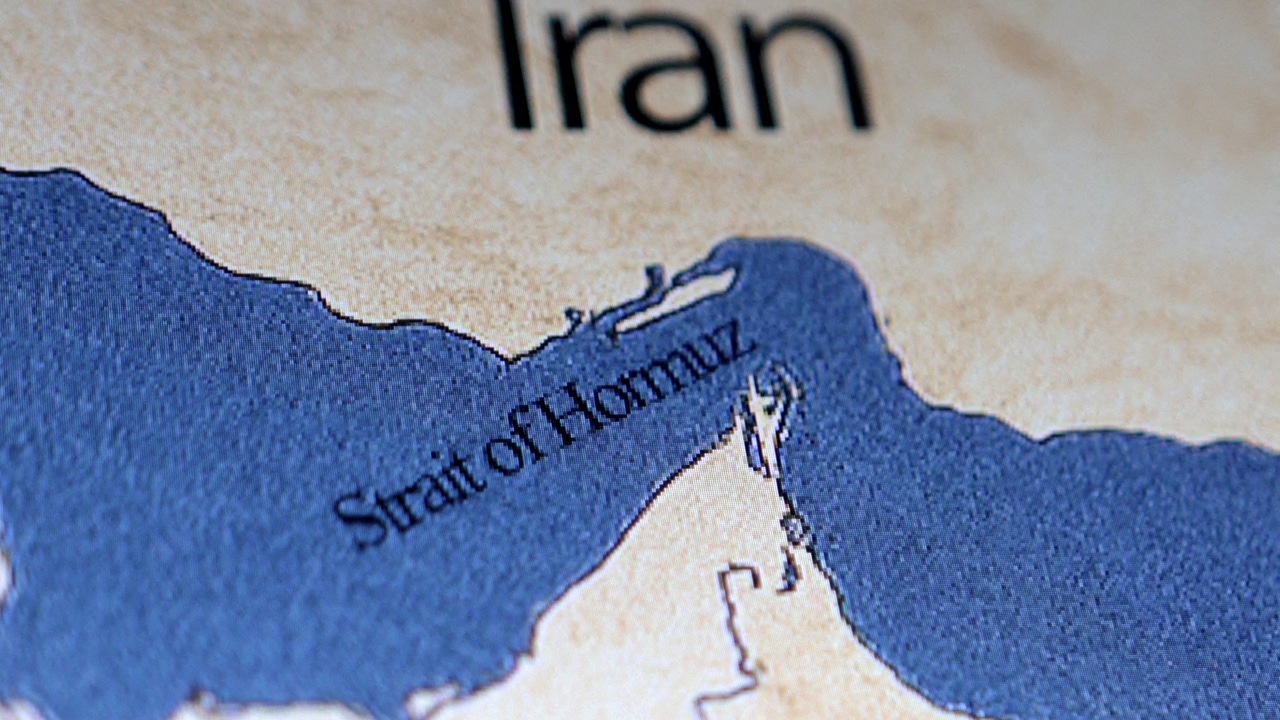
The Strait of Hormuz is geographically located as the only maritime communication route between the Persian Gulf, to the west, and the Gulf of Oman and the Arabian Sea, to the southeast. This narrow channel divides the northern coast of the Islamic Republic of Iran from the Arabian Peninsula, bounded in particular by the fragmented Omani territory of Musandam and the United Arab Emirates.
Its strategic importance is undeniable as it is a bottleneck through which a large part of the crude oil transported by sea worldwide transits. Given the planet’s energy dependence on fossil fuels, any modification in its traffic seriously affects international economic stability.
The innocent step and in transit
The crux of the legal problem lies in determining what rights foreign ships have during their journey through these waters. To do this, it is essential to differentiate between the innocent passage regime and the transit passage regime.
While the former enables the coastal State to establish regulations for the sake of its security and order, the right of passage in transit guarantees broader freedoms of navigation and overflight for rapid and uninterrupted transit that cannot be unilaterally suspended.
The interpretation of both concepts is the center of tensions in this area of great instability.
The United Nations Convention on the Law of the Sea (UNCLOS) is the main legal text governing marine spaces worldwide. This agreement stipulates the delimitation of areas such as the territorial sea, the exclusive economic zone and the continental shelf, also prescribing rules for the protection of the marine environment.
Iran denies the law of the sea
The strategic value of the treaty lies in promoting peace and the equitable use of ocean resources. Even so, its effectiveness is conditioned by the fact that not all States have fully ratified it. This lack of universal adhesion, as is the case of Iran, represents a basic pillar for the analysis of international maritime tensions.
The right of innocent passage constitutes one of the most significant institutions of the legal regime of marine spaces, as it seeks to harmonize freedom of navigation with state security. According to the United Nations Convention on the Law of the Sea, the concept of passage is defined as navigation through the territorial sea with the purpose of crossing it without entering internal waters, or to go towards or leave them. For said transit to be legitimate, international standards indicate that it must necessarily be rapid and uninterrupted.
The basic principle that qualifies the condition of innocence is that the passage is not, under any circumstances, detrimental to the peace, good order or security of the coastal State. In the exercise of its sovereignty, the coastal State is capable of enacting laws and regulations that regulate this right, especially in matters related to maritime security, the prevention of fishing violations and the preservation of the environment.
Likewise, the coastal state may require foreign vessels to comply with traffic separation devices or the use of designated sea lanes.
Furthermore, the legal system empowers the State to temporarily suspend innocent passage in specific areas of its territorial sea when such a measure is essential to protect its security, such as in the case of weapons exercises, provided that there is prior formal publication.
Secondly, the regime of passage in transit constitutes the fundamental rule applicable to straits used for international navigation that connect a part of the high seas or an exclusive economic zone with another area of the same nature.
This special legal system was born as an imperative need to facilitate and ensure global communications in strategic geographic points. Unlike innocent passage, as explained above, the right of transit passage entitles all ships and aircraft to exercise the freedoms of navigation and overflight for the exclusive purpose of rapid and uninterrupted transit.
One of the decisive characteristics of the Iranian regime is its absolute nature, since the Convention clearly prescribes that there will be no suspension of this right by the coastal States. This legal protection is considerably superior to that of ordinary innocent passage through the territorial sea.
Therefore, the coastal State’s control is minor and is limited to the promulgation of laws on navigation safety, pollution prevention and customs control that cannot, under any circumstances, deny or impair the effective exercise of transit.
In short, this legal regime prioritizes the freedom of international communications over local sovereign prerogatives.
Freedom of navigation
The Strait of Hormuz is legally classified as an international strait as it connects the Persian Gulf with the Arabian Sea. In this context, the applicable legal system is the right of passage in transit, characterized by freedoms of navigation and overflight that do not allow suspension.
Despite this, the Islamic Republic of Iran, having not fully ratified the Convention and being a persistent objector, defends similar limitations on innocent passage in practice and in its domestic legislation. Tehran maintains the power to require prior authorizations, opposing the automation of traffic.
This clash between the conventional norm and sovereign claims causes serious legal and political frictions that compromise operational stability in this strategic region. Furthermore, Donald Trump’s statements and orders aimed at blocking the strait by the naval forces he has in the area do not contribute to reducing tension and highlight the existing climate of instability.
The problem in the Strait of Hormuz emanates from contradictory interpretations and the lack of ratification of the UNCLOS by strategic actors, who give priority to sovereign rights over the automatism of transit.
Law and international straits
In short, the position of the Persian State is not a simple denial of the law of the sea: it accepts the customary norms that reinforce its sovereignty, while rejecting all those that limit its control over the strait by invoking its status as a persistent objector.
On the other hand, the international community operates in such a way that the right of transit in international straits is binding on everyone. Contemporary state practice reveals an almost uniform position: strategic straits like Hormuz cannot be left to the unilateral discretion of the coastal state.
Along these lines, international law works less as a closed formal system and more as a strategic agreement that tries to guarantee the continuity of global navigation.
Julián Santana Silva, Associate Professor of the area of Public International Law and International Relations, University of Las Palmas de Gran Canaria
This article was originally published on The Conversation. Read the original.
