
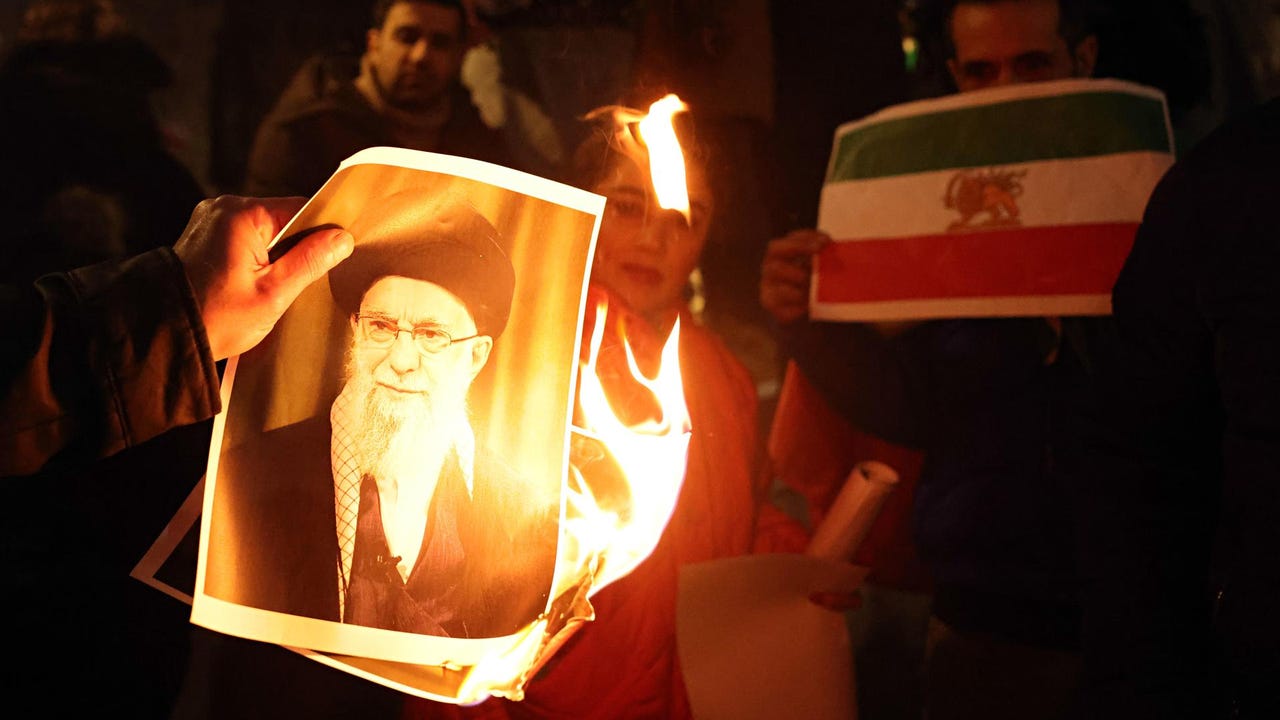
The Iranian human rights activist Nilufar Saberi has gone through the microphones of More than One to explain the situation that Iran is experiencing in the midst of the massive protests that since the end of December have been putting the Ayatollah’s regime in check. The state repression and violence used against protesters have left, so far, a death toll of at least 500.
Carlos Alsina has asked him how he manages to obtain information from inside the country, where since December 28 the population has remained on the streets. Saberi explained that, after the call for mobilization made last Friday by Reza Pahlaví, son of the last Shah of Iran, the Iranian Government cut off access to the internet and international communications, trying to isolate the country from the outside world.
Even so, some of the information manages to get out thanks to Starlink, a satellite connection system owned by Elon Musk that allows some people to communicate. “Everything that comes to us is through them,” he noted.
Saberi has described the situation as “truly terrifying.” According to his testimony, in addition to using hitmen, the regime forces shoot at protesters from rooftops and helicopters. With her voice visibly broken, after having participated in several support demonstrations in Madrid, the activist has denounced the magnitude of the violence.
Three differentiating factors
In his opinion, the current moment is different due to three key factors:
- Firstly, the coincidence between the interests of the great international powers and the majority desire of the Iranian population to end the regime.
- Secondly, the massive support of citizens, with estimates that speak of up to 40 million people mobilized, willing, according to Saberi, to “die rather than continue living under the yoke of the Islamist theocracy.”
- And, thirdly, the emergence of a clear political alternative. For years it has been argued that there was no real alternative to the ayatollahs, but Saberi believes that on this occasion Reza Pahlaví can lead a transition process that leads to free elections and the choice of a new political system.
Despite her reluctance towards a monarchical model, the activist is confident that the eventual arrival of Pahlavi to power can put an end to the loss of human life and the systematic violation of human rights in Iran.
