

Traditional rhythms capitalize on Cape Verdean music
A teacher, a mother and a son – Tó Tavares, Tereza Fernandes and Zito Kaumy – live through and for music. Heirs of a long artistic tradition that has made this small archipelago known throughout the world, they show from the classroom, tradition and experimentation that the Cape Verdean “is a natural musician” who projects to the world a unique, emotional sound identity full of cultural nuances.
Tó Tavares points out three keys that, in his opinion, explain why music is the most relevant cultural expression of Cape Verde: insularity, the relationship with nature and emigration. «We are a small country of islands and music helps us expand and shout to the rest of the world that we exist. Living on islands makes us dreamers: we are isolated, surrounded by the sea, and the sea sings every day on our rocks. The singing of the birds, the roar of the wind… All of this passes through us and makes us react, by resonance. On the other hand, we are used to seeing our relatives leave in search of a better life and that leaves us with a deep feeling. And the way to express it is with music.
Educate from the soul
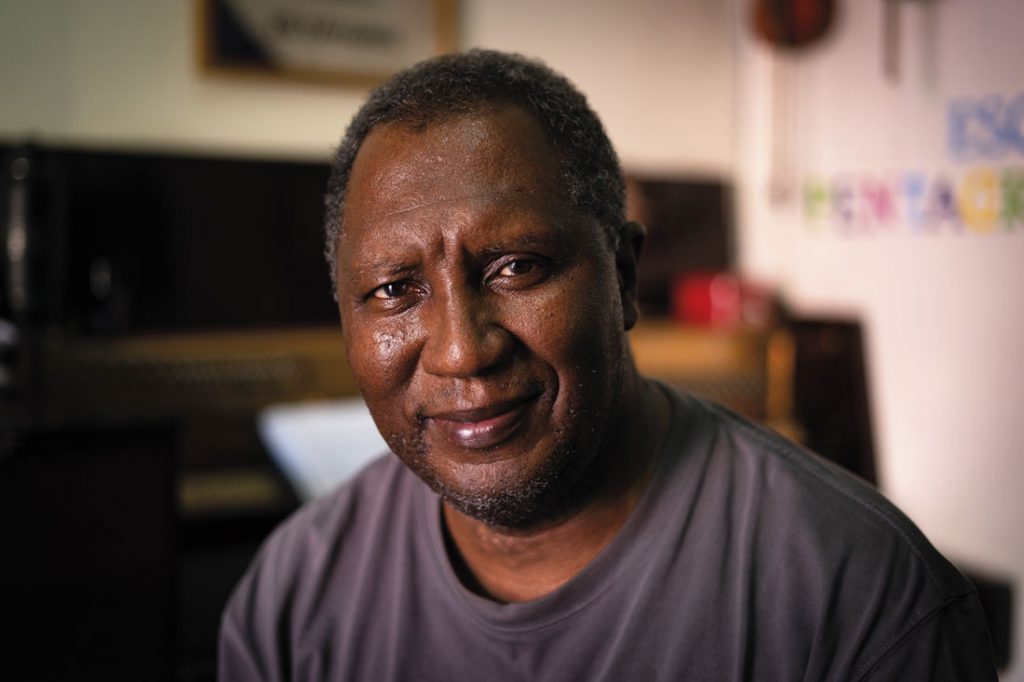
Augusto Fortes Tavares – better known as Tó – lives in Praia and is one of the most respected composers and music teachers in Cape Verde. In 1991 he founded Pentagrama, the only musical initiation school on the island of Santiago for 16 years. Hundreds of children, young people and adults have passed through its classroom, among them artists such as Mayra Andrade or Sara Alinho. Finding him is easy: he spends the entire week, including weekends, dedicated to teaching, surrounded by guitars, violins and pianos. «I am always teaching classes. Today a student came who wanted to learn guitar and I made time for her during lunch time. “I don’t want anyone to be left without learning music.”
He was born on the island of Maio almost 60 years ago and since he was a child he felt the duty to contribute to the development of his country. “At first I tried football, but I realized that my talent was being a teacher.” He remembers being nine years old, in his house in Calheta, surrounded by children to whom he taught everything he discovered about that fascinating language: music. At ten he built his first instrument: a small wood and tin guitar with four strings tuned in E, G, B and D. And he started playing. He wanted to study music in depth, but no one on the island could teach him. He read everything and one day he found a coupon in a Portuguese magazine offering music classes by correspondence. He sent it to Lisbon without too many expectations. Half a year later the postman notified him that he had a package in the city. «You can’t imagine what happiness it was to receive that fat brown envelope. “I walked the 13 kilometers round trip without realizing it.” The first lessons were free, but for the rest of the course, Tó—who grew up in a single-parent home with his mother and had worked since he was 12 to help his mother—started going to a carpentry shop in the afternoons. He also learned French. As a tour guide for those arriving by yacht in Maio, he met a Belgian who played classical guitar and continued learning with him. At 18 he was already teaching music to all the children in the village and two years later he moved to São Vicente, where cultural life was much more intense. There he composed a wide repertoire of songs, created a group with which he recorded several albums and even formed a children’s choir with his students.
At the beginning of the 90s he was hired in Praia, on the island of Santiago. He taught in several Primary schools and formed a choir with more than 100 students. But his real dream was to create a center dedicated only to music education. His friends believed it was a madness doomed to failure, but on February 23, 1991, he opened Pentagrama with the aim of contributing European training techniques to the development of traditional Cape Verdean music.
Today in Santiago there are more than 80 musical education initiatives. “The Cape Verdean, for me, is a natural musician,” says Tavares, convinced that a good teacher must establish a fraternal bond with the students. «You have to know how to awaken the desire to learn and understand that each student is a world. “The same method cannot be applied to everyone.”
Zito Kaumy: from tradition to jazz
Zito Kaumy was one of those students. Today he is a professional guitarist and bassist, a great defender of traditional music and open to new fusions. We met him at the Quintal da Música, a few meters from Pentagrama, in the Plateau neighborhood. This restaurant and music club is a benchmark for morna, coladeira, funaná and batuque. Figures have passed through its stage
consecrated as Cesária Évora. “I played here for the first time almost 20 years ago,” Zito remembers. «I was in high school and a pop singer invited me to accompany him. Since then I have returned many times with my mother and her group of batucadeiras, Tradison di Terra, and also with Orico Tavares.
Music was always part of Zito’s life. His father, from the island of Fogo, came from a family of morna and coladeira musicians. His mother, Tereza Fernandes, from Santiago, is an essential figure in batuque. «My first musical memory is hearing her sing. It was my first inspiration. Playing with her is a dream come true. They have created many songs together: she composes lyrics, melodies and sings; He takes care of the arrangements and musical direction. «I grew up surrounded by musicians and tradition is my identity. My mother’s songs talk about rural life in Santiago, a reflection of her life. Stories that new generations barely know. Preserving that memory is essential.
Institutions should promote programs to bring traditional music to young people, who are more interested in hip-hop or zouk, think. “It’s a way to safeguard our identity.” Although their music also draws on the traditional music of Mali, Senegal, Burkina Faso, Guinea-Bissau or the jazzwhich for him “is infinite music, without limits to experience.” An admirer of Pat Metheny, Toumani Diabaté or Paco de Lucía, he feels the need to break with a certain stagnation of the traditional. «Paco de Lucía was a universe that surpassed the borders of Spain. My music is born from that same need to experiment. Zito is part of the group Djunta Raíz, collaborates on a Lusophone project with Teo Pascal, Carmen Souza and other musicians from Angola, Mozambique, Portugal and Cape Verde, and continues creating music with his mother and his group of batucadeiras.
Tereza Fernandes: the soul of batuque
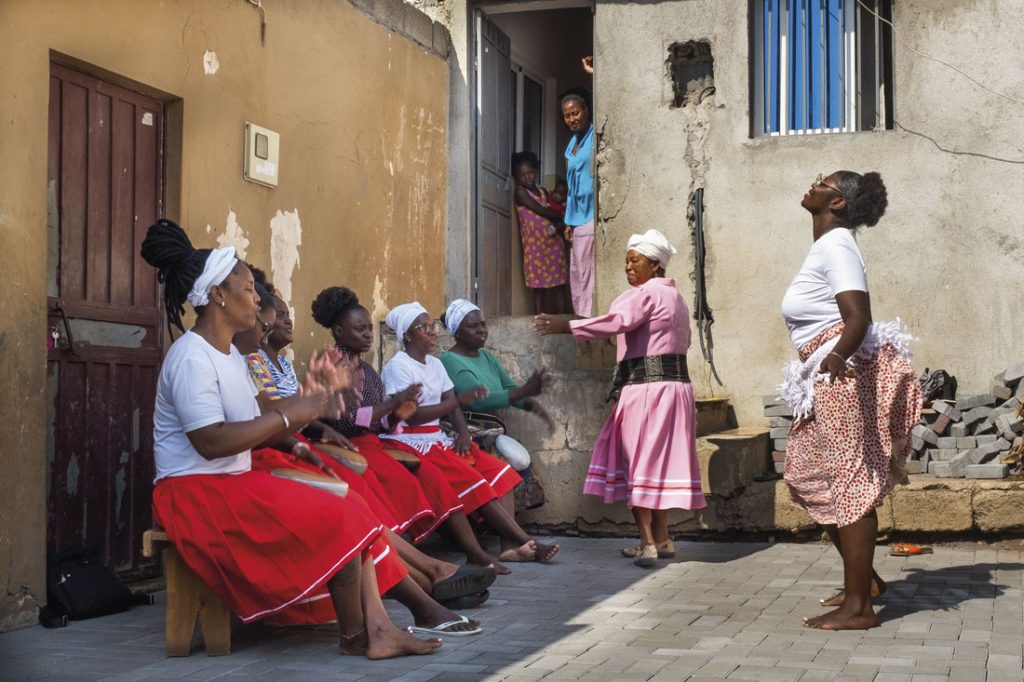
Batuque is the most African musical genre in Cape Verde, linked to the island of Santiago and based on percussion and voice, the song-response pattern and the combination of two simultaneous rhythms. Mainly practiced by women, “it is the first rhythm that existed in Cape Verde,” says Tereza Fernandes, leader of Tradison di Terra. The group, made up of 12 women and three men, has taken the batuque to stages in Spain, Portugal, Senegal, Algeria, the Netherlands, China and the United States, rehearsing daily and performing almost every week. “The batuque is our soul,” says one of the members, who combines the group with studies. “My father danced it, and before he died he told me to continue with this, because it is our culture,” says another. “With the batuque we showed the settlers that we wanted our independence,” says a third.
Batuque was born on the island of Santiago as a form of communication between enslaved people brought from different regions of Africa – Guinea, Mozambique, Sao Tome, Angola or Mali – who did not share the language. “When they played, riots broke out and they banned it,” explains Zito. «Over time, it evolved into music. The morna and the coladeira come from the batuque.
A bond between those who leave and those who stay
Migration is at the heart of Cape Verdean music. «For generations, every time someone has traveled they have brought new music. And this plays a fundamental role in the development of our own music, which we then take to the rest of the world,” says Zito. He also thought about emigrating, to live the adventure and to study Sound Engineering, but in the end he chose to stay and study Sociology in Cape Verde. Today he lives with his wife and three children in a house near his mother.
His former teacher warns about the massive departure of young people. «Cape Verde has always gained a lot from emigration, not only because of remittances. In the diaspora, the first musical groups and liberation movements emerged, but now we are losing the best social fabric: educated youth. I don’t understand. “With 50 years of independence, it is worrying that so many look outside for what they cannot find here.” To his students, Tó Tavares recommends that they not leave: «We need to be more Cape Verdean, more African. We need to find our own way of living without looking to the standards of others. Find our own path from who we are. As Amílcar Cabral said, “think with our own heads.”
Zito Kaumy points out that music has always been a bond between those who stay and those who leave. «Those who emigrated brought music with them so as not to lose the bond. And when musicians started playing outside, many disconnected Cape Verdeans began to return. Hence, nostalgia is so present in the Cape Verdean songbook, as in Sodade, the famous song by Cesária Évora, the anthem of a people that has spread throughout the planet.
