
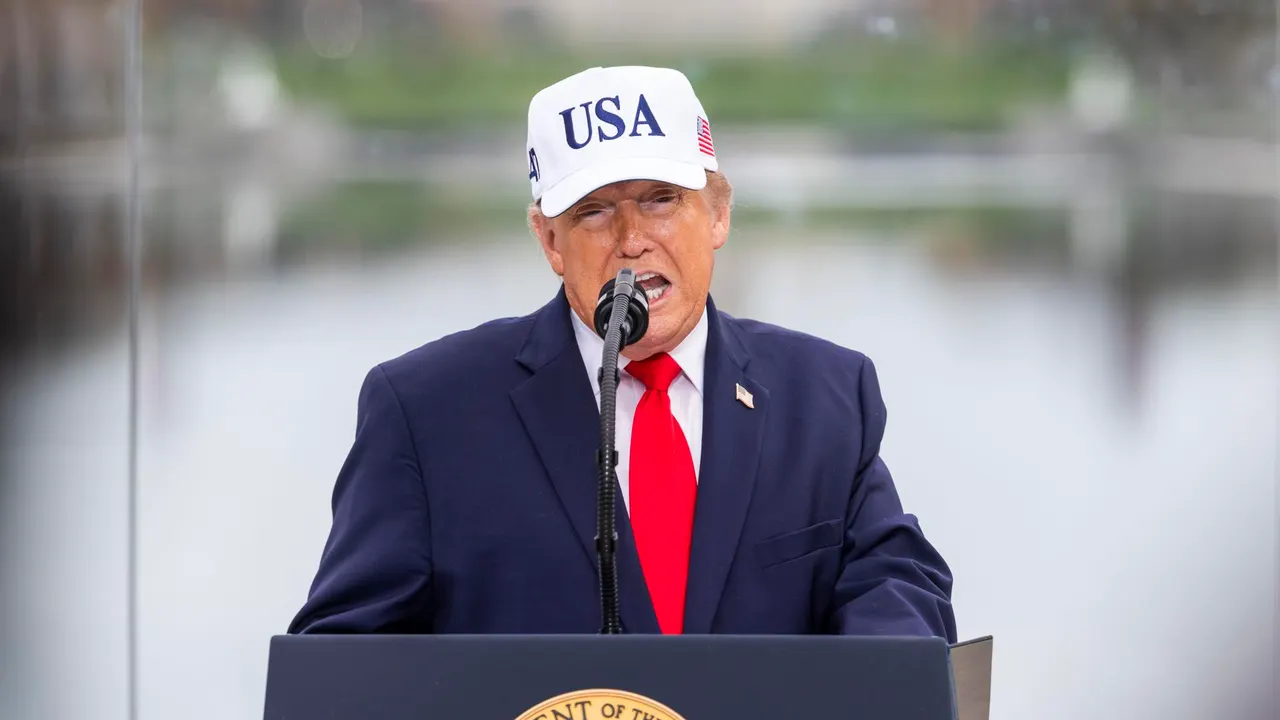
Donald Trump has lost control of the House of Representatives and the Senate in the midterm elections and questions now arise about how the president could act from that moment on. Although he could continue to govern through executive orders, a Democratic majority in both chambers complicates his ability to act.
To learn more about the political situation in the American country, Marta García Aller has brought together a committee of experts on the midterm elections in the United States, in which Pedro Rodríguez, professor of International Relations at the Pontifical University of Comillas, and Carlota García Encina, principal researcher for the United States and Transatlantic Relations at the Elcano Royal Institute, analyze the possible scenarios after the elections.
Government through executive law
Pedro Rodríguez has pointed out that Trump has so far multiplied executive orders, a dynamic that he could maintain if he loses control of Congress. However, he has explained that Democratic majorities would make his activity difficult by having the ability to promote investigations into his administration and appointments. He has also raised the possibility of a third impeachment process, although he considers that “it is not a very viable scenario.”
For her part, Carlota García Encina has warned that Trump could once again question the election results. “We are hearing this narrative that we have heard from Trump in the past these days and we will surely hear it, especially over the next two months,” he stated.
Lame duck or crazy duck
García Encina explained that, until January, when the new Congress takes office, we will have to observe how the situation evolves. The researcher has suggested that Trump could enter a period known in American politics as ‘lame duck’ or ‘lame duck’, although she has also pointed out the possibility that he acts in a more unpredictable way, like a “mad duck.”
In this scenario, he recalled that the president could continue governing through executive orders and that issues such as tariffs are not ruled out. He has also warned that Trump retains broad powers in foreign policy, an area in which he could make “somewhat reckless” decisions.
The reaction of the Republicans
The researcher has indicated that another of the fundamental aspects will be to observe how Republicans react after the elections. In particular, he has pointed out that the senators of his party have six years of mandate ahead of them and has raised the extent to which they will maintain their absolute loyalty to the president. He also recalled that figures like JD Vance will have to position themselves before the 2028 presidential elections.
Rodríguez has also pointed out that a Democratic victory could be an opportunity for both Democrats and Republicans to distance themselves from the MAGA movement and Trump. Furthermore, he has highlighted that the performance of these majorities during the next two years can influence what happens in the 2028 presidential elections.
Finally, García Encina has highlighted that, if the Democrats gain control of the Senate, as has happened, it will be interesting to observe what legislative initiatives they try to advance, even if they may face Trump’s veto.
You can listen to the full intervention in La Brújula’s Expert Committee on the midterm elections in the United States.
