
By Chinsisi Moyojournalist
A quiet revolution is taking place in Malawi’s classrooms. The BEFIT program, which aims to “lay the foundation for education through innovation and technology,” as the development of its acronym indicates, is changing the way students are taught in public primary schools. Through digital classes, the initiative is boosting literacy and numeracy, while opening doors for students with special needs to participate and thrive alongside their peers.
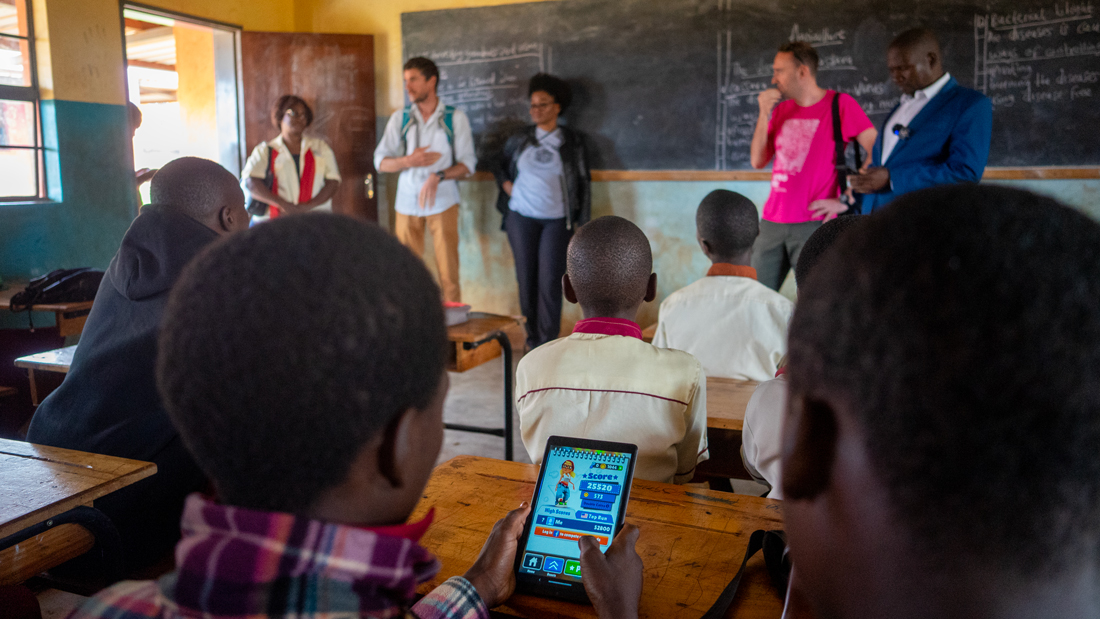
It’s 9am at Linthipe Primary School and BEFIT classes are about to start. Before entering the class, a golden rule is respected in all centers where the program is applied: hygiene comes first. Students line up to wash their hands with soap and leave their shoes outside. Inside, learning is taking on a new dimension.
Liness William, a 4th grade student with special needs, now actively participates in classes thanks to BEFIT. Before, he had a hard time keeping up, but today he is able to read and write simple texts and interact with confidence with his classmates. Their progress is one of the many success stories emerging from this initiative. The center’s director, Newton Chafukira, says this transformation is the result of deliberate efforts to ensure that no student is left behind. Dania Phiri is a student at St. Joseph Primary School in Kasungu. He says this is the first time he has used a tablet to learn, a development that has made classes more engaging and easier to understand.
The success of BEFIT is not only due to technology and educational personnel. Communities are also playing an active role in supporting teachers. Chikondi Ndalama lives in Dedza, in the central region of the country. She says her interest in the program grew after seeing significant improvements in her children’s reading and writing skills very early on. A similar story is being experienced at Chitiwiri Primary School in Salima District, where education has become a shared responsibility. The president of the school committee, Patrick Batiyoni, explains that community members help teachers during classes, especially when teaching students how to use the devices.
Educational authorities affirm that the program is producing quantifiable results. The Chief Education Officer of Lilongwe Rural West, Faida Yonamu, points out that BEFIT has not only improved reading, writing and arithmetic skills, but has also contributed to increasing school enrollment and student retention in school.
The program, which is being implemented by the Ministry of Education, is aimed at students from first to fourth grade and focuses on reinforcing basic skills through learning with electronic devices (see pp. 36-41). To date, 166,000 tablets and related accessories have been distributed across Malawi’s public primary school network, benefiting almost 690,000 students.
Despite the success, challenges remain. The high student-teacher ratio causes overcrowding in classrooms, which places a burden on both teachers and resources. The Ministry of Education recognizes this handicap. Its spokesperson, Lily Kampani, says efforts are being made to address the program’s deficiencies. He adds that, in the long term, the Ministry plans to adapt the BEFIT tablets to better suit students with various special needs.
