
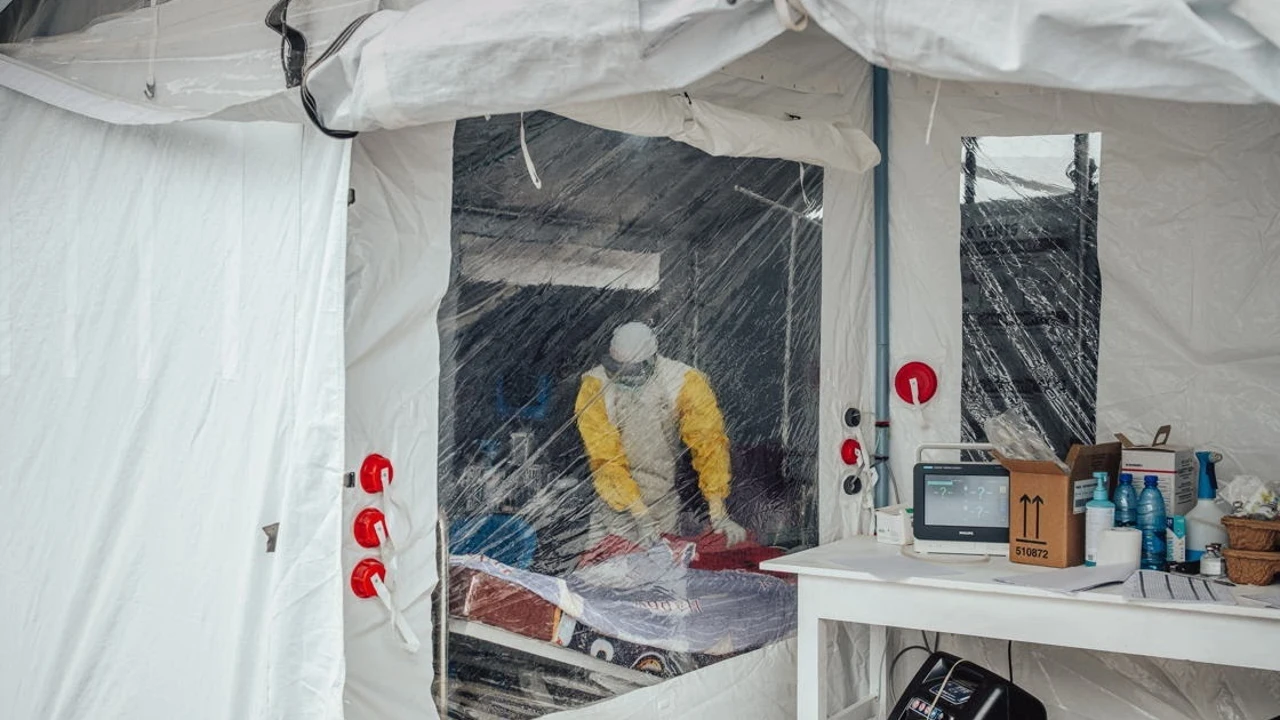
The Ebola outbreak affecting eastern Democratic Republic of the Congo (DRC) could have reached a much larger dimension than official records reflect. The Africa Centers for Disease Control and Prevention (Africa CDC) estimates that only 30% to 40% of actual infections are being detected.
Currently, the authorities count 5,208 confirmed cases, although the lack of detection of a significant part of the infections makes it difficult to know the exact scope of the health emergency.
As explained this Thursday by the head of Emergency Preparedness and Response at Africa CDC, Yap Boum, the models developed by the DRC analysis team together with Imperial College London suggest that the real size of the outbreak could be up to three times higher than the number of confirmed cases.
The difficulty of detecting the chains of transmission of the virus increases
One of the main reasons for concern is the difficulty in identifying how infections are occurring. The Africa CDC has indicated that less than 10% of the cases detected correspond to contacts that were already known.
Furthermore, less than 40% of patients have a clear epidemiological link to another confirmed case. These data complicate the monitoring of transmission chains and increase the risk of infections that have not yet been identified.
The situation has led health authorities to reinforce surveillance and response measures against the outbreak; Meanwhile, they continue working to determine its true magnitude.
70,000 doses of the vaccine will arrive in the DRC
In parallel, the Democratic Republic of the Congo will receive 70,000 doses of the Ebola vaccine to combat the outbreak. However, there is an added difficulty, because the available vaccine is not specifically tested against the Bundibugyo virus, the variant responsible for the current outbreak. This circumstance represents a challenge for health authorities, who must evaluate vaccination strategies while research into the disease progresses.
The outbreak once again puts the international focus on the health situation in eastern Democratic Republic of the Congo, a region that has previously suffered major Ebola epidemics and where case detection continues to be one of the main challenges to containing transmission.
