
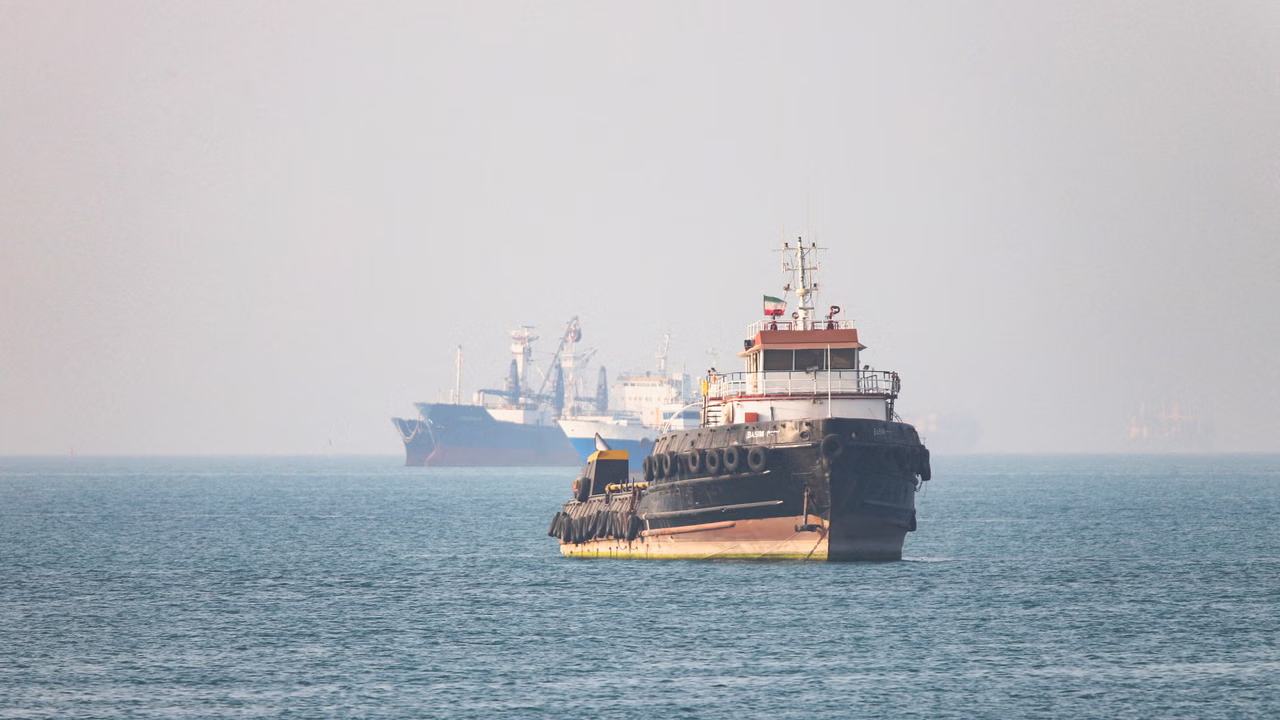
Iran has presented a list of demands that the United States must meet before Tehran proceeds to reopen maritime traffic through the Strait of Hormuz. Among them are the end of the naval blockade, the lifting of sanctions and the payment of war reparations.
“Until the United States corrects its behavior, the Strait of Hormuz will not be opened“said the secretary of the Iranian Supreme National Security Council, Mohamad Baqer Zolgadr, in a statement collected by the state agency IRNA.
Iran’s demands
Zolgadr talks about six conditions which, according to Tehran, would constitute that “correction of behavior” on the part of Washington. Among them he mentioned the lifting of the naval blockade against Iran, the end of sanctions, the release of blocked Iranian assets and compensation for damages causedwhich he described as “two imposed wars”, a demand that also appeared in the memorandum of understanding signed between the parties in mid-June.
The senior Iranian security official has also demanded the end of threats against Iran, cessation of military operations against the country and its regional allies in Lebanon, Palestine, Yemen and Iraq, as well as the withdrawal of US military forces deployed around the Islamic Republic. ““These are the demands of the Iranian people.”
Firm stance in the military and in negotiations
The secretary of the Supreme National Security Council insists that the institution “will never give in” neither in the military sphere nor in negotiations. His statements come after other senior Iranian officials also linked the reopening of the Strait of Hormuz upon acceptance of conditions by the United States.
For its part, Oman, a country bordering the strait with Iran, has said that the talks with Tehran on navigation in Hormuz are “positive”, although it warns of that the attacks against ships transiting this sea routewhere Iran has recently carried out several operations, could “affect” these negotiations.
The Omani Foreign Ministry spoke out shortly after the United Arab Emirates (UAE) reported that Iran had attacked a tanker of the state-owned Abu Dhabi National Oil Company (ADNOC) in the strait, an accusation on which Tehran has not commented.
A new closure of Hormuz
Iran announced in mid-July a new closure of the Strait of Hormuzwhere before the war the 20% of the world’s crude oilin the midst of crossed attacks with the United States. Washington responded by restoring the naval blockade on Iranian ports and shipswhich paralyzed the negotiations between both parties within the framework of the memorandum of understanding for peace signed on June 17.
