
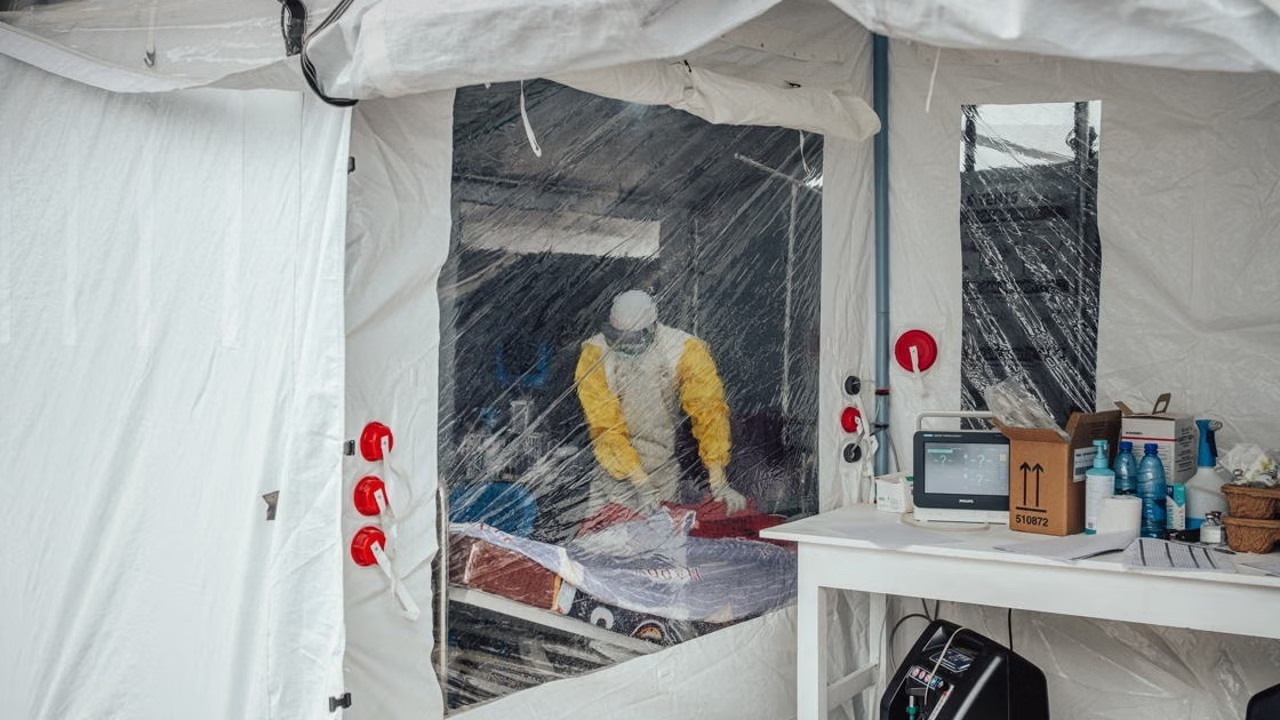
The advance of the Ebola virus in the Democratic Republic of the Congo (DRC) does not let up and continues to spread at an unprecedented rate. Faced with a situation of continuous transmission that threatens to overwhelm current medical resources, the main international health authorities have launched a critical call to intensify efforts and stop this seventeenth epidemic in the Congolese territory.
The latest epidemiological bulletins from the Government of the DRC confirm the severity of the crisis that, according to data from the EFE agency, the barrier of 4,053 confirmed infections and 1,850 deaths has been surpassed. This has left a worrying fatality rate of 45.7%.
The outbreak, officially declared on May 15, already affects five provinces of the country, with Ituri being the epicenter of an emergency that, according to the World Health Organization (WHO), corresponds to the Bundibugyo strain, for which there is currently no authorized vaccine or specific treatment. With these data, the current health crisis has surpassed the ravages of the 2018-2020 epidemic, becoming the second outbreak with the most infections in the history of the African country.
The urgent demand of the WHO and Africa CDC
Faced with circumstances that they define as “exceptionally difficult”, the director general of the World Health Organization (WHO), Tedros Adhanom Ghebreyesus, and the head of the African Centers for Disease Control and Prevention (Africa CDC), Jean Kaseya, have called for drastic intervention, according to Europa Press sources.
Health authorities have warned that in some areas of eastern DRC the outbreak is exceeding operational capacity, slowed by late detection and supply shortages. Therefore, they demand an urgent expansion of the community response, prioritizing bringing testing and isolation services closer to affected areas, in addition to protecting and providing more resources to frontline workers.
Success in containing the virus will depend on the commitment of affected populations and improving contact tracing, which currently stands at around 77.7%, still below the operational target of 95% set by the organizations.
Dr. Kaseya has stressed that providing reliable information to communities is essential for citizens to report symptoms and seek medical care without fear.
At the same time, the WHO and Africa CDC remain alert about neighboring countries, urging them to strengthen cross-border surveillance using Uganda as a model, a nation that successfully contained local transmission and recently declared itself free of the disease.
