

A documentary rescues the memory of Acacio Mañé, independence leader of Equatorial Guinea.
By Jaume Portell Caño
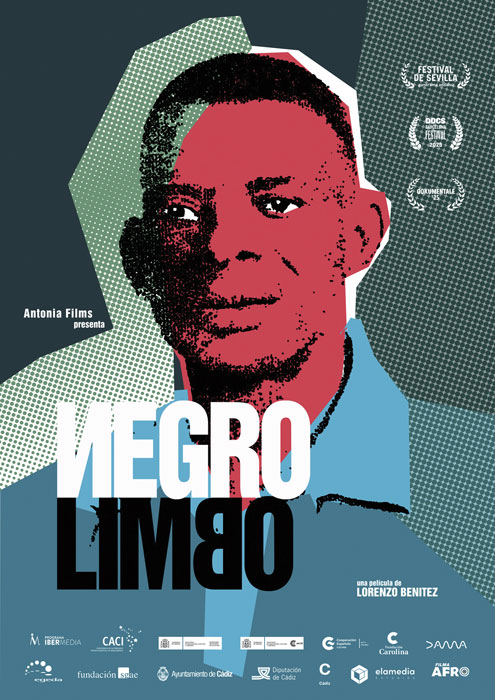
Mañé died in 1959, after being arrested by the Spanish authorities of the time. The tape Black Limbo, by Lorenzo Benítez, places his story within the framework of Spanish repression in colonial Africa.
Spaniards interested in the contemporary history of Africa have often heard the name of leaders such as Patrice Lumumba (DR Congo) or Thomas Sankara (Burkina Faso). Assassinated when they were young leaders, the passage of years has turned them into myths and symbols of an Africa that never came to fruition: a group of independent countries without interference from the former metropolises. However, to these Spanish Africanists – and to the general public – a name closer to the history of Spain is much more unknown: Acacio Mañé, from Equatorial Guinea, who disappeared after being detained in Bata by the Spanish colonial authorities in 1959.
Older than Lumumba and Sankara at the time of his death, Mañé (1904-1959) was an independence leader from Equatorial Guinea, assassinated nine years before its independence in 1968. Black Limbo, A documentary by Lorenzo Benítez, rescues his memory through testimonies that experienced this story up close: from Spanish settlers to relatives of Mañé himself, who have put their story at the service of Benítez so that he could show it to the Spanish public. The 75-minute film, presented in Barcelona and Madrid, has been received with special emotion by the public with roots in Equatorial Guinea.
This is an oversight resulting from a “stone imposed by the Franco regime, which turned it into a reserved matter,” Benítez tells News Now Nigeria. The trend continued after the transition to democracy and the passing of the years has relegated Equatorial Guinea to a history that only older Spaniards or settlers whose vital memories are linked to this central African territory know: “Guinea was on the maps of Spain, as the Canary Islands are now, but then it disappeared both from the map and from the collective imagination,” says Benítez.
Who was Acacio Mañé?
The documentary Black Limbo was born almost by chance. Benítez is a personal friend of Mon Fernández-Dans, son of the last prosecutor of Spanish Guinea, José Antonio Fernández-Dans. Mon was born in Spain, but could have been born in Africa if his mother and family had stayed there a little longer: they had lived and grown up in present-day Equatorial Guinea. It was in that context of silence about the past that Benítez’s interest in this story was born: Guinea, for Mon’s family, was a page in his life that was little talked about, and his father never told them exactly why they left. Fernández-Dans had had a direct conflict with the colony’s governor general, Faustino Ruiz: “With absolute powers and a very intimate friendship with Carrero Blanco, Ruiz was practically the last viceroy of the Spanish Empire,” says Benítez. The prosecutor wanted to investigate the disappearance of Acacio Mañé, but to achieve this he encountered a great obstacle: his own boss.
Equatorial Guinea was a source of raw materials of vital importance for Spain, especially during the period of Franco’s autarky. Focused on the production of wood, coffee and cocoa, social life there revolved around the production and distribution of these resources. For the Spanish settlers, residing in Guinea meant an escape route to a life away from the economic hardships of the long post-Spanish war. The Guineans, as one of those interviewed in the documentary remembers, “were nothing,” except the social class of which Mañé was a part: “Acacio belonged to an elite, that of the emancipated, who had more rights than the rest of the black population to exploit the farms,” explains the director of Black Limbo.
With the accumulation of economic and social capital came calls for political freedom: after the end of World War II, the colonial world – from Southeast Asia to North Africa – moved to achieve independence, in some cases through armed struggle. In Spanish Guinea, Acacio Mañé mobilized several members of the more educated administrative class to ask for political freedom that would ultimately lead his country to independence. Spain then converted the colonies into Spanish provinces, to fulfill Mañé’s and his own desires for more autonomy, but it was insufficient: “Activists like Mañé wanted to submit a request for sovereignty to the United Nations and demand, like the rest of the African nations, a negotiation with the colonial power, with Spain, to reach an agreement,” says Benítez. Spain even proposed the division of Guinea based on ethnic criteria: Fernando Poo, of the Bubi majority, would remain Spanish; the mainland, with a Fang majority, could be integrated into Cameroon. All options were rejected by local independentists.
a sea of silence
In a dialogue in the film, a Spanish colonist who lived in Guinea summarizes one of the most repeated attitudes when talking in Europe about colonialism and historical memory: self-deception. In this case, regarding the degree of repression applied during their stay in Guinea:
–Does anything about a certain Acacio Mañé sound familiar to you?
–They killed him (…). They killed a lot of people. Not while I was there, but later. Lot.
–This is a case from ’59.
–Well then it was.
The colonial period was marked by racial supremacy and economic exploitation. In the period prior to independence, 1,500 Equatorial Guineans were repressed through arrests, torture and prison stays. Others preferred to go into exile to neighboring countries: “France Press explained during the 1960s that there was a return of more than 1,000 Equatorial Guineans from neighboring countries,” Benítez recalls. Although he did not achieve it, Franco’s objective was for Río Muni and Fernando Poo – the name given then to the current territory of Equatorial Guinea – to remain in Spain with the same status that Ceuta and Melilla have today. In 1960, a year after Mañé’s death, Guinea barely had more than 250,000 inhabitants: the repression affected a significant percentage of society, and sought to send an exemplary message to the rest.
Beyond the number of repressed people, Benítez insists, this immersion in Guinean historical memory serves to break the story of Spanish colonialism in Africa, which in some cases attempts to present itself as a more benevolent force than other metropolises (France, Belgium or the United Kingdom, among others). Once independent in 1968, Equatorial Guinea was silenced in Spanish history, becoming a reserved matter until 1976. The transition to democracy did not change the coordinates much: except for those Spaniards who had lived in Guinea or who had family and emotional ties with it, this African territory passed into media oblivion in Spain.
The few narratives that remained on the table were those that recalled a nature garden where some spent their youth – in some cases, the best years of their lives. The corruption of the new postcolonial regimes – Guinea has only had two presidents since independence and has never held free elections – served, in some cases, for the Spanish colonists to confirm their prejudices about Africans and their poor ability to govern themselves.
The story of an operation
Black Limbo, For now, he has already achieved a small victory: the film has served to endorse Acacio Mañé as a victim of Franco’s political and colonial repression. “I don’t know if on the Spanish side there will be a lot of desire to see the film,” smiles Benítez, who considers that these types of stories open up a “complicated melon at the level of diplomacy and foreign policy” for Spain. To carry out the investigation, both he and the documentary research team had to face great challenges: the lack of transparency of the official Spanish archives, the lack of freedom of information in Equatorial Guinea and the pandemic. All in all, they managed to move forward with the film thanks to some unexpected contributions, such as the archive of the Franco Foundation or the personal archive of the Minister of Foreign Affairs at the time, Fernando Castiella.
These consultations have allowed Benítez to better trace the political trajectory of Mañé and some of his fellow fighters. They played a double clandestine game: they related cordially with the Spanish while they organized politically to achieve independence. The colonial authorities followed in their footsteps: “A book could be written, a novel about the operation that the Franco regime mounted to monitor the leaders, all the activists, their meetings,” says Benítez. Despite all their dissimulation, they were “perfectly controlled and booked.” The affiliations went beyond nationality, since the Fang – the group of which Mañé was a part – were distributed beyond the Equatoguinean borders, a fact that facilitated their operations and reinforced the political effervescence in Guinea – fueled, in turn, by the success of other independence movements throughout the African continent.
Equatorial Guinea gained independence nine years after Mañé’s death, but his family still does not rest. His body remains missing. One of the achievements of the documentary is to follow the trajectory of Joaquín Mañé, son of Acacio, who acts as narrator of his father’s life, accompanied by the testimonies of other interviewees, images and archive videos of the time. This mosaic of glances converges in a definitive question that Joaquín poses to the audience, so many years later, and that still awaits an answer: “How come his corpse, that of a great personality like Acacio Mañé, who was vice president of the Patronato de Indígenas, does not appear?”
