

Rwanda takes advantage of events such as the Cycling World Cup to sell its image to the entire world
By Diego Menjibar from Kigali (Rwanda)
The World Cup, one of the most famous events on the international cycling calendar, has arrived for the first time on the African continent. Rwanda has hosted an event that has served to offer a positive image of the nation to the entire planet. This reality collides with the systematic violation of rights that occur in the Country of a Thousand Hills.
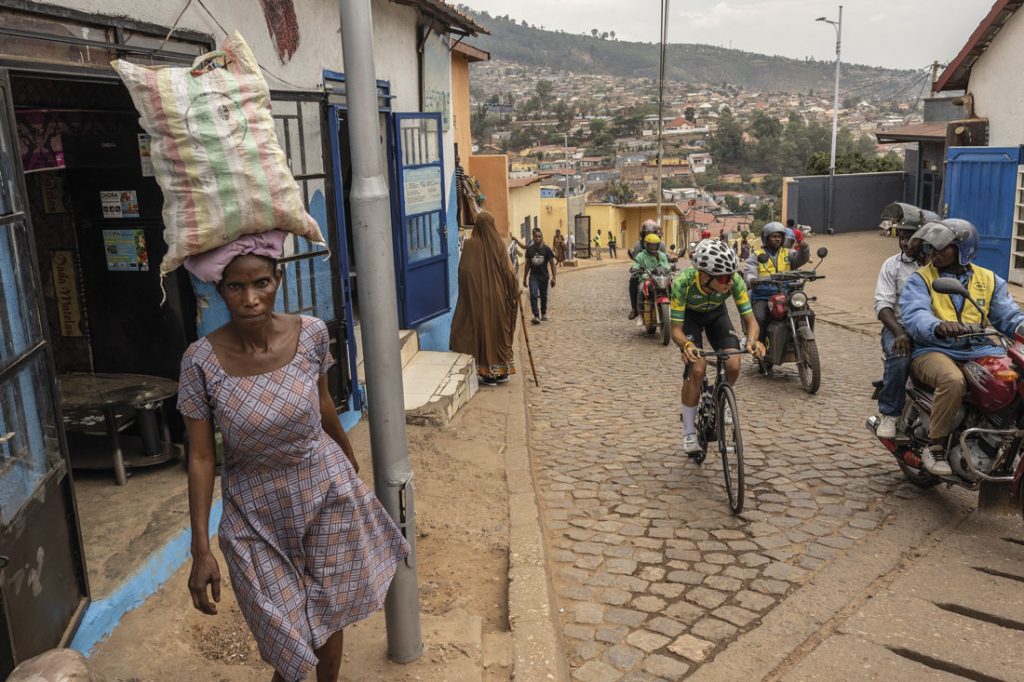
For those who have never set foot in Africa before, landing in Kigali can be a huge disappointment. And not precisely because of a bad experience (the capital of Rwanda is probably the safest city in Africa), but because the collective imagination built in the global north around Africa differs diametrically from what a visitor will find when arriving here.
In this city there is not the automobile chaos of other cities spread across the continent; The color and heat of Lagos, Dakar or Lusaka are not overwhelming either, but the pristine asphalt, the roads, the order and the newly painted pedestrian crossings that people do use are. Only in this incomparable setting could the World Road Cycling Championships organized by the International Cycling Union (UCI) take place, for the first time in Africa. And so it happened, between September 21 and 28.
For a week Kigali was a party and, therefore, it is necessary to first talk about cycling. Every morning, thousands of Rwandans headed to the various locations in the city – most gathered at the capital’s legendary Convention Center – to cheer on their idols on the street. 769 cyclists from more than 108 countries, including 36 Africans, participated in this event that will remain to be remembered: it was the most demanding race in the 103-year history of the championship. With more than 5,475 meters of accumulated elevation gain in the elite men’s race (267.5 km) and 3,350 meters in the women’s race (164.6 km), the circuit tested the best cyclists in the world in the Country of a Thousand Hills.
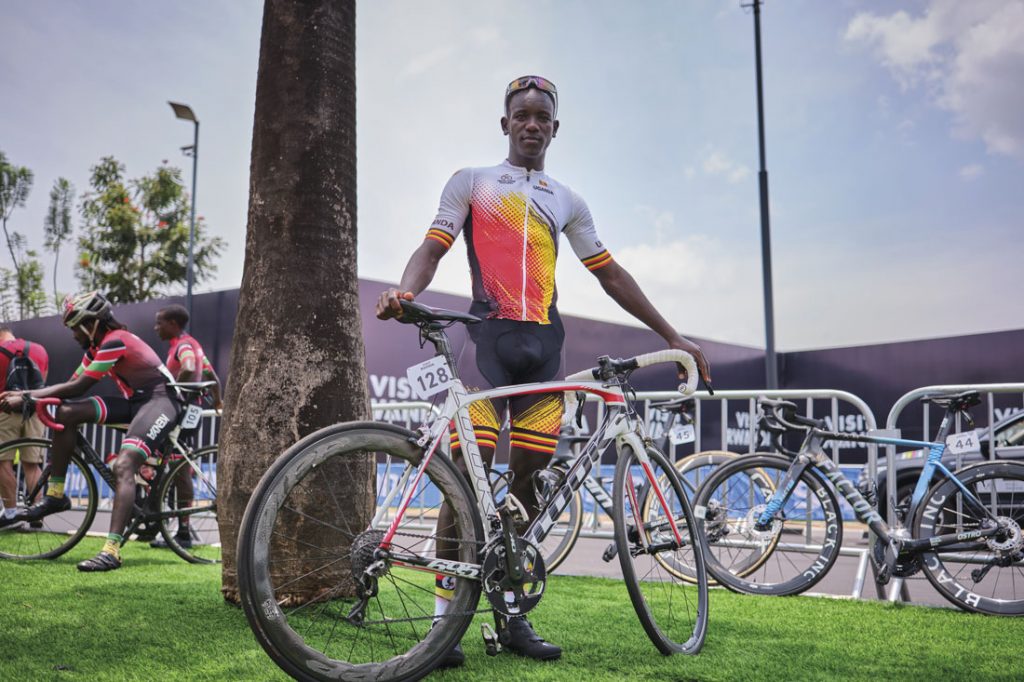
The World Cup represented a milestone for sport on the continent. Michael Lobo, a junior cyclist on the Ugandan team, explains it from the box of his country’s team: “It is incredible that Rwanda has organized this World Cup and, as an African, I am very proud and I hope that other countries on the continent take up the baton in the future.” At the other extreme, the overall winner of the men’s event, the Slovenian Tadej Pogačar, said in a press conference that it had been the hardest race of his life and that “the fact that it happens here, in Africa, makes this victory even more special.”
The past that defined the present
Since the end of the genocide in Rwanda, one of the darkest periods in history, in which nearly 800,000 people were murdered in just 100 days, the country began a reconstruction process whose spearhead was national unity. The Rwandan Patriotic Front (RPF) took Kigali in July 1994 and ended the genocide. After a six-year period of government by Pasteur Bizimungu, Paul Kagamé assumed a presidency that lasts to this day.
When the RPF came to power, the Executive imposed a series of measures that became what Rwanda has become today. Public reference to Hutus and Tutsis was banned and a single national identity was promoted: Rwandans; Strong police and military control was imposed in the country and dissident voices were persecuted at a time when any criticism of the new order was harassed and appeased, and, finally, the return of millions of Hutu refugees in the Democratic Republic of the Congo was facilitated. Meanwhile, the Tutsis occupied positions of power in the Government. Rwanda was a broken country and the wound was still open. Measures like these were interpreted by the international community as necessary for reconstruction.
Two years after the genocide, in 1996, the country began its direct involvement in armed conflicts in other countries. It first invaded eastern Zaire (now the Democratic Republic of the Congo, DRC) to hunt down those responsible for the genocide who had fled, destabilizing the region and causing the fall of the then president of the neighboring country, Mobutu. From 1998 to 2003 he supported rebellions against his successor, Laurent Désiré Kabila, and against his son, Joseph Kabila, in eastern DRC.
When it withdrew its troops in 2003, it continued to support groups such as the National Congress for the Defense of the People (CNDP) and the well-known March 23 Movement, or M23, an armed group that took the city of Goma in January of this year and has been accused of war crimes. Since 2019, the deployment of Rwandan troops in the Central African Republic (CAR) and in Cabo Delgado (Mozambique) has been supported by the Rwandan government with a narrative that leans more towards regional security and stability.
«Visit Rwanda»
However, since 2018 Rwanda began its sports whitening campaign –sportwashing– with a motto as simple as it is omnipresent in the country: “Visit Rwanda”. This practice designates the government or corporate strategy that uses major sporting events to improve its public image and divert attention from human rights abuses, conflicts or repressive policies. Today, clubs such as Arsenal, Paris Saint-Germain, Bayern Munich, Atlético de Madrid, the Los Angeles Clippers and the Los Angeles Rams sport it on their shirts. Other examples of this strategy are the construction of a Formula 1 circuit or the Cycling World Championship.
“This duality between a conflict-driven foreign policy and a strategy of projecting a positive international image has been part of Rwanda’s strategy since the early 2000s to present itself as a developing state,” Ladd Serway, senior analyst for the African continent of the Armed Conflict Location and Event Data Project, explains to MN. However, he adds that “unfortunately, that does not reflect the complexities. It does not show, for example, the challenges that many of Kigali’s poor have faced in these development projects, the displacements to rural areas or the differences in development between the capital or major cities and the rest of the country.
For Serway, this strategy manages to divert attention from his involvement and support for groups such as the M23 or the Banyamulenges in the DRC, and direct it towards areas that are perceived as positive. This is where Rwanda is presented as an attractive tourist destination through the “Visit Rwanda” campaign, whose banners are displayed throughout the capital. “That draws public attention to those other sectors, which is useful for them in terms of international credibility,” he says.
Rwanda’s foreign policy is clearly linked to the country’s economic and geopolitical needs. With an extension of only 26,000 km2 and an economy that depends largely on agriculture, income from abroad is key for Rwanda. The pattern is natural resources: in Cabo Delgado there are 5,000 soldiers on the ground to defend the population from the Al Shabab insurgency, but also to control one of the largest reserves of liquefied natural gas in the world; in CAR, Vogueroc, a Rwandan firm, obtained a concession in 2022 to operate mines in five locations in the country for 25 years; And in the DRC it is the control of coltan mines.
Although the World Cup has been impeccable, Rwanda has not been able to escape criticism. In a September 22 statement titled “Cycling event fails to counter Rwandan abuses,” Human Rights Watch (HRW) warned that the World Cup could be linked to human rights abuses: “HRW has documented that Rwandan authorities arbitrarily detain and imprison sex workers, street children, and other people deemed “undesirable” before high-profile international events.”
Tourists who come to the country to walk around Lake Kivu, see the gorillas in the Volcanoes National Park, as well as cycling fans who attended the World Cup, are probably not going to notice that more opaque side of the Kagame Government either: they will not have heard that the American NGO Freedom House has classified the country as “not free”, giving it a score of 21 out of 100 in its 2025 evaluation. They will not know that the media panorama It is so restrictive that Reporters Without Borders ranks Rwanda 146th out of 180 countries in terms of press freedom or that 17 journalists have disappeared, been imprisoned or murdered since the RPF came to power after the 1994 genocide. Nor will they suspect that dissident voices are being politically persecuted inside and outside the country.
The latest case of this state repression was that of Stijn Vercruysse, a journalist for VRT News, who was prevented from boarding the plane bound for Kigali from Zaventem airport (Belgium): «We planned to report critically about the host country. That will no longer be possible and may reveal the authoritarian nature of the regime in Rwanda,” he explained. When asked about the sportwashing, The coach of the Rwanda cycling team, David Louvre, was blunt in his response: “I am not here to talk about politics. “I have my own opinion on this, but the Ministry of Sports is my boss, so I prefer not to give an opinion.”
