

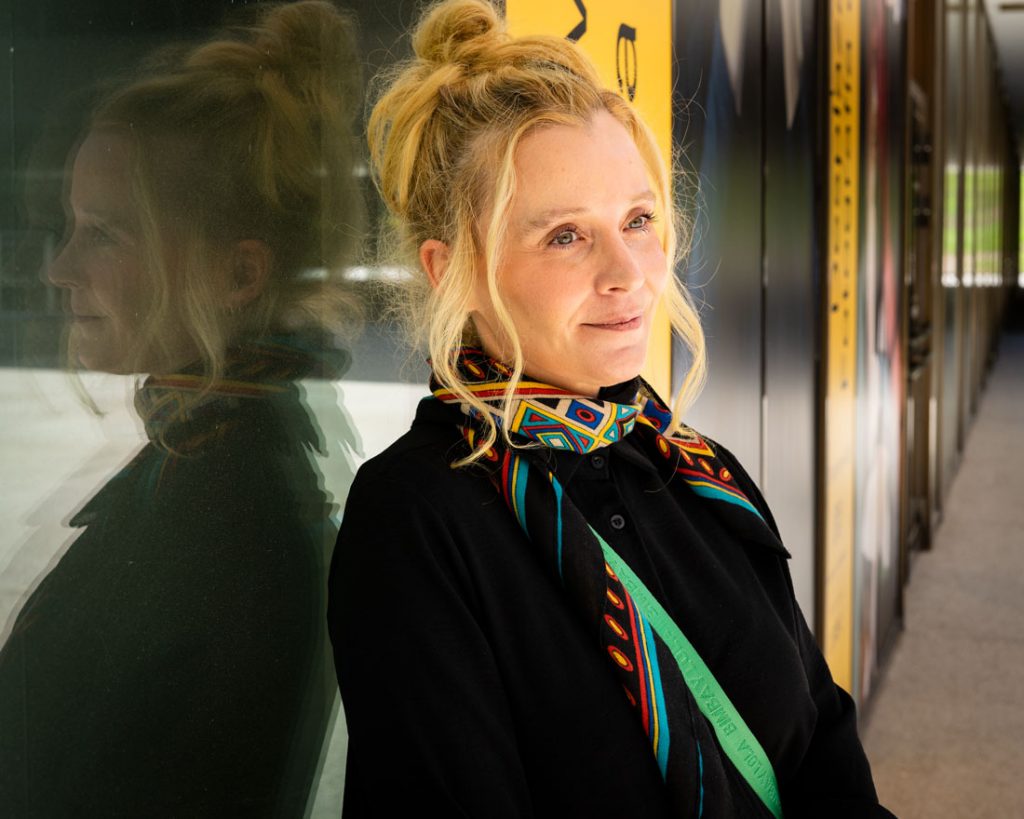
The Portuguese-Angolan visual artist and photographer Nélia Dos Santos, winner of Discoveries 2024 of PHotoESPAÑA and finalist of the ENAIRE 2024 Foundation Award, exhibits “Marimbar”, with the help of Fujifilm. In this work he delves into Angola’s colonial past through the history of his own family, proposes a dialogue about identity and migration, and generates a story that transcends individual experience and extends to the collective. MUNDO NEGRO has visited the exhibition together with the author.
A large photograph shows us a boy bathing in the sea. He is floating face up, eyes closed and arms open. The image, in black and white, is contemporary and beautiful. Nélia Dos Santos took it in Angola and chose it as the beginning or end of the tour for her exhibition “Marimbar”, a bridge between the past and the present. «It has been built with this purpose, that it does not have a specific beginning and end. Finish or start, it depends on how you look at it,” he explains.
The exhibition, which can be visited until September 28 at the Art Center of the Complutense University (in Madrid), is made up of photographs taken by the photographer in the last ten years, archive photographs, videos and objects that speak of the history of her family in Angola. When his grandfather Antonio was 16 years old, he fled the dictatorship in Portugal and went to the African country, a colony at that time, and there he worked as a typographer for a newspaper, raised a family and spent most of his life until the war of independence forced him to return to Portugal. Nélia dos Santos’ mother was born and raised in Angola. The photographer was born in Portugal. «My mother was African. My skin is always white to black people, but my culture is very black to white people. I carry this heritage always looking for a place of belonging,” he says. The exhibition jumps between colonial time and the current moment, with the aim of proposing a necessary dialogue for the author about the sense of belonging, identity, colonial trauma and the act of moving, experiences that, in one way or another, are universal. “I think we are all migrants,” he says, and returns to the photograph of the young man floating on the water: “For me, it speaks of the need for this issue to always be on top, so that it can be talked about and so that we don’t forget.”
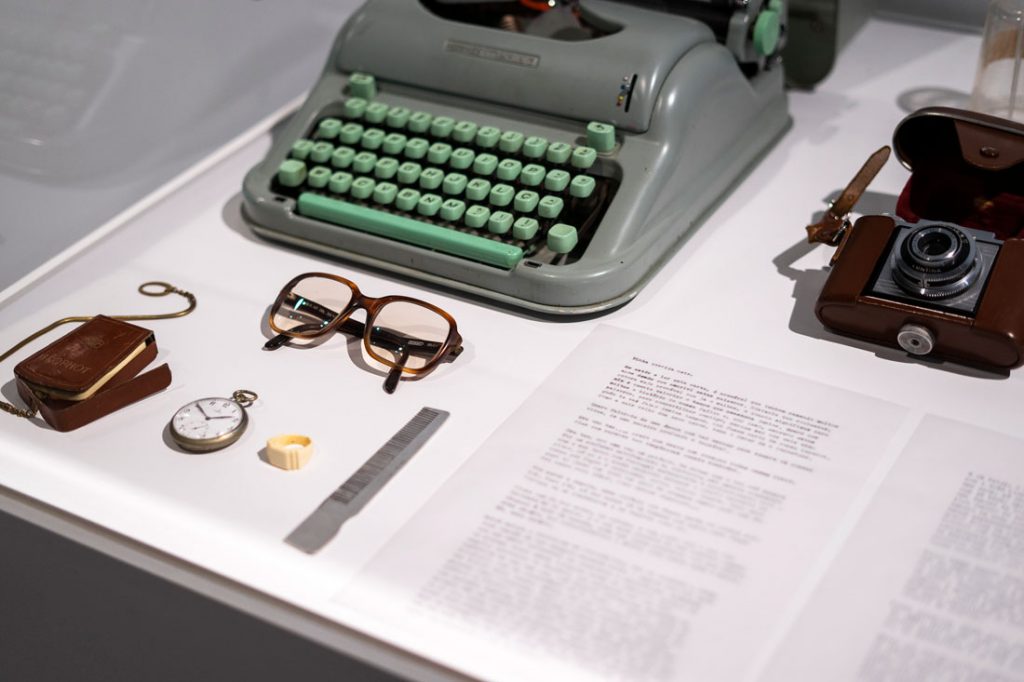
In the exhibition, a display case contains his grandfather’s personal objects: a comb, glasses, a typewriter, a camera… «They are objects that I inherited and that I have brought here. He grew up in Angola, it was his country and that of my family. “They are objects that were part of their daily lives.” Next to them, a small marimba, the musical instrument from which the artist has taken the name for the project, “an instrument that speaks of Africa and that travels with the diaspora.” There is also the letter that her grandfather Antonio never wrote to her, composed of fragments that the photographer found in her diaries, and which summarizes her experience in the African country: «I ended up in Angola, a country that was a Portuguese colony for more than 500 years. A land that was part of our dreams, where only the men who were lucky enough to make their fortune or the condemned and fugitives like me went (…) your mother was born on July 23, 1960. When night fell that day, I went up the river, between those two banks, with an immense black sky above me, and I felt that this whole world was my home, the only home I was going to have in my life. “There was no longer any doubt for me.”
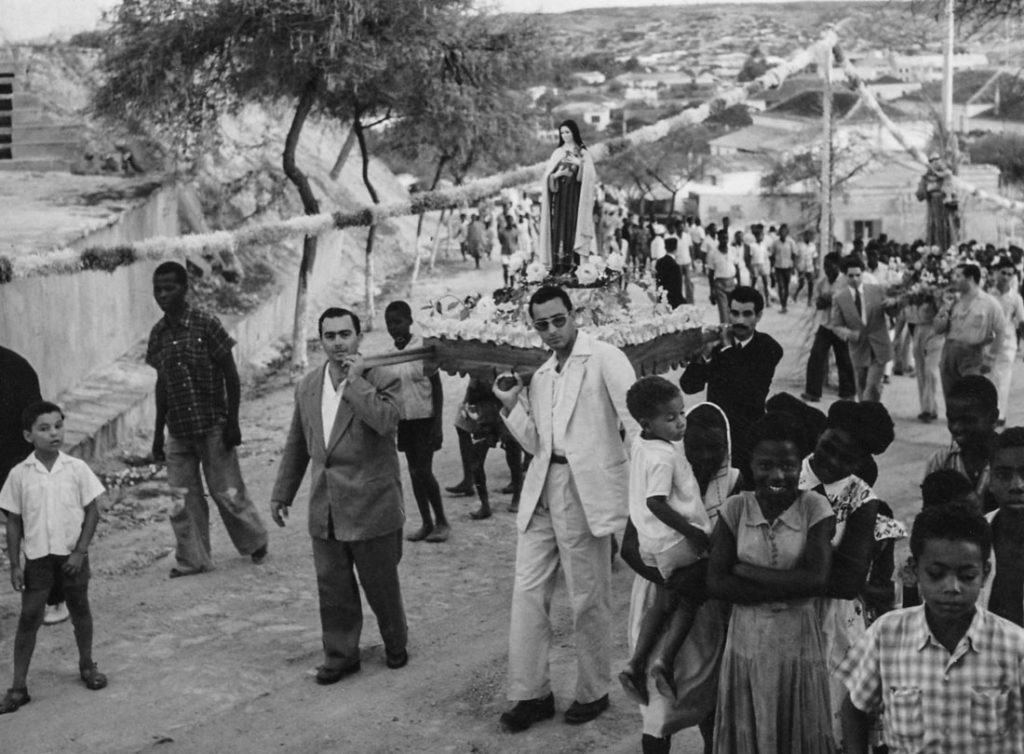
In the oldest photographs in the exhibition, the author’s grandparents appear, young, scenes of daily life with neighbors, her mother as a child, landscapes, markets, an image in which Portuguese troops appear… «What I am looking for is for the project to be a place of repair, I try to use the intimate to be able to talk about these stories that have been marginalized, that are outside the official discourse, so that they become part of all of us. It is my story and that of my family, but there are many stories similar to ours. “If we don’t tell the stories that speak of colonial trauma and have been silenced, they will be lost.”
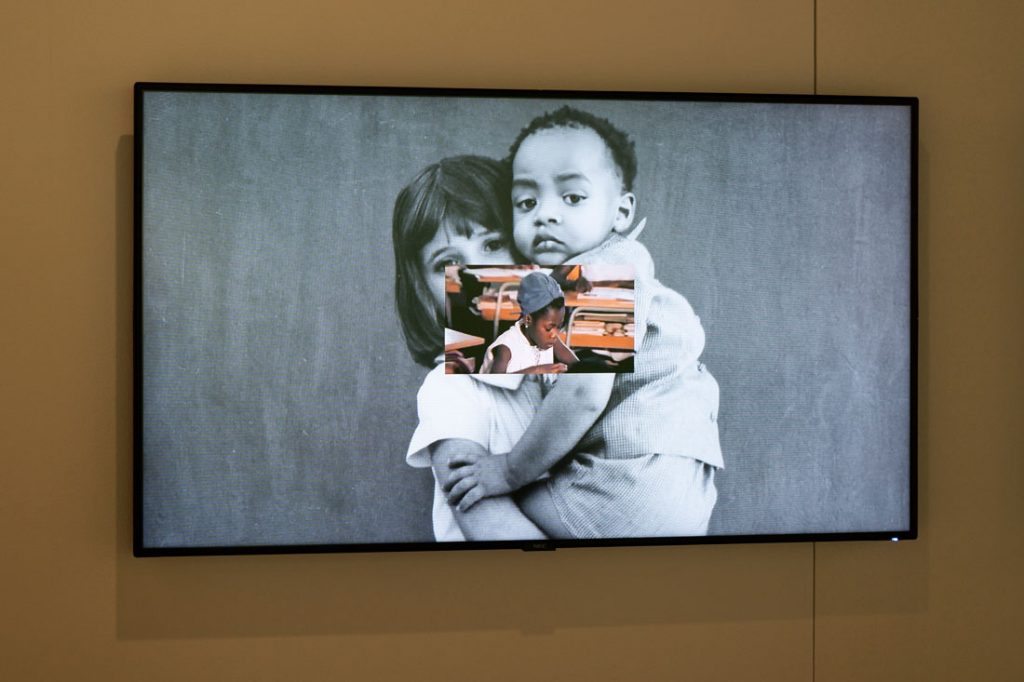
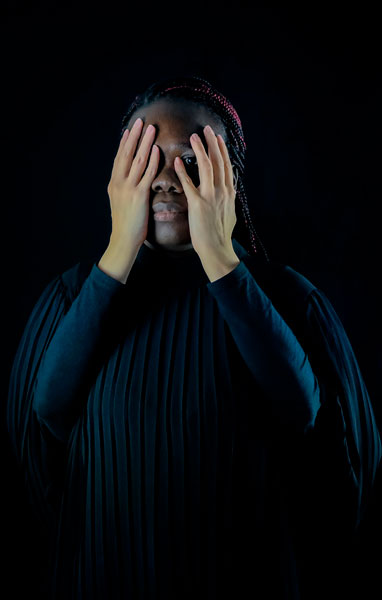
Along with these images, monitors show video fragments from Portuguese Radio and Television in which we can see urban scenes from colonial Angola. And the past is interspersed with the present, with photographs currently taken by the artist, some of them documentary, others performative, using models, which play with the contrast between black and white and invite the viewer to reflect on the experience of belonging to two worlds united and separated at the same time.
The author tells us that when the war that led to independence broke out in Angola, her family was forced to leave the country, leaving behind what was their land, their culture and their people. The move to Portugal was not easy. «Portugal was emerging from the Salazar dictatorship and was extremely retrograde, very classical. The colonies had a very great development in relation to the metropolis. My family was shocked by the delay in development. And of course, they dressed in colors, they had a much more modern behavior. “It was a very big cultural shock and they had to adapt.”
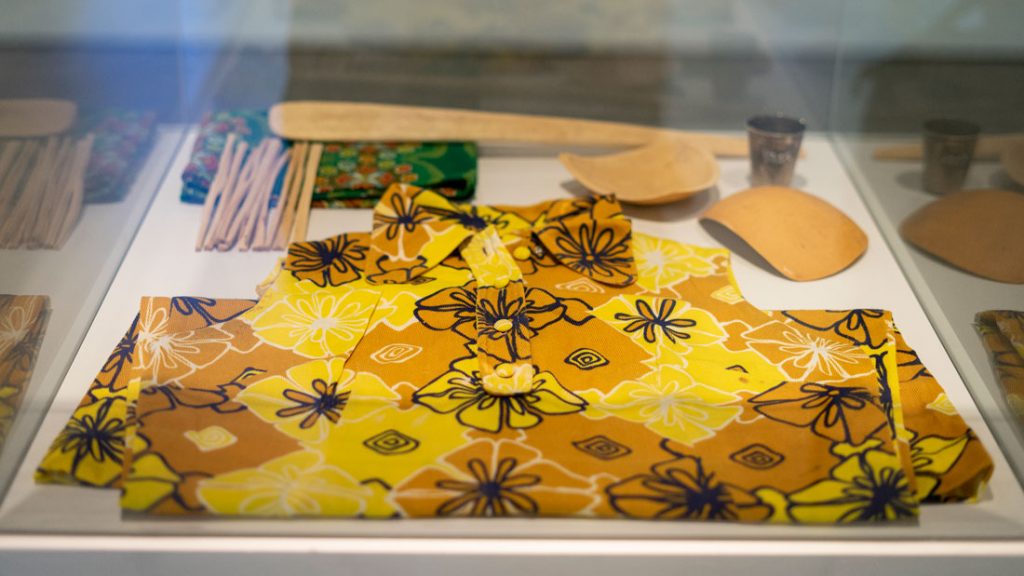
Another of the display cases contains the dress that her mother was wearing when she arrived in Portugal, a garment that caught everyone’s attention and provoked disapproving comments among those traditional Portuguese people of ’75. Her mother, who appears as a child in another of the photographs in the exhibition, while holding another younger child, a friendly neighbor, in her arms, suffered greatly during the immigration process. «When my mother looked at these photographs and talked about these stories, she did so with deep sadness, and I understand why. The people who appear in these images stayed there when my family had to leave Angola. She had a deep love for those people and never had contact again, because at that time communications were different. On the other hand, my grandfather always talked about all his adventures with enormous joy. “My grandfather wanted the independence of Angola, but he also wanted to continue living there, although it was not possible.”
Nélia Dos Santos maintains a close relationship with Angola and other countries on the continent to which she often travels. He feels at home there. What you find is part of your culture. She has grown up listening to his music, tasting his cuisine, familiar with the objects and customs he shows in his artistic project. «It is a heritage that I carry with great honor. And I see that the people who are visiting the exhibition end up identifying themselves in some way. I use my personal items, but they could be yours. I use my family tree, but it could be yours, and I tell a story of personal experiences that could be yours or are close to those of any human being. Even if you don’t understand everything in my presentation, you can relate. We are all the same, it doesn’t matter where you come from.
