
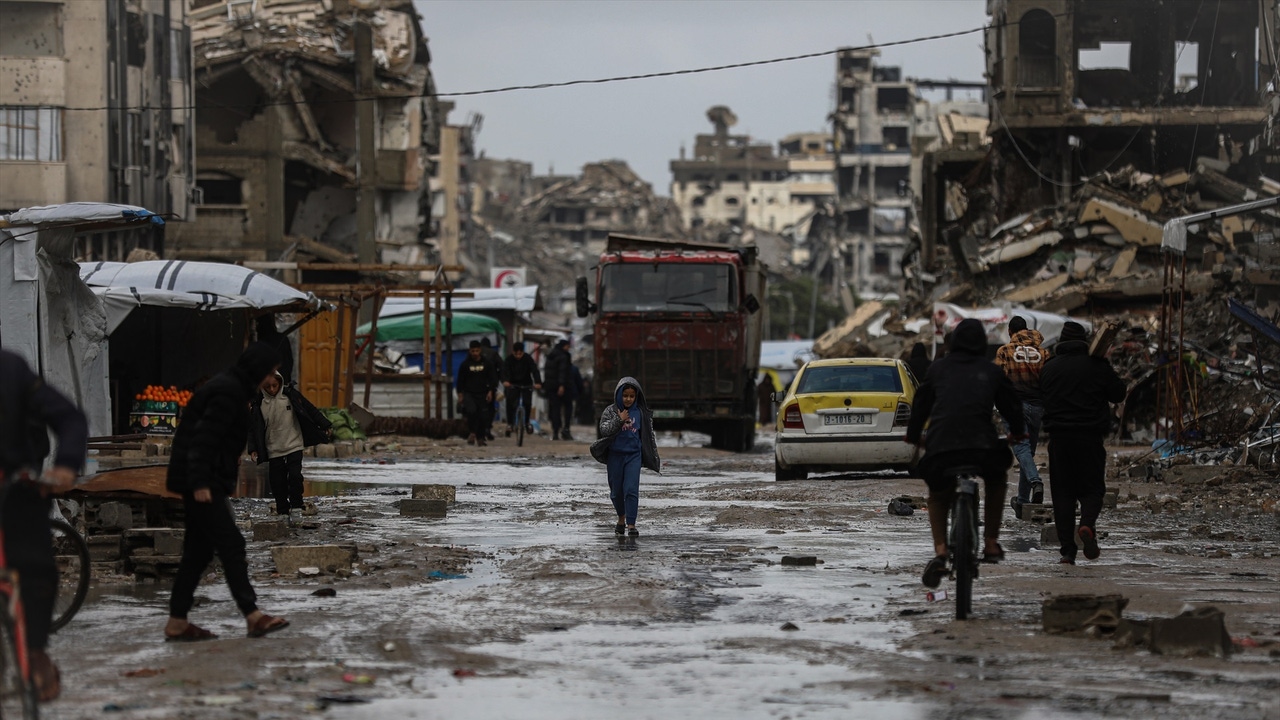
The United States announced this Wednesday the start of the second phase of the peace plan that contemplates several important actions such as the demilitarization of Palestine or the establishment of a technocratic government, without the presence of Hamas, before beginning the reconstruction of the region.
It was Trump’s special emissary in Gaza, Steve Witkoff, who announced the start of this second phase through a message on his social networks. From now on, it is intended to move between a cessation of hostilities between Israel and Hamas to a stabilization of the Palestinian enclave.
The first issue to be addressed is the demilitarization of Gaza, the main pillar of this phase. This means disarming Hamas and other unauthorized armed groups to neutralize their military capabilities. Everything indicates that this process will take some time and that it will also be done in phases, removing the heaviest weapons first and then the lighter weapons.
This will be carried out by the National Committee for the Administration of Gaza, a transitional administration body to govern the region, which will be made up of up to fifteen independent Palestinian technicians and experts, rather than Hamas leaders.
This committee, which will act under the supervision of an International Peace Board, will be technocratic and apolitical and will be responsible for daily civilian management in Gaza, overseeing essential services, reconstruction and functionality of the territory.
As this committee works, the possibility is contemplated that Israeli forces will gradually withdraw and security responsibilities will fall to an international stabilization team and the new Palestinian authority.
Once all this is achieved, work can begin on the last of the issues in this phase of the peace plan: reconstruction. To achieve this, work will have to be done to guarantee infrastructure and basic services, before providing facilities for the development of trade.
Another humanitarian objective of this phase of the plan is the reopening of key border crossings, such as Rafah, to allow the entry of aid from other countries.
Ultimately, this plan aims to achieve a stable political and security order in the region with the disarmament of armed groups that allows the withdrawal of Israeli forces, always supervised by the transitional civil administration that we talked about previously.
