
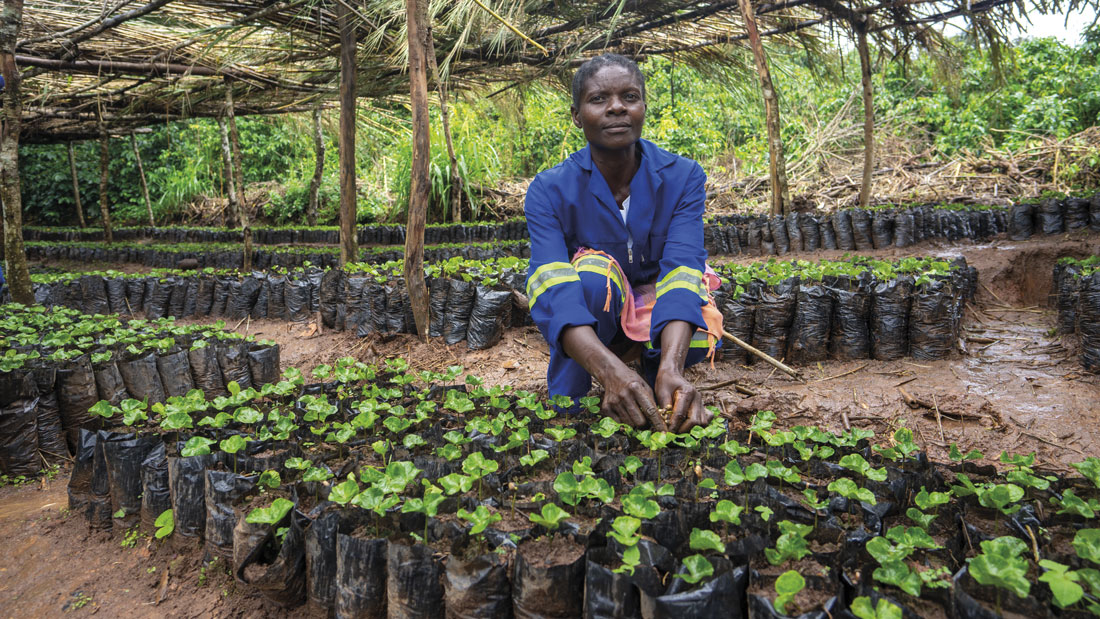
The Mughese and Chipunga agribusiness projects allow the diocese of Karonga to generate employment and sustain social and health initiatives.
Faced with a decrease in funds for development projects, the diocese of Karonga, in the Northern region of Malawi, launched an ambitious agricultural initiative in 2017 based on coffee production, which is already exported to countries inside and outside the continent.
Karonga is a young diocese. Erected by Pope Benedict XVI on July 20, 2010, it is located at the northern end of Lake Malawi, in the Northern region. Despite the ongoing works that will improve road infrastructure, arrival by road is difficult. The trip from Mzuzu, the third largest city in Malawi and capital of the region, can only be made in collective taxis, as regular buses from Lilongwe only go to this town.
Monsignor Martin Anwel Mtumbuka is the first and so far only bishop of Karonga, a diocese with 43 priests and 17 parishes to serve a population of more than half a million inhabitants. In conversation with MUNDO NEGRO, the bishop’s secretary, Judith Kamanga – the only woman in charge of a bishop’s secretariat in the country –, a 44-year-old laywoman and mother of three children, explains that “some parishes are located in mountainous and rural areas with very complicated access.”
To these remote enclaves, where one often has to walk more than ten kilometers between hills to celebrate mass, administer sacraments or assist the sick, the younger priests are sent, while the older ones remain in urban centers, where mobility is better. Despite this, they all share the same diocesan motto: “We will go to them.” Monsignor Mtumbuka and his team are aware that this apostolate requires extraordinary resources to forge a self-sufficient Church and promote integral development. For this reason, since 2017 they have opted for agribusiness projects in the Mughese and Chipunga plantations, focused on the production of coffee and macadamia nuts.
Sustainability
The first of them, with eight hectares, was acquired by the diocese in October 2025. Located at 1,550 meters above sea level, it takes about three hours to get there by car from the city of Karonga, along roads that wind between green hills and stretches of red earth that, after the rains, only off-road vehicles can safely traverse. Kamanga says that the diocese has planted 20,700 coffee bushes and 4,400 banana trees. Both species are grown together because, as the farm manager, Charles Mtumbuka, explains to us, “the coffee needs shade to develop better and the banana protects it from the intense sun and reduces the temperature. This leads to an improvement in the quality of the coffee.”
However, the most important and ambitious diocesan project is located in another neighboring territory of the diocese located about 25 kilometers north of Mzuzu, in the Nkhata Bay district. Acquired in 2017, the Chipunga farm has 286 hectares. Although only 80 are in production, the forecast contemplates expanding the cultivated hectares little by little. This farm focuses on the production of high-quality Arabica coffee berries and macadamia nuts that compete in international markets, taking advantage of the growing demand for both products.
Joseph Mkinga, a 35-year-old priest ordained in 2019, indicates the double objective of the agribusiness project: “To support the educational and health facilities of the diocese, the care of orphans and disadvantaged, justice and peace initiatives and, at the same time, create jobs for the surrounding communities and improve their quality of life.” Some goals that are not without difficulties. When he was appointed manager and legal person in charge of the project by the bishop, he had to take on numerous challenges: «At first I had no training in coffee production. I have acquired all the knowledge on the subject through experience, workshops and personal effort. In 2023, Fr. Mkinga had to complete an online course from AgriCollege International to professionalize project management and ensure international quality standards for diocesan coffee production. The increasing tasks of administration, coordination and supervision of the farm, as well as the training of local farmers, have led him to settle permanently in a house on the farm since March 2026.
social action
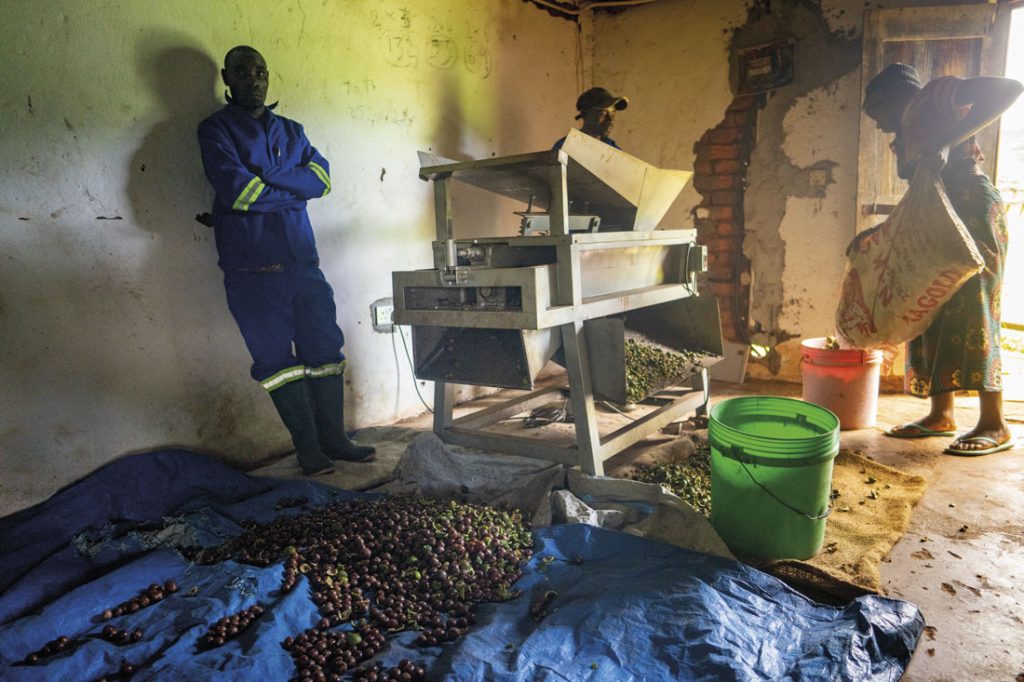
Up to more than 100 employees come to work in Chipunga, depending on the season and the activities that have to be carried out. “Starting in May, the farm usually hosts many workers, since we have quite a few activities related to the harvest of both coffee and macadamia,” says the priest. The farm is not exempt from direct competition, since coffee plantations abound in the region. However, Chipunga has a good incentive to attract more workers, since, as Father Joseph explains, “not everywhere the workers eat, so they prefer to come to work with us, because here they eat, go to the fields to harvest and then return home.” The priest adds that “with this we have created job opportunities and we continue to do so. Hopefully by 2030 we will have more than 300 workers here.”
The creation of cooperatives is another interesting aspect that differentiates Chipunga from other initiatives. Up to 15 cooperatives in the area grow coffee that they then sell to the diocesan project. Each of them has a leader with whom Chipunga negotiates and signs the contract. «When that coffee is harvested, they bring it here, we weigh it, analyze the quality, add it to our production and sell it. We make sure that the prices we offer them are above what is paid in the local market so that it also benefits them. With this program, the diocese’s plantation supports more than 200 farmers in the surrounding area, of which 80% are women,” says Father Mkinga.
One of the biggest challenges of working on the farm is communicating with workers. Father Joseph explains to us how they solved the problem thanks to a traditional and infallible method: the bell. «To call everyone, you ring the bell several times, while to call the driver you ring it twice every three seconds. If the person you want to notify is the property manager, ring once every three seconds. To maintain communication with the diocese, the priest has installed an antenna connected to satellite Internet on the roof of his house, which also serves to monitor humidity, outside temperature and other essential factors to determine the ideal time for harvesting and drying the harvest from a monitor installed on the table in his office. The project in Chipunga has also taken a qualitative leap with the acquisition of industrial machinery, financed by Manos Unidas, which optimizes transformation and marketing processes that were previously carried out manually.
Impact without borders
Chipunga’s dream is for his coffee to be recognized throughout the world, as well as on the African continent. For this reason, they actively participate in the conferences of the African Quality Coffee Association (AFCA), where they present their product to buyers from ten member countries, from Ethiopia to South Africa through Burundi, Cameroon, the Democratic Republic of the Congo, Kenya, Rwanda, Uganda, Tanzania and Zambia. Mkinga’s office proudly hangs the AFCA membership certificate, obtained at the meeting held in 2025 in Dar es Salaam (Tanzania). Thanks to this projection, Chipunga is already exporting part of its production to Italy, Scotland, the United States and Germany: “The quality excites buyers and demand is beginning to exceed our production capacity, which will force us to expand the plantation next year,” concludes Father Joseph Mkinga.
Mughese and Chipunga represent the path that the diocese of Karonga is taking to become a self-sufficient Church, capable of financing its mission and reducing its dependence on external aid.
Caritas Karonga leadership
Under the leadership of Bishop Martin Mtumbuka, Bishop of Karonga, the Diocesan Caritas Commission has consolidated a robust strategic orientation, both in its organizational architecture and in its ethical framework. Established shortly after the birth of the diocese, the Commission coordinates and manages diocesan socioeconomic development projects. As detailed on its website, “its work is structured around four fundamental pillars: education, health, sustainable livelihoods and promotion of justice and peace.”
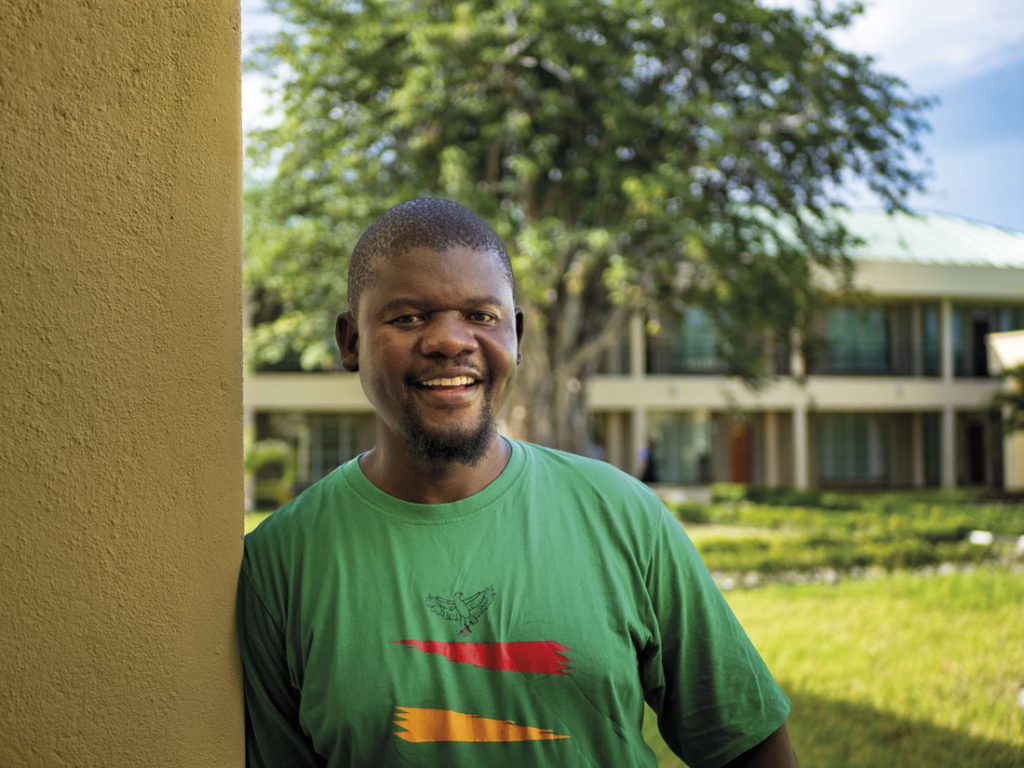
Mwadi Shaba, current secretary of the Commission (pictured), is a witness to this evolution. Coming from the neighboring diocese of Mzuzu, he was summoned by Bishop Mtumbuka in 2010 to join the founding team of the Commission. Today, management falls on a board of directors made up of seven members that meets regularly twice a year and in extraordinary sessions to respond to the emergencies of the local context.
The impact of Caritas in the region is vast. Currently, the Commission manages seven health centers located in underserved rural areas, in addition to an educational network that includes 83 primary schools and ten secondary schools. As Shaba points out, the scope is very broad: “More than 28,000 young people are trained every year thanks to this diocesan educational system,” making the Church an indispensable pillar for the future of youth in northern Malawi.
However, the path to financial autonomy remains a pending challenge. Most of these initiatives depend on the solidarity of international partners and donors, since, in Shaba’s words, “our programs have not yet reached the level of integration necessary to function self-sufficiently.” Added to this economic dependence is a cultural challenge, “the fight for a change of mentality regarding traditional practices such as witchcraft”, which, according to the Secretary of the Commission, continues to be a source of social violence that must be eradicated.
Faithful to the diocesan motto “We will go to them”, the Commission is not limited to the management of centers, but is committed to social awareness. To do this, it relies on the diocesan radio station Tuntufye (‘praise’, in the Nkhonde language), a key tool to break the isolation of the most remote communities. Through the airwaves, the diocese enters homes and villages where other organizations do not have a presence. This closeness reinforces its credibility with the population and consolidates Cáritas Karonga as an agent of social transformation capable of going where no one else does.
