
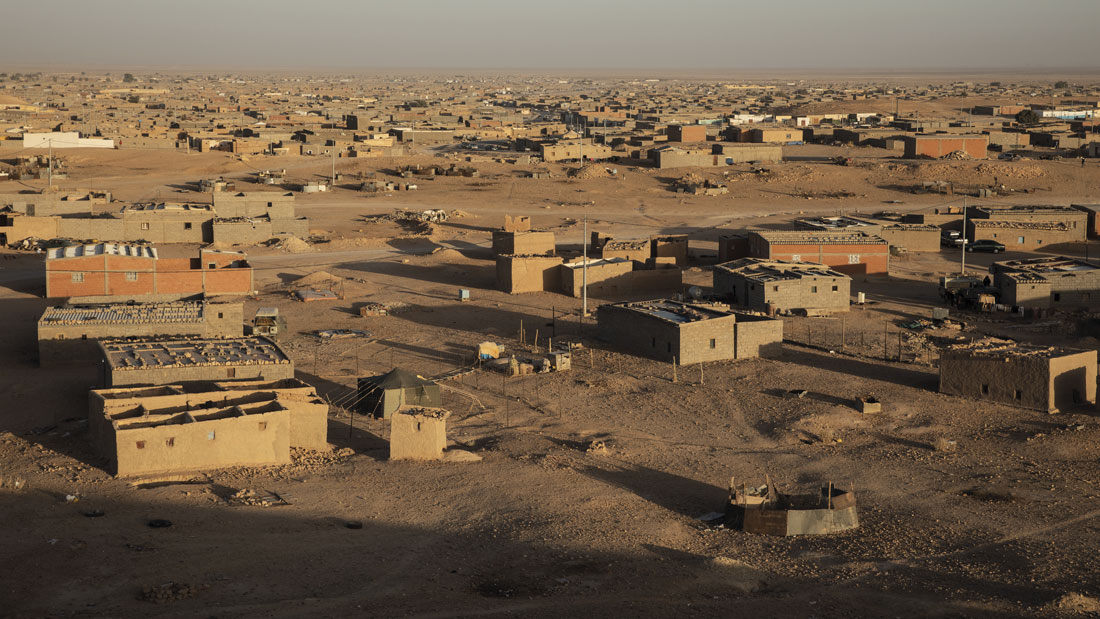
The population of Western Sahara has been denied access to its coast for half a century, while fish from its territorial waters supplies European markets.
By Marta Saizfrom Tindouf (Algeria)
The Sahrawi people have been living with their backs to the Atlantic for 51 years. The occupation of its territory by Morocco has since conditioned the survival of the population, which cannot access the exploitation of its land and maritime resources. While Rabat negotiates international agreements that include the waters that bathe the Sahrawi coast, initiatives are being launched in Tindouf that try to make up for that deficit.
Hameiduha Emhamed remembers the taste of freshly caught fish from her native Dakhla. He remembers it before the agreements, the occupation, the exile. As a child, the sea was part of his routine, when he accompanied his elders fishing. In that coastal city on the Río de Oro peninsula he was born in 1958, in what was then known as Villa Cisneros, Spanish Province 53.
–I spent my childhood in that beautiful coastal city. We went to the beach and there we met with an important community of Canarians and citizens from other parts of Spain.
He speaks of those years with the nostalgia of someone who remembers a place to which he cannot return. His sea left him behind at 17 years old.
In 1975, and in response to United Nations resolutions, Spain announced that it would organize a referendum so that the Sahrawi population could decide the future of their territory. It was never celebrated. While the Franco dictatorship was dying, Morocco intensified its claims to Western Sahara. The International Court of Justice concluded in October of that year that there were no ties of territorial sovereignty that nullified the right of self-determination of the Sahrawi people.
But Morocco did not accept the ruling. On November 6 he launched the Green March – Black March for the Sahrawi people (see MN 717, pp. 28-47) –. On November 14, Spain signed the Madrid Agreements with Morocco and Mauritania, where a joint administration was established between the three countries. All of this outside the United Nations. After the final withdrawal of Spain in February 1976, Morocco, with the participation of Mauritania until 1979, began a war against the Sahrawi population that caused the exodus of thousands of people to Algeria.
For Hameiduha, his family and thousands of Sahrawis, those decisions made far from his home and his town translated into exile into the desert.
–People came out as best they could. It was chaotic, with the population pursued by the Moroccan and Mauritanian armies. Part of my family died in the bombings of Um Draiga, where the Moroccan aviation used napalm and white phosphorus.
Algeria opened the border to those who managed to arrive. There the camps of Sahrawi refugees began to rise in Tindouf, in the middle of the hamada. What should have been a provisional exit became an exile that lasted more than half a century.
–In February 1976, when the last Spanish soldier left, we proclaimed the Sahrawi Arab Democratic Republic (SADR), recognized by 84 countries and a founding member of the African Union (AU).
At that same moment, in El Aaiún, the capital of Western Sahara, the Spanish flag was replaced by the Moroccan one.
–Probably my generation will not see a free Sahara, as our parents did not see it. They will be our children, grandchildren or great-grandchildren.
Diplomat of the SADR in Venezuela, Panama, Ecuador and the Basque Country, Emhamed speaks of the optimistic character of the Sahrawi people and the hope of recovering a land that today is promoted for tourism as “the pearl of southern Morocco.” And that erases the identity of an entire town.
–Free or martyrs. There is no other alternative.
A fish farm in the desert
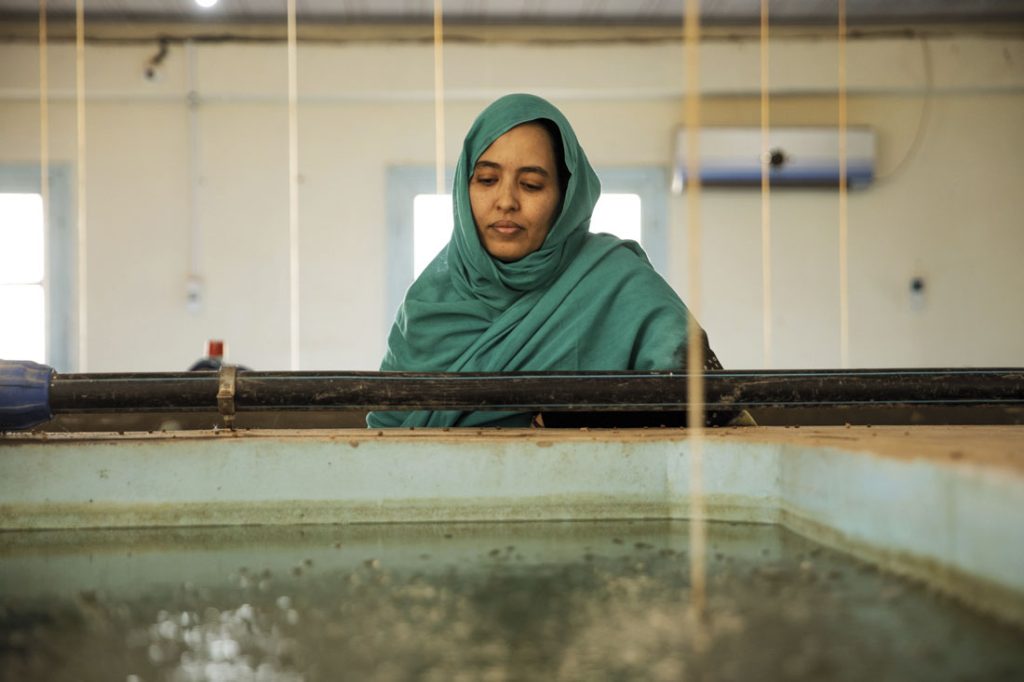
Far from that sea is also Jadiya Nafe, a biologist and promoter of a fish farm in the Tindouf camps, located in N’khaila, an oasis of green palm trees that bursts into the middle of the aridity on the outskirts of Smara, one of the five wilayas in which the camps are organized and which bear the names of cities in Western Sahara.
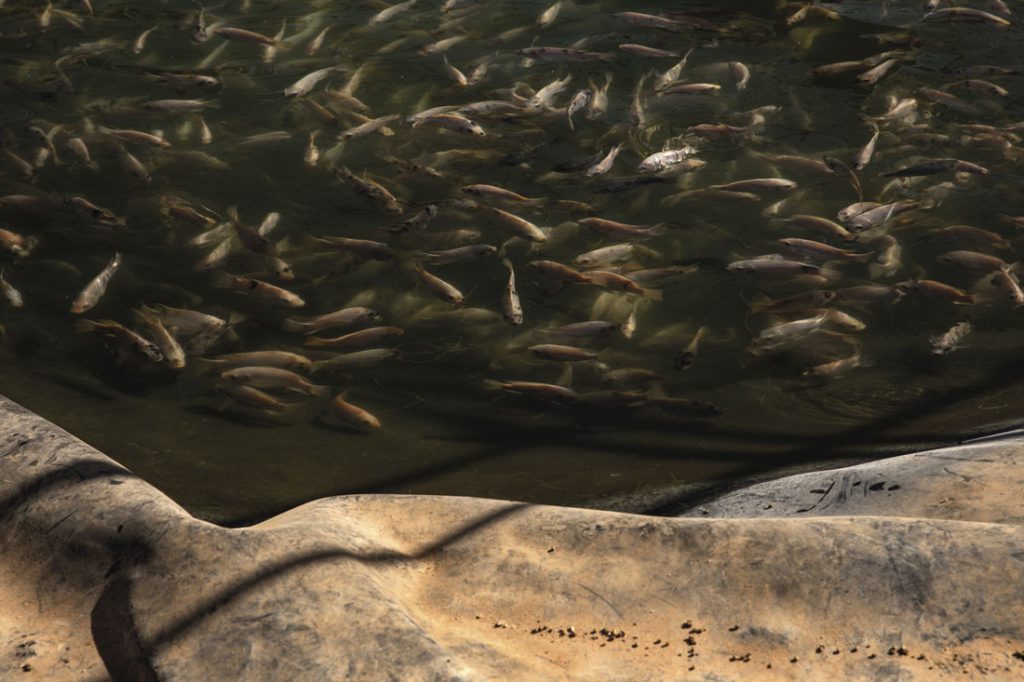
The entrance to the facilities is through a gray open-air fence that leads to the ponds where red and Nile tilapia are raised. In total, more than 48,000 specimens swim in the pools of a project inaugurated in 2019 with the support of the World Food Program and that today resists minimally. The 11 people who work there do so voluntarily.
Nafe, who at 37 years old has never seen the sea in his homeland, was told that raising fish in the desert was a crazy idea. But the lack of basic nutrients in the diet of a population deprived of access to the sea seemed crazier to her. Part of his family remains in the occupied territories. Another lives dispersed in the diaspora. Some of her aunts died before she could meet them.
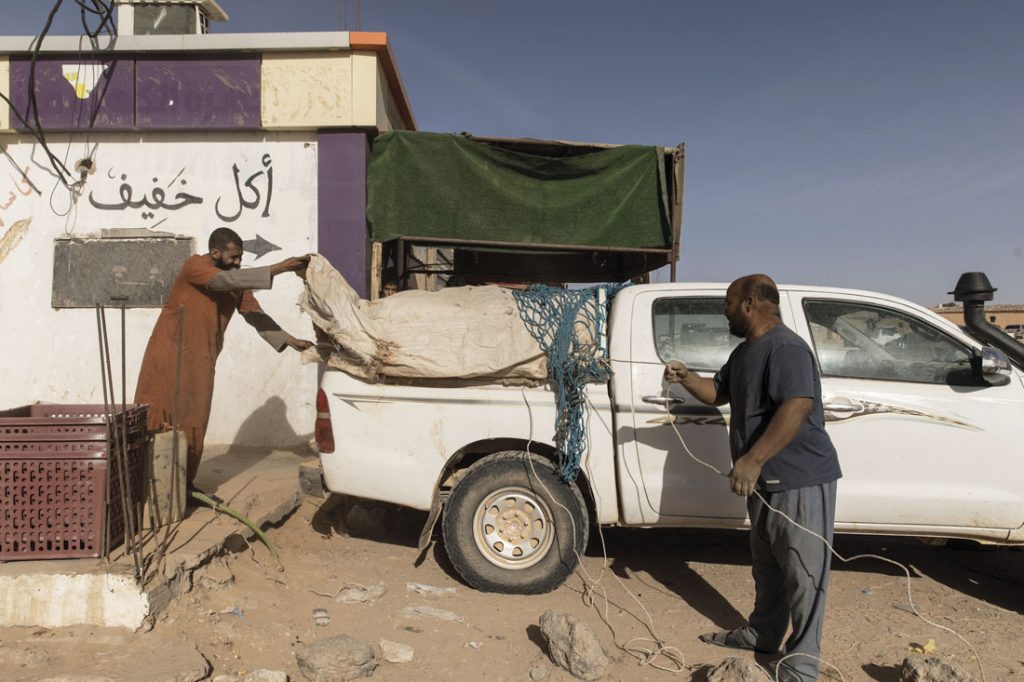
Like the biologist, a good part of the more than 170,000 people who live in the camps have grown up far from the sea. Among them is Damba Mohamad, who during the winter months – from December to February – travels more than 800 kilometers in his white Toyota to look for fish from Nouadhibou, a Mauritanian city near the border with Western Sahara. He makes the trip in two days, one there and one back, always accompanied by another person to the city of Zuerate, where he picks up the merchandise.
–When the fresh fish arrives in Zuerate, by train or plane, it is placed in cold rooms for 24 hours to freeze so that it can be transported, preserve its quality and protect it from decomposition.
The product arrives at two Rabuni stores and, once there, is distributed to the rest of the wilayas according to demand.
–This fish is part of the basic needs of every person –says Mohamad–. And it is the only way for the people in exile to eat what they could freely eat 50 years ago.
Western Sahara has more than 1,100 kilometers of coastline and one of the richest fishing grounds in the Atlantic. But for those who live in Tindouf, the only way to eat fish is once a month for three months a year, frozen and at a price that not everyone can afford. The cost of gasoline also makes everything more expensive.
Intertwined contexts
What happens in the Sahrawi camps is directly linked to what happens at sea and in the distant offices of the European institutions.
–Throughout these 50 years in which Western Sahara has been under Moroccan occupation, we have seen how wealth, including fishing, has been systematically plundered and without the consent of the Sahrawi people.
Mahfud Bechri is a Sahrawi activist, member of NOVACT and the coordination team of the Western Sahara is Not for Sale platform.
–The European Union (EU) has been signing illegal agreements with Morocco for more than two decades, in which the fishing resources of occupied Western Sahara are exploited.
The last agreement, ratified in 2019, was signed with a validity of four years. In it, Brussels paid Morocco more than 50 million euros a year in exchange for 138 licenses to fish in its waters, 92 of them Spanish. On October 4, 2024, the Court of Justice of the European Union, considering the resources of the Polisario Front, issued a ruling in which it struck down the agricultural and fishing trade agreements between the EU and the Kingdom of Morocco, considering that they have been applied to the territory of Western Sahara without the consent of its people.
–In several investigations it has become clear that Spanish companies are directly or indirectly involved in the exploitation of fishing resources –continues the activist–. Some operate through subsidiaries in Morocco, while others trade directly with products from the territory, labeling them as Moroccan.
According to the report The tentacles of the occupationfrom the Observatory of Human Rights and Business in the Mediterranean, Spain imports 20 times more octopus than it catches, about 21,500 tons. Nothing mentions its real origin. Only in some cases does Dakhla appear, but linked to Morocco. The origin also usually appears as FAO 34, a broad name that covers from the Strait of Gibraltar to the mouth of the Congo River.
The origin of the catches is diluted on the label. Since 2009, the group monitoring the plundering of natural resources from Western Sahara in the Canary Islands has tracked the movement of ships between the ports of the occupied territory and the archipelago.
–It is a work that makes visible why there is so much interest in the occupation continuing – highlights Anselmo Fariña, coordinator of the group. The reports prepared by the group show the extent to which the Moroccan fishing industry depends on Sahrawi waters. The 2024 report indicates that of the 1.3 million tons captured by the Moroccan coastal and artisanal fleet, more than 904,000 tons were landed in ports in Western Sahara, almost 70% of the total. In parallel, a total of 158 fish processing plants operate in the territory, concentrated mainly in the enclaves of Dakhla and El Aaiún.
For Fariña, all this has contributed to strengthening the Moroccan presence on the coast. Today, more than 400,000 settlers live in the territory.
From there, thousands of tons of fish and agricultural products travel to Europe every year. According to data from the European Commission, in 2022 exports from Western Sahara to the EU reached 590 million euros – 203,000 tons of goods – of which 504 corresponded to fishery products.
–In Western Sahara we are also beginning to see a significant problem of overexploitation. Artisanal fishermen have stopped finding sardines. And there is another element that completes the picture: European companies with vessels that operate under the Moroccan flag – he adds.
Although the Canarian activist insists that the members of the group are not great computer experts, the group has managed to track – through public data and boat tracking platforms – European companies that continue fishing in Sahrawi waters.
Everything is there, in sight. So visible. So unpunished.
