
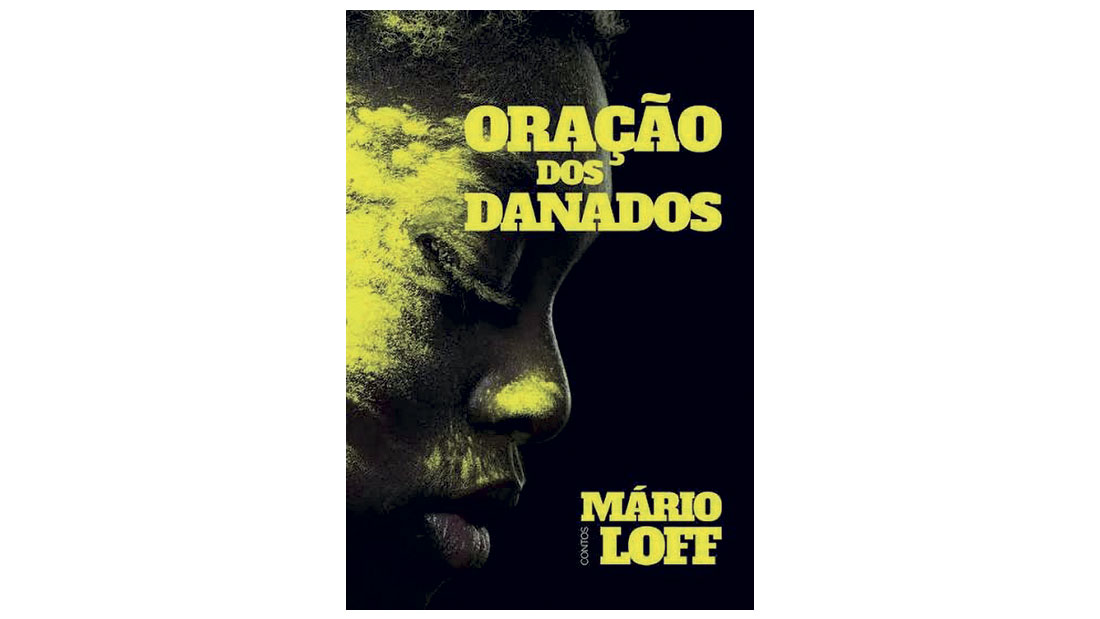
Mário Loff works in the former Tarrafal concentration camp – one of the stigmas of the Salazar dictatorship – located on the island of Santiago (Cape Verde). It is impossible not to take this detail into account when reading the latest novel by the Cape Verdean author, Prayer two damaged, in which the great themes that surround the archipelago, which became independent from Portugal just 51 years ago, appear and disappear.
The Cape Verdean writer Mário Loff reinforced his identity “against the current” in December 2025 when the Provacultura publishing house, created by him, launched his second work, Prayer two damaged (Prayer of the damned). The fact is that Loff is not only a playwright, cultural activist, literary mediator and poet, a set of professions that contributed to his debut as a writer in 2019, with the publication of the acclaimed work The kidnapping of the first lady. His literary identity “against the current” is due to the fact that he was born in Tarrafal in 1981, a city that, until the Carnation Revolution, symbol of the fall of the dictator Salazar in 1974, has gone from misfortune – for hosting a concentration camp – to boasting the imposing Museu do Campo de Concentração de Tarrafal. And it is in this place where Loff has worked since graduating in History and Heritage, cultivating the “testimony” genre to collect stories, create memory and promote their dissemination.
Prayer two damaged It is organized into nine apparently independent stories, but linked by four opposing forces: trauma, memory, the ghost of Salazar and a proposal for the creation of a Cape Verdean national identity that is committed to not stopping looking at either Africa or Europe. Loff distances himself, in this sense, from the two main lines of hegemonic thought that have emerged in African postcoloniality. The first advocates, when creating national identities, a return to the precolonial past, and the other advocates forgetting the past and looking towards the West.
In Prayer two damaged, Loff cultivates magical realism and politically incorrect language. In the case of the first story “Hydraulic Roosters (water and bread)”, based on an impossible love story between a baker and a water well builder, the outcome occurs thanks to the ghostly appearance of the male couple. And it is he who tells of the adversities of his city, from drought, impunity and poverty. Now, in other stories such as “Crafts to love a whore”, “The mouth of the island”, “A badia in power” or “The beach of sad whores”, Cape Verde appears as a challenged country. Mário Loff, in an interview he offers from Tarrafal, assures that his new work confronts, among other aspects, a unique reality: “Cape Verdeans do not fully know who they are.”
The first question he answers is simple: Prayer two damaged It barely has anything to do with religion. Nobody prays. Nobody gets condemned. Cape Verde, he insists, is a unique anthropological case, born from the often violent encounter between Africa and Europe. Despite this reality, the author is proud as a citizen, because both he and others have worked to create their own identity from two fragments: «We live in a permanent tension: Africanity versus Europeanness, Creole versus Portuguese, islands versus nation, tradition versus modernity, diaspora versus archipelago. These tensions are not a defect, they constitute the very material of which we are made. Our greatest wealth has always been the people. However, from a very early age, we learned that surviving meant leaving. Emigration ceased to be just an economic phenomenon and became almost a structural element of national identity (see MN 715, pp. 18-23). Many Cape Verdeans grow up with the conviction that success is always found elsewhere and that the islands represent only a starting point. “Those who stay tend to live between what comes from Africa and what comes from Europe.”
Prayer two damaged It collects stories of characters who live in internal and external exile, who die, who are resurrected, but always return to dismantle networks of corruption, bring water or bread to the community, recover lost love… Mário Loff considers that “a national identity is built when a people begins to generate original thought, institutions that reflect their historical experience and their own responses to their own problems.” It is in that sense that, he says, “Cape Verdeans may not yet fully know who they are.”
