
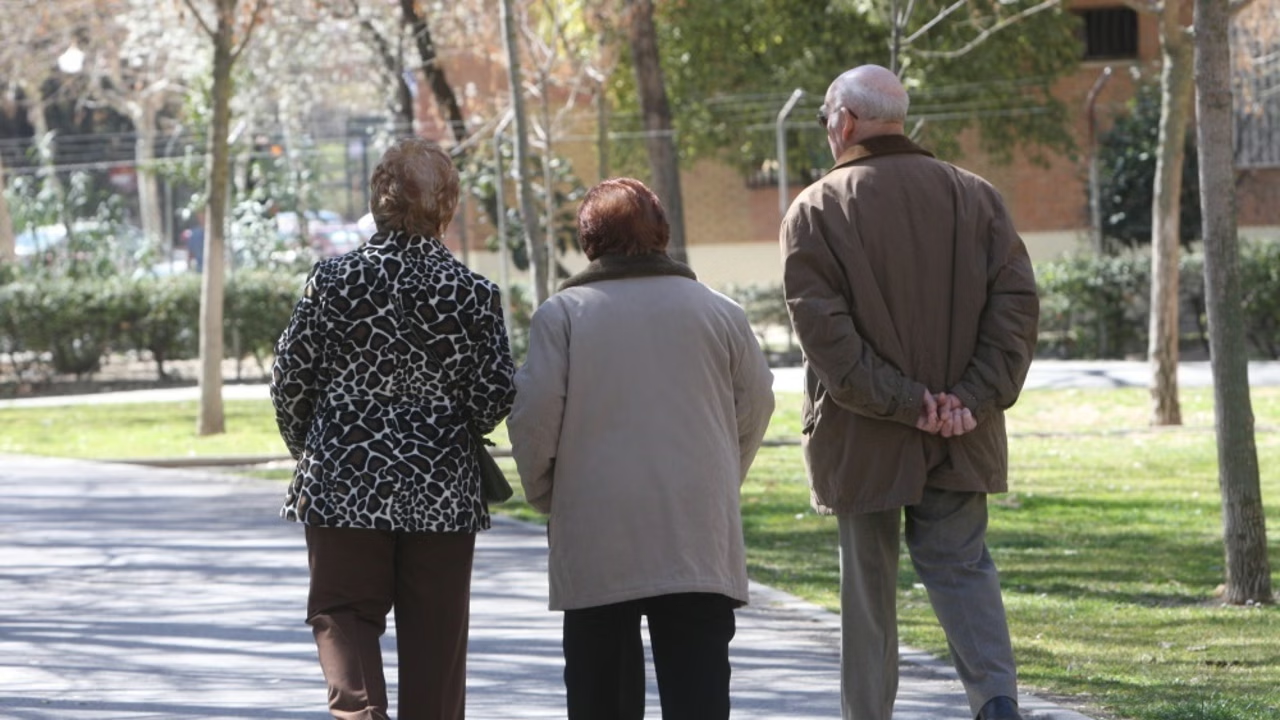
In Germany, a commission appointed by the Government to reform the pension system suggests a gradual increase in the retirement age, in harmony with the increase in life expectancy.
General media such as the “Süddeutsche Zeitung” or “Deis Spiegel” have been able to access this report; and this Tuesday it will be handed over to Chancellor Friedrich Merz. It establishes a series of calculations according to which by 2051 the retirement age should reach 67 years, increasing progressively until reaching 71 in 2092.
The current report already foresees a gradual increase in the retirement age, which is set at 67 years for those born in 1964. Its authors defend that these proposals complement each other, so they would only have the expected effect if they are accepted in their entirety.
One of the key aspects of this reform plan is the so-called “Swedish retirement”, in which part of the contribution to the system will be invested in the capital system, and its dividends must complement the pension in the future.
A measure that arises to compensate for possible cuts derived from other elements such as the increase in pensions paid according to the pay-as-you-go system will be done more slowly, taking as guidance the number of new retirees and those entering the labor market.
The benefits of this “Swedish retirement” would only begin to be seen by those who retire in 2040, which is why a transition rule is suggested with which to compensate, using money from the treasury, retirees from previous years.
They also consider reducing the possibility of early retirement
Currently, early retirement is contemplated for people who have 45 years of contributions, who can retire two years before reaching the regulatory age. In Germany, it is also contemplated to reduce this possibility.
The obligation to contribute will also be imposed for groups that until now were exempt, such as the self-employed, directors of public limited companies and deputies; with the purpose of increasing the collection of the system.
In the case of the self-employed, their inclusion in the system should also have, according to the commission, a beneficial effect in the fight against poverty in old age.
