
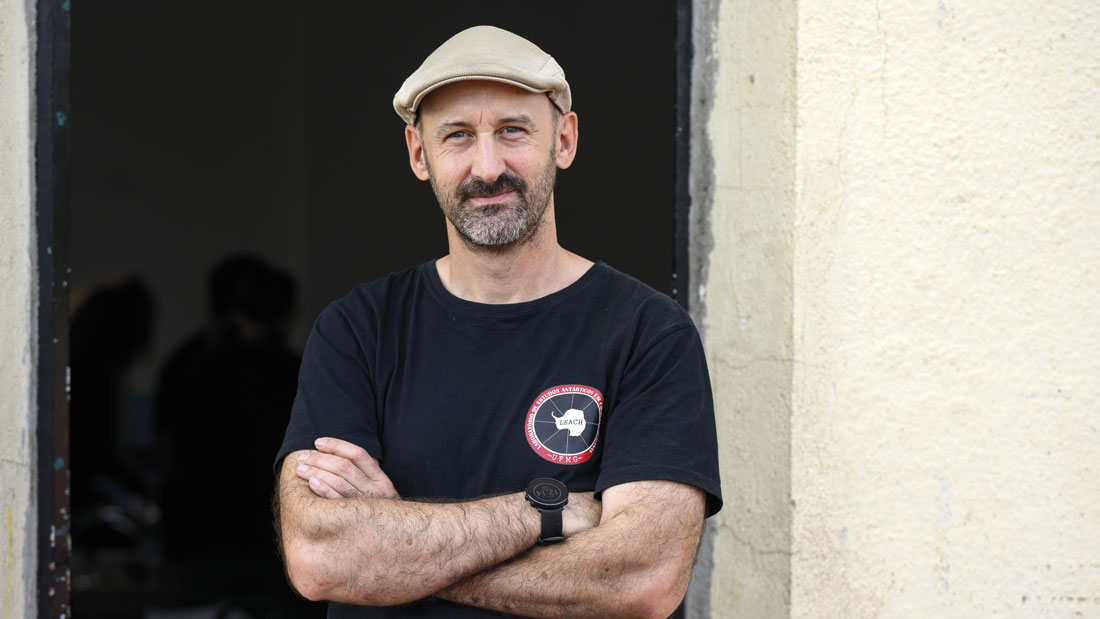
Alfredo González-Ruibal, archaeologist
By Alfonso Masoliver
Alfredo González-Ruibal (Lugo, 1976) is a reference in African archaeology. CSIC researcher, he has been working in the Horn of Africa for more than 25 years. His work, which focuses both on remote societies and the effects of contemporary conflicts, combines archeology with anthropology and historical memory. One of his obsessions is the formation of local teams that work on the ground.
How does a Galician end up working on archaeological projects in the Horn of Africa?
It was by chance, because I had never thought of dedicating myself to African archaeology. What happened is that in my department at the Complutense University, that of Prehistory, there was a very strong tradition of studying northeast Africa as a result of the campaign to rescue the Aswan Dam in the 1960s. Since then, there was a presence of archaeologists from my department in Sudan and Egypt. My professor at the time, Víctor Fernández, who directed my thesis, had participated in excavations in northern Nubia in the 70s and I started with him in Sudan. It was on the Blue Nile, in the south of the country. Just the next year, my professor started a new project in Ethiopia. It has been a process of advancing southwards from Egypt, Sudanese Nubia and the Blue Nile towards Ethiopia. I have continued the journey to the east, because from there we started working in Somaliland, Djibouti and Somalia, where we are now.
Why does archeology seem to be more developed in East Africa than in West Africa?
Well, it depends. There is a very strong Egyptological tradition that covers both Egypt and Sudan, which is an entire field of study. And there are thousands of archaeologists who have worked there. Then there is a fairly strong tradition in Ethiopia, but in West Africa there is also a lot of archaeology, especially a very strong French-speaking archeology that has done a lot of research since colonial times. The English are in Tanzania and Kenya with Swahili archaeology, which is also powerful, but in reality everything is quite fragmentary. There have been enormous gaps in spaces that have never been investigated in more inaccessible or jungle areas. Perhaps the most complicated thing is the center, and I think of the Congo and central Africa. Due to the difficulties it presented, archeology has developed later in these sites. In fact, it began to take off in the 70s with the advancement of infrastructure. In reality, we don’t know what we can find there. When we began to enter jungle areas there were huge surprises, like in the south of Benin. A Swedish team began prospecting areas of tropical rainforest 10 or 15 years ago and have found cities from 2,000 years ago with a surface area of 200 hectares.
Alfredo González-Ruibal. Photographs: Álvaro Minguito.
Are there projects subsidized by local governments that work in their countries? Or is it usually a collaboration between foreign teams with local teams?
There have been national teams working there for years and there are very good people. In some places more than others, of course. In Ghana, for example, there are many professionals trained locally and some in foreign universities who now work there and have a very good international level. In Sudan too, but today it is a catastrophe. There were trained archaeologists there, very good professionals who were the ones who carried out most of the research in the country. The excavations were done by them and to a very good standard, but all of that has been interrupted by the war. Then there are areas where there is nothing: Central African Republic, Chad, Niger… These are territories where there is no local archeology or there are very few local professionals trained outside.
These last countries that you mention are experiencing complex security situations. Speaking of which, sometimes they go to countries where there are active conflicts. How are these risks avoided so that the work can be done naturally?
We are not journalists, so we avoid conflicts as much as possible. What we always try is to inform ourselves with our local colleagues and see where it is reasonable to investigate. We never want to take risks. Now, it is true that the area where I work the most, which is the Horn of Africa, is very volatile and unstable and you never know what is going to happen. In Ethiopia, since 2013 we have not had a peaceful campaign in which nothing has happened.
Does the excess of romanticism that usually surrounds African traditions often cause them to be pigeonholed? Can we deconstruct those stories?
Part of my work in Africa, especially the early years, had to do with conflicts between Africans related to slavery or over Ethiopian imperial conquests. I am often told that I think all Africans are wonderful and that I idealize them. I respond that I’ve been going there for 26 years and I think I have enough nerve not to idealize anyone. At a historical level, sub-Saharan Africa is full of very complex and often very contradictory societies, like any other part of the world. There are terrible phenomena of slavery and oppression, like anywhere else. But it is also true, and this interests me more and more, that Africans have been able to develop institutions for conflict resolution, create egalitarian mechanisms and avoid the most excessive forms of oppression or despotism…. That is to say, both things exist, and I believe that anyone who studies African societies is aware of that complexity and those ambivalences. It is also true that increasingly, and especially in my informative role, I tend to put emphasis on the positive aspects of Africa. It is not that I am not aware of all the problems and horrors that happen, but since those horrors are very present and journalists are doing a fundamental job there, I believe that my job as a researcher of the past is to present other pasts, other trajectories of African societies that are not necessarily marked by conflict, by genocide or by confrontation, but on the contrary. This is where phenomena such as hospitality, coexistence between very different cultures, between religions and cultural borrowing come in. And that is what I want to emphasize, a little to counteract the negative aspect that comes to us.
What should be done with African heritage at risk? Should we intervene or not?
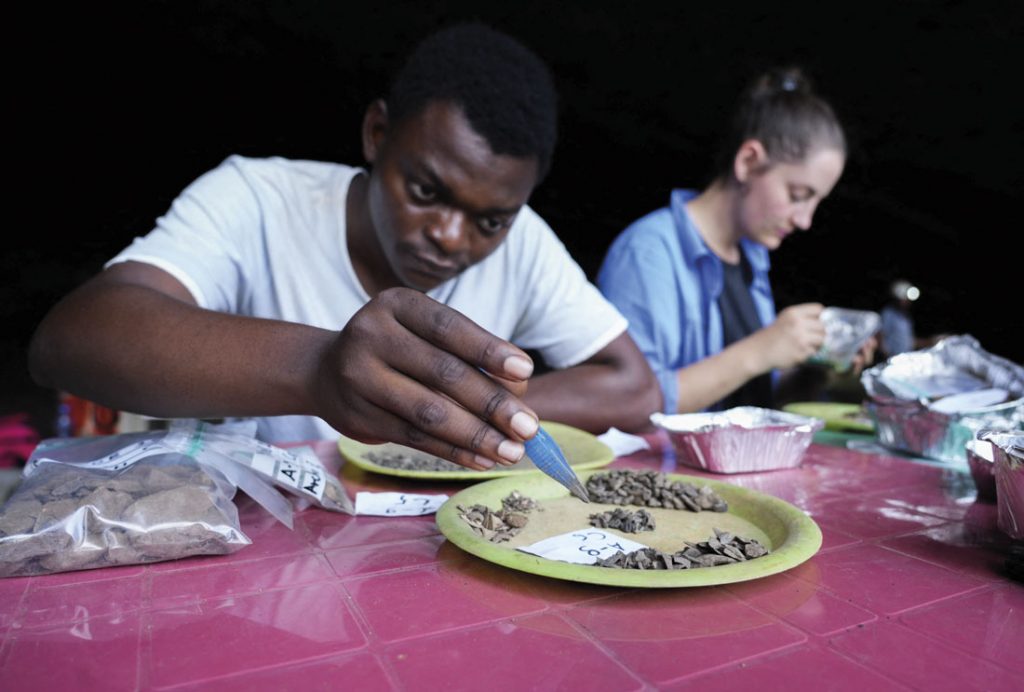
In fact, so that their heritage can be safeguarded, they are often the first to request international cooperation in these cases. Another question is what we do in ordinary situations and where there is no catastrophe or war. It is true that many times countries have neither the interest nor the means to preserve this material. I did four campaigns in Equatorial Guinea and stopped working there. One of the fundamental reasons was that the Government did not guarantee the protection of the objects that we were unearthing, which meant they were going to be lost or destroyed. They were amazing objects, some of the most spectacular from the Iron Age that I have excavated. I said to myself: “Look, it’s better for them to stay underground and be able to remain there for several thousand years, than to dig them up and let them go to waste.” There are countries where there is still an absolute absence of heritage sensitivity. It is true that there are other (countries) that have very well established protocols and what they need is international help to be able to maintain them. There may be no means, there may be a need for help, but this idea that they don’t know how to take care of it… Maybe it’s not that they don’t know, it’s that they can’t, right? I understand that for a country like Ethiopia, without going any further, which has serious needs in health and education, perhaps a museum is not the most important thing. Furthermore, there are times when we forget about the speck in our own eye: castles are continually falling on us. In Spain we were bombing the Prado Museum 80 years ago. Or the museums of Berlin 70 years ago. That is to say, no society is immune to the destruction of its heritage, voluntarily or involuntarily.
The existence of large kingdoms with highly developed structures is well documented. Why do people still not know that these kingdoms had a presence on the continent?
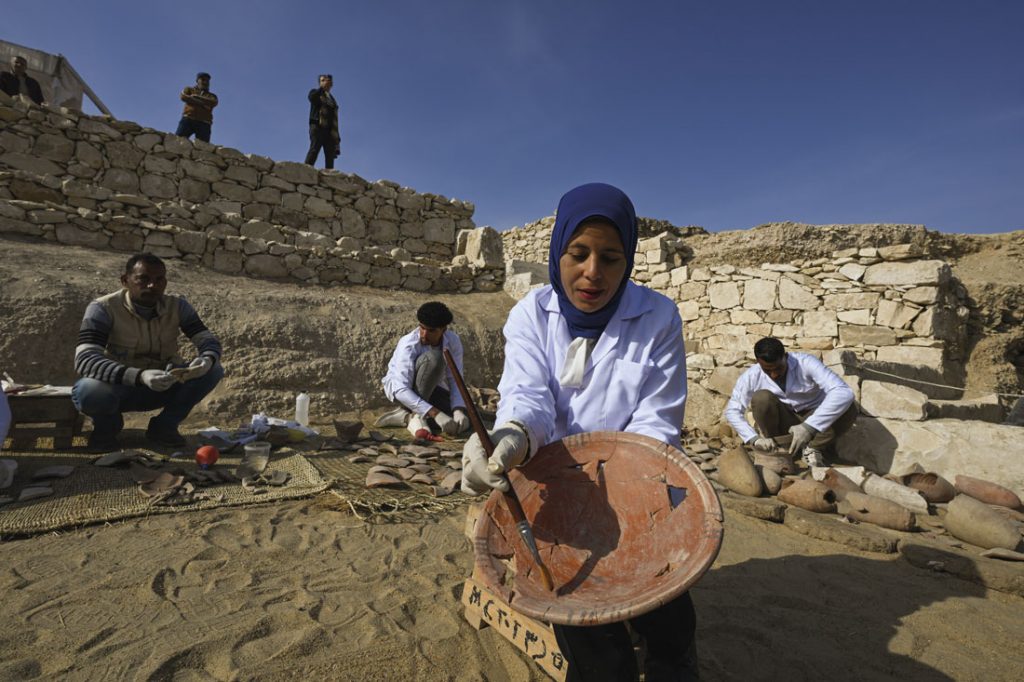
There is an important issue: a good part of the most complex African societies were dismantled with colonialism or previously, with the Atlantic slavery market, which represented a very strong disruption in African societies. All the societies that the European powers colonized from the mid-nineteenth century were, to a large extent, societies that were already ruralized, although they were not necessarily ruralized in origin, or were in clear decline. A very obvious example is that of the Swahili cities. The entire East African coast was an essentially urban society. People lived in most cases in cities. Starting in the 16th century, the Portuguese arrived and these cities began to decline. Some before, others after, already clearly from the 18th century onwards. When the colonization of Europe arrived, in the 19th century, what remained was a reflection of what had previously been. I also think of the wall of Benin, for example, which the English themselves destroyed. In addition to this, what was most striking for Europeans were the rural societies, evidently, whose inhabitants were those who were naked and with a spear. There was not such a strong othering in the case of urban areas.
Do you want to add anything else to close?
I always emphasize the idea that Africa’s past was very different from the present and that the future can also be very different. Many times we think that Africa is condemned to live in this present of misfortunes and perpetual conflict, but in reality we are talking about a present that is a very short period of time. There are societies that have been splendid, have lived in peace, have developed and have been prosperous for centuries and centuries. Nobody says that can’t happen again. I believe that there is part of that knowledge and that memory of another way of doing things that is still present in African societies. What happens is that the part of violence, predation and despotism has predominated in recent years. But there is that utopian element and it can be rescued.
