
The Senegalese capital hosts the Youth Olympic Games, the first Olympic event in history to be held in Africa.
By Enrique Bayofrom Dakar (Senegal)
The Senegalese capital is preparing with overwhelming enthusiasm to receive the 2,700 athletes and over a million people who are expected to visit the city for the celebration of the Youth Olympic Games (YOG26). Boys and girls between 15 and 18 years old from 207 countries will fight for medals from October 31 to November 13.
Everything moves in the city. Young volunteers clean the streets, municipal workers paint walls, fences and pedestrian crossings, technicians install tents, posters and emblems with the YOG26 slogan in French and English: “Africa welcomes, Dakar celebrates.” A frenetic activity that, however, is not exempt from criticism. For Brother Ferrán Sans Pascual, from the Piarist community in the Senegalese capital, “Dakar has become a large construction site with constant closures of streets and routes blocked by the construction of facilities against the clock. This collapse is aggravated by the discomfort of residential neighborhoods, such as Castor, which suffer recurrent flooding and sewage problems, feeling that the authorities have prioritized the Olympic aesthetics over the daily well-being of the neighbors.
Police, gendarmes and soldiers have been deployed to every corner to guarantee security in an already very quiet city. They are seen at every roundabout and avenue, but, above all, along the A1 highway that connects the airport with the city and next to which is the brand new Abdoulaye Wade National Stadium of Senegal, which will host the opening ceremony of the YOG26 and most of the athletic disciplines.
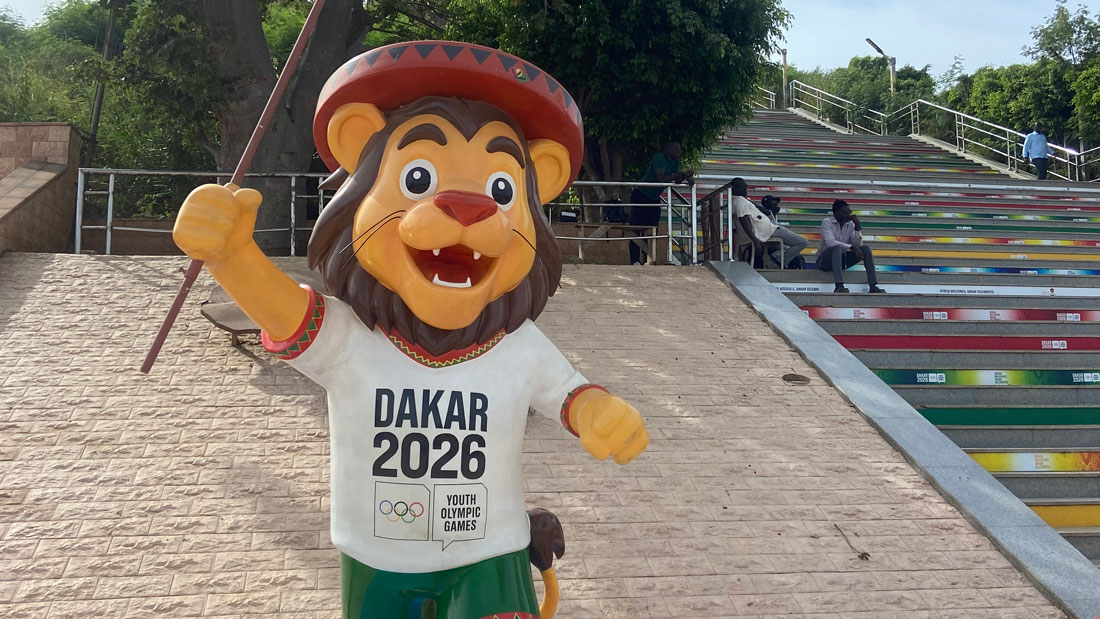
It is impossible to escape the impact of a sporting event that floods everything in Dakar. Posters and advertisements, luminous arches and the omnipresent mascot, Ayo, whose name in the Yoruba language means ‘joy’. Hundreds of figures of more than two meters of this animated lion have been displayed in the city, in which he is seen practicing each of the 25 sports disciplines that will take place in this great sporting event.
The television news repeats the same message over and over again: “Dakar enters history by holding an Olympic event for the first time in Africa.” An argument that has permeated and filled the Senegalese with healthy pride and that is also used by municipal and national politicians, with President Bassirou Diomaye Faye at the helm, to justify the strong investment made at a time when the country is going through serious economic difficulties due to its enormous public debt. Of the more than 300 million euros in the YOG budget, some 190 million will come from the coffers of the State and the Dakar City Council, whose investment is expected to have a direct impact on the population, mainly due to the rehabilitation and construction of infrastructure. In the absence of evaluating the direct economic impact that athletes and visitors will generate in the city, those who complain are some residents of the city. «Informal traders and vendors in Dakar’s traditional markets have seen their incomes drastically reduced. The public works that lasted for months and the evictions of pedestrian areas to clear access to sports venues have severely damaged their daily activity,” says Brother Sans Pascual.
The Catholic Church has not hesitated to invite young people from the groups it accompanies to get involved as volunteers. Mons. André Gueye, archbishop of Dakar, will celebrate this Friday, October 30, a Eucharist in the Cathedral of Our Lady of Victories to pray for the success of the Games.
The YOG takes place every four years and in Dakar they reach their fourth edition. The first three took place in Singapore (2010), the Chinese city of Nanjing (2014) and the Argentine Buenos Aires (2018). Senegal then committed to holding the 2022 Games which, for reasons beyond the country’s control, have had to be delayed until 2026.
