
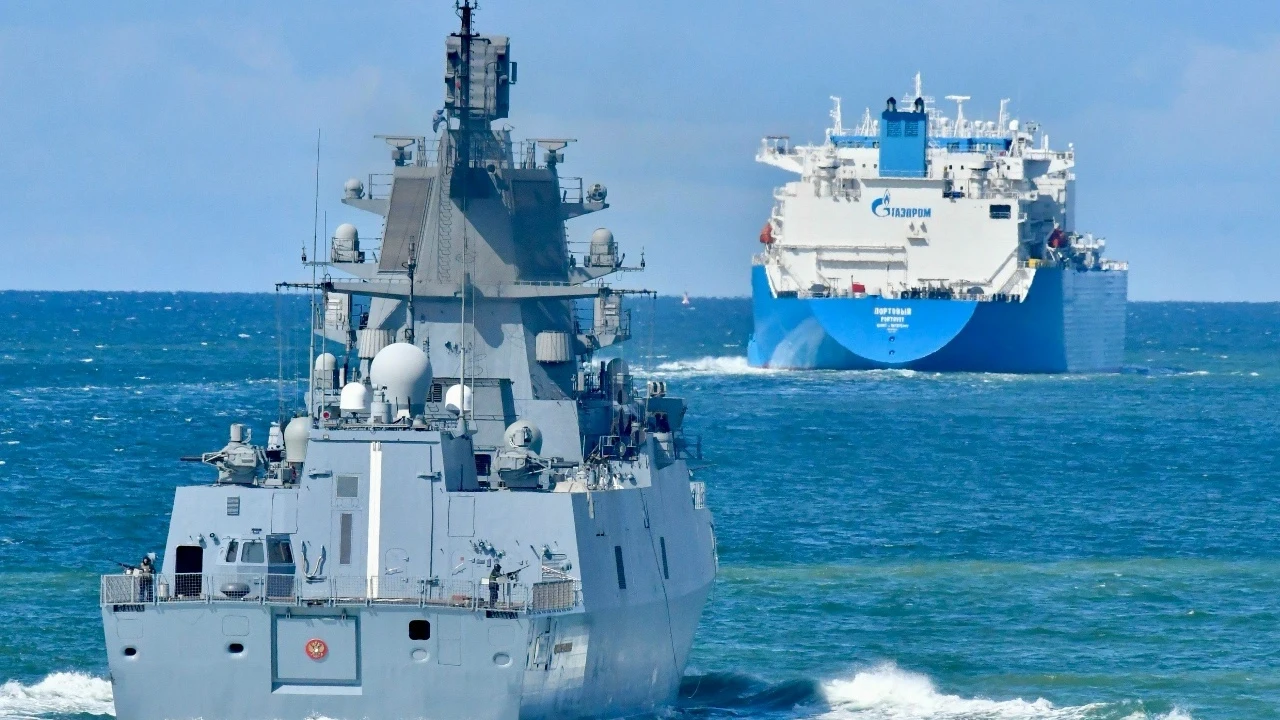
The United States intelligence service has alerted Spain, Italy and France of a possible drone attack by Moscow. This has been reported The World, after learning that the North American country has informed several European countries of the possible Russian operation.
The offensive would be based on launching Gerbera drones, with 600 km of autonomy, from various ships to attack the countries of southern Europe. And given this information, Brussels has admitted to being aware of this attack.
Sources from the European Commission indicate that the Community Executive is aware of the information, stating that the possibility of a Russian attack does not come as “any surprise” to them.
“We have seen the information and it does not surprise us at all,” community spokesperson Thomas Regnier said at the EC’s daily press conference.
Russia violates European airspace
After being asked about the news published by El Mundo, the spokesperson stated that the European Union is aware of this possibility. As he stressed, the Commission is not aware of a specific alert about these possible attacks, but rather about the information that is circulating.
“We know that our airspace is being tested and that it has been violated on several occasions. We know that several hybrid attacks directed against many of our Member States are taking place,” he detailed.
Drones used by Russia
According to information collected by anonymous Lithuanian Defense Ministry sources, the drones used by Moscow would be ‘Gerbera’, a Russian device two meters long and weighing 18 kilos capable of traveling up to 600 kilometers at about 160 km/h.
Russia’s plans would involve launching them from ships, so the drones would have to travel a long distance. Regarding its explosive capacity, its charge would not be used to destroy a large facility, but it would be used to cause a fire, damage exposed equipment or temporarily close a port or airport.
In the event of an attack, the European spokesperson has indicated that it would be a matter “of national authorities”, although the EU has a long history of supporting its Member States in case of need.
