
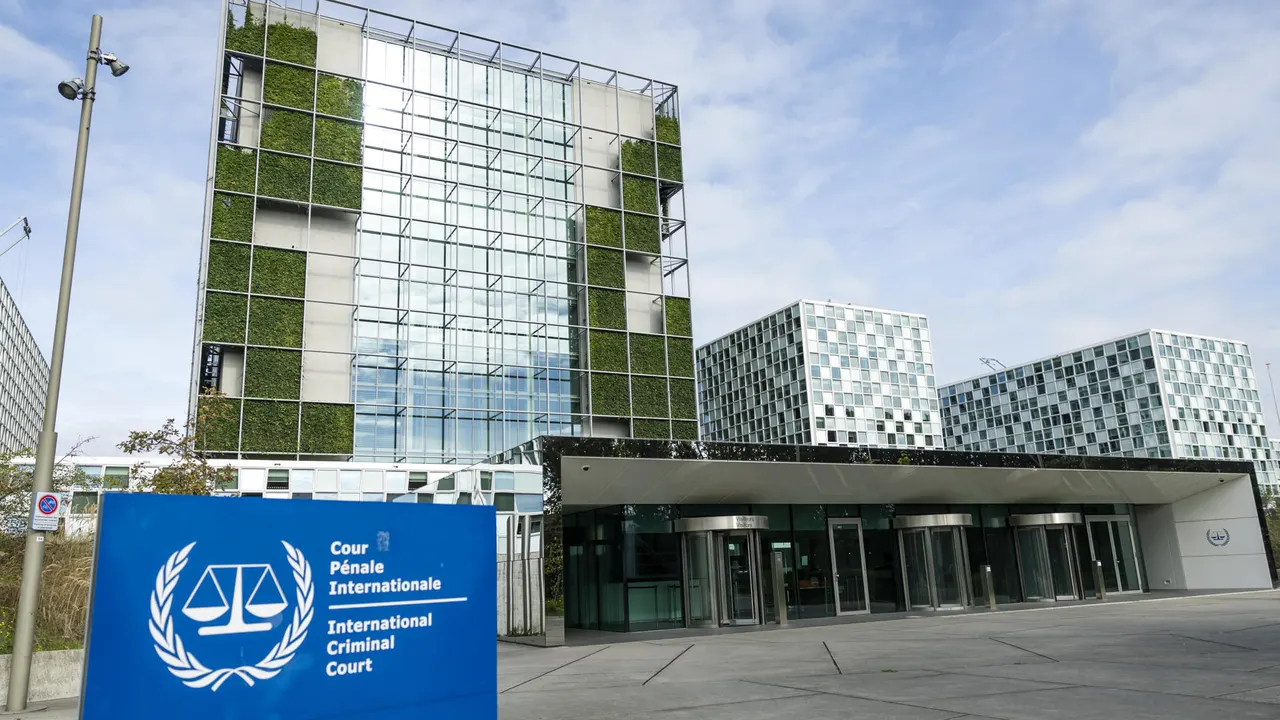
The International Criminal Court (ICC), subject to US sanctions for its genocide investigations in Gaza, has been awarded the 2026 Sakharov Prize for Freedom of Conscience, the annual prize awarded each year by the European Parliament.
This has been decided by the Conference of Presidents, which brings together the president of the institution and the leaders of the political groups. The award ceremony will take place on December 16 in the French city of Strasbourg during the plenary session.
“The European Union is founded on respect for multilateralism and international institutions, and this award recognizes the important work of the court in defense of International Law and justice,” said the president of the European Parliament, Roberta Metsola, in an institutional statement.
What does the prize consist of?
The Sakharov Prize, worth 50,000 euros and named in honor of the Soviet physicist and political dissident Andrei Sakharov, recognizes the work of individuals, groups and organizations that have contributed significantly to the protection of freedom of thought.
Since its creation in 1988, great personalities have received it. In 2025 it was awarded to the Belarusian journalist and activist Andrzej Poczobut and the Georgian journalist Mzia Amaglobeli, while in 2024 it was awarded to the Venezuelan opposition leaders María Corina Machado and Edmundo González Urrutia.
This year’s award will be presented at a ceremony on December 16 during the plenary session of the European Parliament in Strasbourg, France.
What is the TPI
The court was born in 2002 with the idea that neither heads of state nor military commanders would be left out of the reach of justice for more serious crimes, and more than two decades later, it investigates conflicts from Ukraine to Palestine and Afghanistan, while facing strong political and financial pressure from the United States.
Created by the Rome Statute, the International Criminal Court has 125 member states that grant it jurisdiction to try people for genocide, war crimes, crimes against humanity and aggression when national justice is unable or unwilling to do so.
In recent years, it has been at the center of some major geopolitical disputes. In 2023, the court ordered the arrest of Russian President Vladimir Putin for his alleged responsibility in the deportation of Ukrainian children from Russian-occupied areas.
Likewise, in November 2024, it approved arrest warrants against Israeli Prime Minister Benjamin Netanyahu and his former Defense Minister Yoav Gallant for alleged war crimes and crimes against humanity in Gaza.
Trump’s sanction to the court
Following the court’s convictions and accusations, Donald Trump’s government announced several weeks ago strong sanctions against the International Criminal Court in an attempt to dismantle an institution considered “rebellious.”
The announcement came hours after former judge Navi Pillay was awarded the 2026 Nobel Peace Prize for her efforts to promote peace and international law.
Although the United States has already penalized 17 judges and court officials, the measure announced by Marco Rubio, Secretary of State, sanctioned the institution itself with the aim of collapsing its ability to operate financially.
