
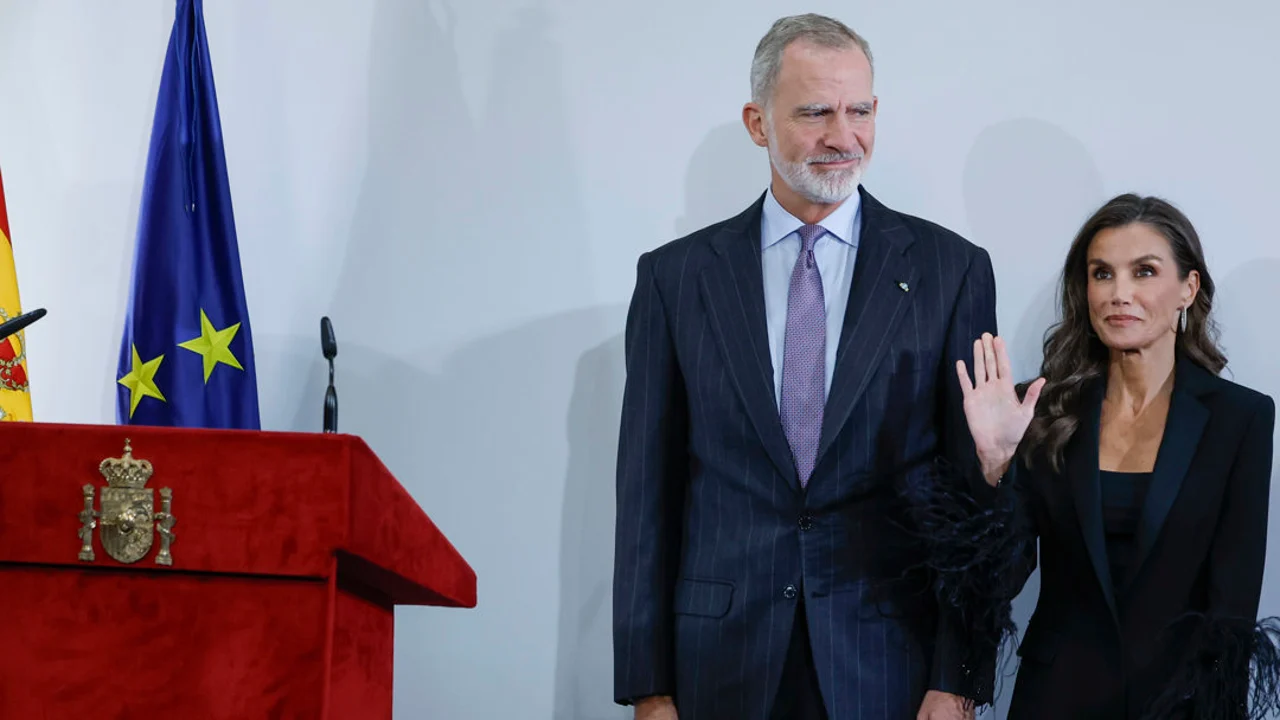
This Monday is October 12, the National Holiday, but what is interesting for the purposes of international politics is going to happen a few days later. On October 13 and 14, the kings of Spain will visit Ceuta and Melilla for the first time since 2007, just at a time when the massive arrival of migrants to the autonomous city is not resolved and the border crisis caused by Morocco continues. Why is it happening now and how is this going to affect Morocco?
Fernando Arancón explains in The World Order of Julia in the wave that this visit has a very important “level of detail and symbolism”, and proof of this is that this will be the first time since Alfonso XIII that the kings of Spain sleep in Ceuta. The visit that Don Juan Carlos and Doña Sofía made in 2007 was only five hours and they left, which was already a restrained gesture on the part of the Government at that time.
“So that you can see the level of how these types of details were measured in previous visits, visiting Ceuta and Melilla, yes, but sleeping was already overkill in 2007. Well, now they are going to sleep and that is one more point of reaffirmation of Spain’s political position. Everything is very measured and even so, in 2007, a very important diplomatic crisis occurred between both countries: Morocco withdrew the ambassador in Madrid and the Moroccan king came out publicly to criticize this visit,” explains the international expert.
Now the situation is the opposite because the aggrieved party is the Spanish. It must be remembered that this visit is the reaction of the Spanish Government to that border crisis with Morocco that led to a migration and humanitarian crisis that still persists several months later. But it must be remembered that, just as the lukewarmness of the Spanish Executive has been widely criticized, “it is true that a visit from the kings is one of the most powerful tools that Spain has to keep Morocco at bay in its territorial claims.”
What is known, what is intuited and what is not known about the visit of the kings to Melilla?
Fernando Arancón explains what he knows, what he intuits and what he does not know about the visit of Felipe VI and Queen Letizia to the autonomous city. What he knows is that for “Morocco this visit is going to feel like a kick” because it is one of the most “unfriendly” gestures that can be received from Spain because it is a reaffirmation of Spanish sovereignty over Ceuta and Melilla”, the “most powerful” symbolic gesture and the reason why the Spanish Governments use it “with a dropper”, twice in the last 20 years.
What he senses is that Morocco “is going to keep it to itself” because a reaction now, with the previous crisis being so recent and with Europe watching, “is not very intelligent.” But for them, “this is practically an insult and sooner or later they will force another immigration crisis, I suppose on the next Government, as a way of collecting this.”
What Fernando Arancón does not know is when this possible reaction will occur or when the public discourse in Morocco will be. On Friday, King Mohammed VI said that he did not like what was happening (he did not mention Ceuta) and that the current cooperation model with Spain, including migration, was obsolete and had to be changed: “Spain is still insisting on that relationship with Morocco and Morocco is saying that we have to change strategy. I don’t know if they will opt for a discreet line to not attract attention or, as in 2007, they will force a diplomatic crisis to victimize themselves and try to capitalize a little on the situation.”
Spain cancels a high-level meeting with Algeria
This situation of tense calm between both countries is the possible reason why the Spanish Government has canceled a high-level meeting that was scheduled with Algeria for this month of October. Although the argument has been that the electoral call disrupts the entire agenda, Fernando Arancón believes that it is an “excuse” because the Government can continue to have foreign activity, especially if it was already planned: “I think this is more about not angering Morocco even more,” he points out.
“Canceling a RAN is relatively common and is not a drama either. It was designed months ago and was going to be a new gesture of rapprochement between Spain and Algeria after that 2022 crisis. In fact, Sánchez was in Algeria a few months ago (…). Let’s think about the situation for Rabat: in just a few weeks, the kings of Spain visit Ceuta and Melilla and the Spanish Government meets with the Algerian government, which is its biggest geopolitical rival,” he explains.
According to the expert, if we look at the Moroccan perspective, “it has to cause tremendous panic”: “It is assumed that the Spanish Government wants, while sending a strong message, not to escalate the situation”, so, at the very least, “it was prudent or reasonable to postpone this with Algeria”: “This does not mean that we do not have to cultivate good relations. It seems that a complicated winter is coming in the international energy markets and we are not in a position to anger or make a mess of one of our main energy partners.”
