
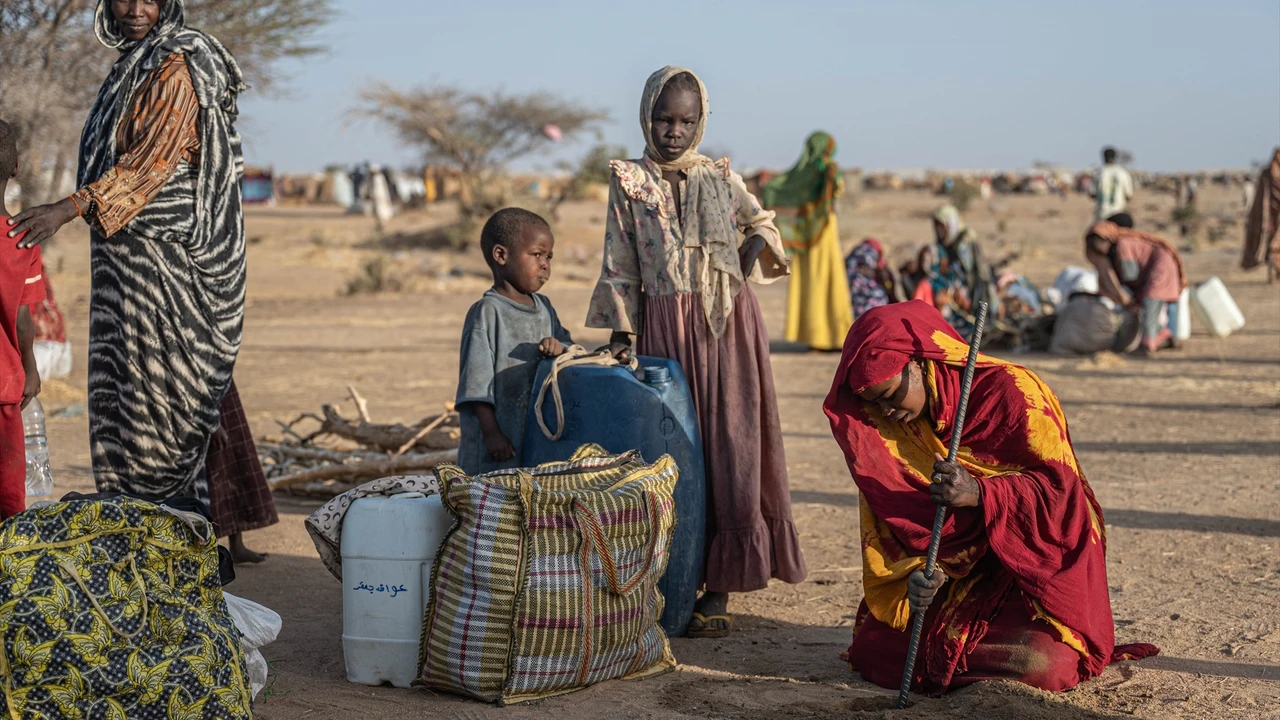
According to the UNHCR report “Paths to the future: Education, opportunity and self-sufficiency”, 44% of refugee children (about 5.8 million) remain out of school due to the drop in funding. And Secondary education continues to be one of the main challenges.
Although at the end of 2025 65% of refugee minors of primary school age do go to school, when we talk about secondary education the rate plummets to 32%, with a special impact on girls due – above all – to poverty or child marriage. “Although girls and boys attend primary school in very similar proportions, the gap widens considerably in secondary school, as poverty, protection risks, early marriage and other pressures cause an increasing number of adolescent girls to drop out of school,” the report warns.
Among the countries most affected by this educational gap: Syria, Afghanistan, Ukraine, Sudan or Venezuela
UNHCR warns that the cuts threaten to reverse, even decades, the progress made in recent years. And it defends that education is not only a learning tool, but also a protection tool for an entire generation of young people who have seen their lives interrupted by conflicts, wars or climate change.
UNHCR High Commissioner Barham Salih warns: “At a time of intense pressure on humanitarian funding and development aid, cuts to education threaten to reverse decades of collective investment and deprive an entire generation of young people of opportunities.” That is why they demand that the international community protect funding for the education of such a vulnerable population.
