
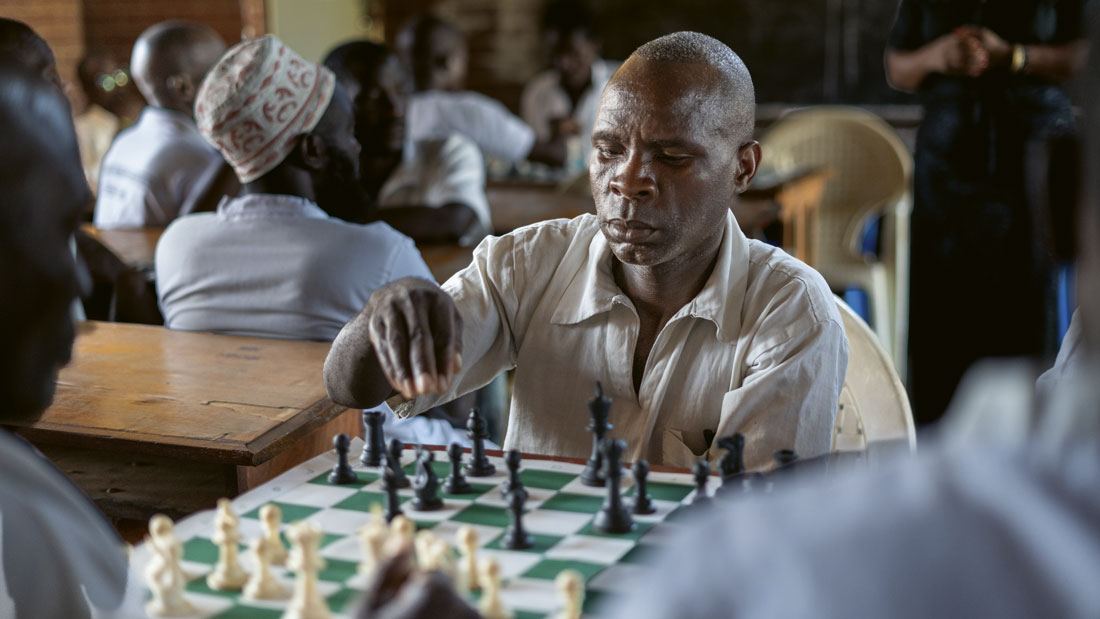
Chess becomes an instrument of human development thanks to the Dadaz Center project.
Chess, also recognized as a sport, is one of the oldest games played around the world. In Malawi, too. But for Susan Namangale it is much more than that. It is a tool to change lives.
Pawn to e4. Pawn to d5. Bishop to b5: check. Pawn to c6. This opening sequence could be seen in the central prison of Lilongwe, in a game between street children, in a rural school in Malawi, in the orthopedic center of a hospital or in a nursing home. Susan Namangale has arrived at all these places, and some more, with her chess boards and pieces. It all started thanks to his sister, who one day brought home a board from school and taught him the tricks. Once he arrived at high school, Namangale – who turned 50 last March – joined the chess club and started playing. Since then, he made it a central part of his life.
The vicissitudes of everyday life, family and work led her down other paths. She stopped playing, but instead engaged in administrative tasks, which led her to the presidency of the Malawi Chess Association. He held that position until 2022, when he decided to make a 180-degree turn in his life. In 2023 he made a bold decision: he left his job as an environmental and social affairs specialist and began to dedicate himself full-time to what he loves, chess. «I decided to focus and build something from nothing, starting from scratch, because it is something unusual in Malawi, in my country, in my situation and in my community. “No one leaves their job because they want to dedicate themselves to volunteering or social work, but I had to do it because I believed that something would come of it.” This new path has led her to try to run as a member of Parliament to promote the introduction of chess in schools. Although he did not succeed in the last elections, held in 2025, he hopes to try again next time, as it was an experience from which he learned a lot.
The academy
It didn’t take him long to get to work and it was in his own home. There he set up a room, where he has several tables with chess boards, and a small room that serves as an office. Prizes, diplomas, medals and trophies accumulate here, because he has also played in chess Olympics. This is the headquarters of the project, which was born under the name Dadaz Chess Academy, waiting for it to continue growing and to have a more spacious place. Namangale dedicates himself to chess here with complete freedom, launches his projects and coordinates the volunteers who are part of the initiative. The name derives from Swahili, a language in which Dadaist It means ‘sister’, as they call her when she returns to her native Nkhotakota. Along with chess classes, he recently also incorporated music, an idea that came together after reading a quote from chess player Siegbert Tarrasch: “Chess, like love and music, has the power to make people happy.” With the expansion of activities, the name of the project also changed, which is now called Dadaz Center. In the future he plans to create a library.
Susan lives chess as more than just a game, as a tool capable of changing lives, including hers: «The experiences I have had throughout my entire life are due to chess. (…) It is taking me to places I never imagined. There I connect with people. (…) And I think that changed my perception of life. “It has changed my relationships and given me more courage and confidence.” The chess player adds that she even helped him with his education: «When I joined the chess club, I started playing and solving problems. That helped me, because I changed my way of approaching mathematical problems and I got very good grades. “That’s how I was able to go to university, because, at that time, you had to have very good grades to be able to enroll.”
Prisons, streets and towns
Being aware of the change it produced in herself made her believe in “the potential (of chess) to change a person.” That is why she started the prison program that is, as she herself says, her “star project.” In Namangale’s opinion “it is more than chess, it is a transformation.” The project with inmates began with less than 20 people, but has grown and has been implemented in almost all prisons in the country. Currently there are about 1,000 inmates who play chess. In a country with problems of overcrowding in penitentiary centers and with deficiencies in health care for inmates, the chess program is a light of hope, because it shows that something is beginning to change in the system. Namangale affirms that success would not be possible without the support he receives from those responsible for penitentiary institutions, while recognizing that “many countries in Africa still cannot do what I am doing, but I have received a lot of support. “Malawi passed a law on resource reinsertion and my program is in line with it.”
The program goes beyond the prison walls. Once they regain their freedom, the promoter of the Dadaz Center follows them, visits them in their communities and integrates them into the world of chess. Many of them become part of their team of volunteers and teach the movements of the pieces in the squares, which allows them to return to their towns and neighborhoods “not as criminals, but as chess coaches or trainers.” This, in the words of the Malawian, “helps inmates integrate into their community. “When they get there with chess, everyone sees them with different eyes.”
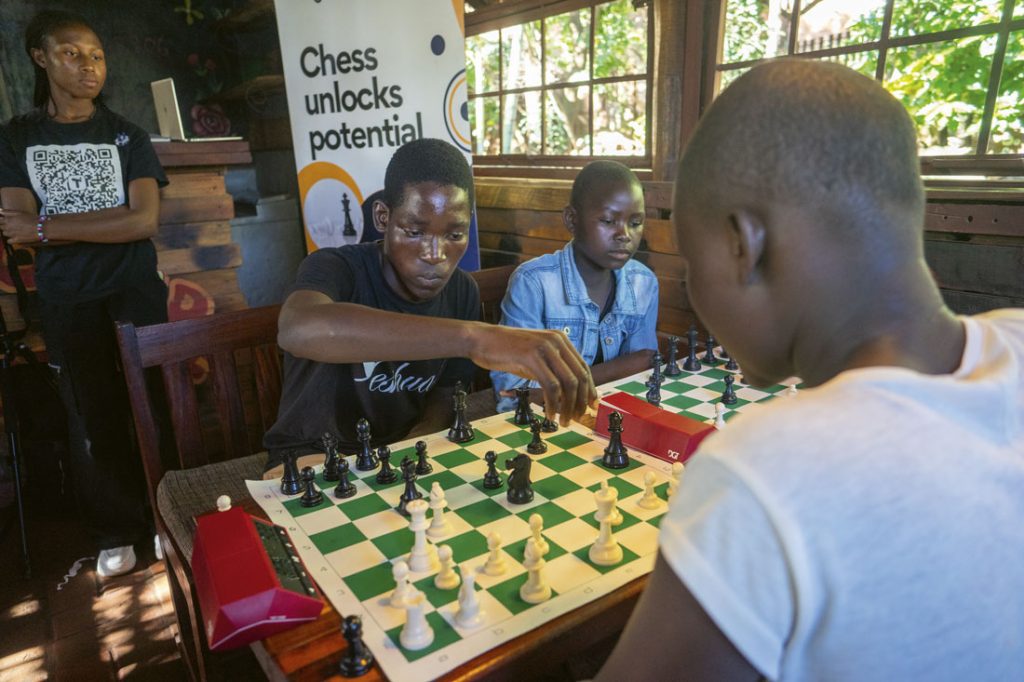
Susan’s energy is not limited to her academy or the prison program. It has also launched an initiative with street children, aware of the vulnerable situation that homeless children go through. In collaboration with the Eden Wellness association, it aims to educate them and get them off the streets, but also to excite them and give meaning to their lives, keeping them away from crime and other scenarios typical of life on the street. Namangale believes that “using chess as a protection tool serves to develop children’s potential.” Accompanied by her, we attended a tournament with several of those boys and girls. Concentrated and silent, they drew up their strategies one after another in each game. Susan Namangale does not hide that one of her dreams is to see some of these kids become chess grandmasters.
However, the Dadaz Center is not limited to these two projects. Another has to do with a kind of democratization of chess in rural schools. “People thought that chess was something for the rich, there was a perception that it was played in private schools and we are trying to change that perspective, taking chess to places that are difficult to access, even on the islands of Likoma and Chizimulu (both located in Lake Malawi), where some of the children had never heard of it,” he explains. For the Malawian chess player, the important thing about this practice is that it acts as an equalizer, because “when they play, they feel equal, they speak the same language: the language of chess.” In addition to these projects, she also introduced the boards in the orthopedic center of the hospital where she went for physiotherapy after suffering an accident, in the Mai Mbambande nursing home, and in the Dzaleka refugee camp (see pp. 36-41).
The Gift of Chess
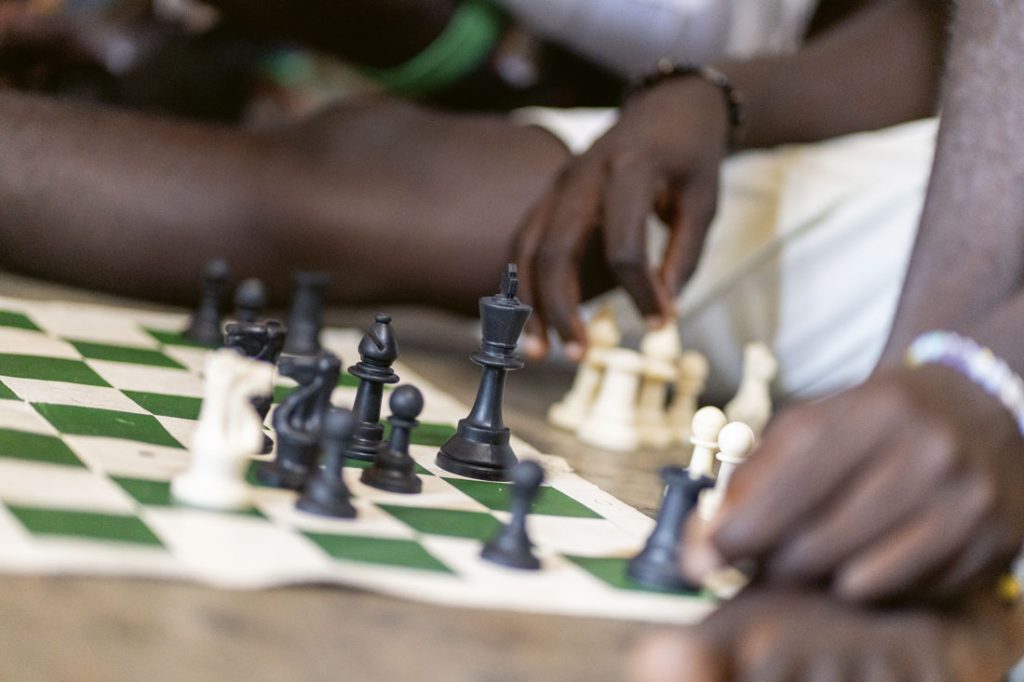
The stage of her life that began with the Dadaz Chess Academy and now with the Dadaz Center has led her to establish contacts around the world. One of them was at the Chess for Freedom conference, held in Chicago (USA). After seeing an advertisement, she wrote to the organization and they invited her as a speaker to present her project in prisons. There, during a visit to a North American prison, he met Russell Makofsky, one of the founders of The Gift of Chess, a North American NGO founded during the pandemic to provide chess boards to people in risk contexts. The organization aims to distribute one million worldwide.
After her meeting with Makofsky, Susan became one of the global managers of the NGO and in a short time distributed more than 1,000 boards throughout Malawi. Thus, establishing networks and contacts throughout the world, the Namangale project in Malawi continues to grow and bring chess closer to every corner of the country.
–What is your favorite chess piece and why?
–The pawn. The reason is that it can be promoted to anything, it can be any piece. I have promoted myself. You can be a little pawn, a small piece, but think about it: you can become a queen. I think there are many lessons to learn from the laborer, from his experience. (…) The world offers you options and I love the experience of being a laborer. When I teach children or prisoners, I tell them: “Look at the pawn. Look what it has become. “You can rise from prison, become something very important and admirable,” explains Namangale.
Pawn to a1: promote to queen. Checkmate.
This sequence may now be being played by someone who spent time in a prison in Malawi.
