
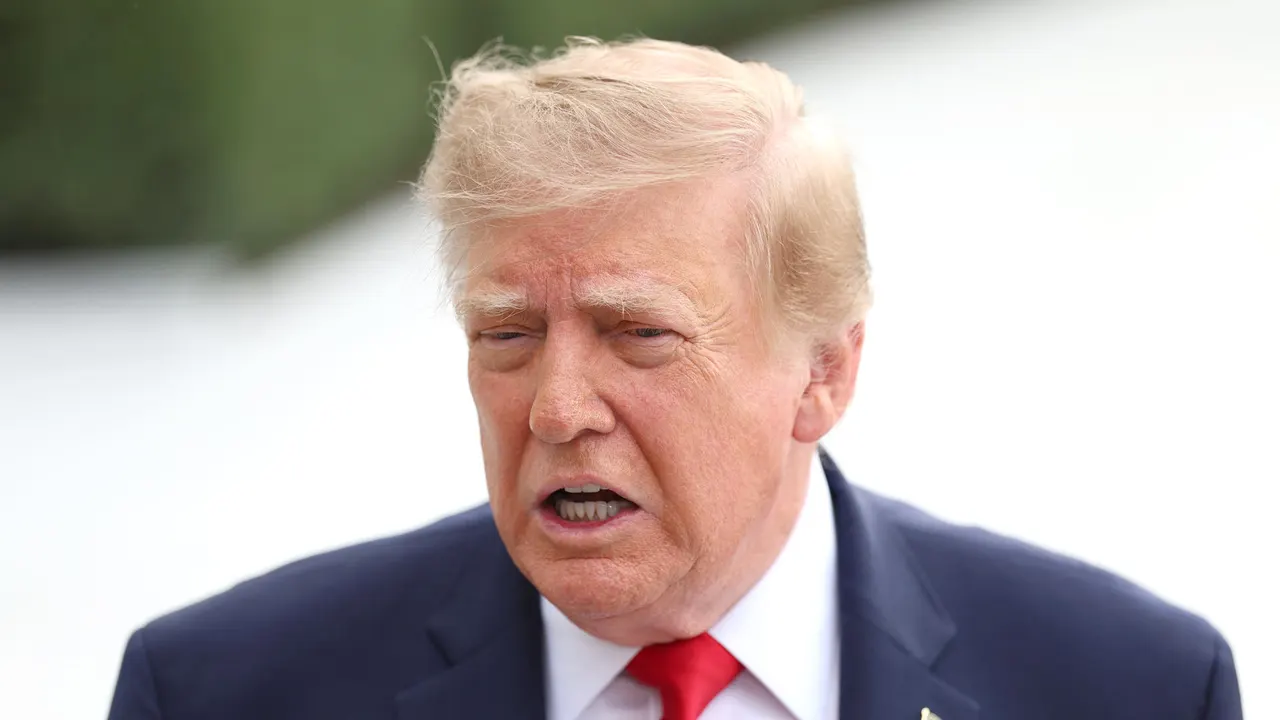
US President Donald Trump has rejected Iran’s seven-day plan to reopen the Strait of Hormuz. “They made a proposal, but I rejected it,” he told the media in the White House gardens before boarding his helicopter.
“They want an agreement, which is fine, but that would not be acceptable,” he added. Despite the blockade, according to the president, the United States has “total control” of Hormuz and “massive quantities of oil” flow through it every day. Iran’s Foreign Minister, Abbas Araqchi, has indicated that he sent the proposal to Washington through Qatar and that it would go ahead “if the American side takes the possibility of an agreement seriously.”
What is Iran’s proposal?
According to the explanations that Abaqchi gave during his stay in New York on the occasion of the UN General Assembly, the seven-day calendar would begin the day after Washington formally accepted the plan. It should be noted that in two days the war will be seven months old.
Among the conditions of the plan, the following stand out:
- Ceasefire: A seven-day cessation of hostilities in the Middle East, including Lebanon and Yemen.
- End of US naval blockade: Tehran demands that Washington lift the naval blockade on Iranian ports.
- End of sanctions on Iranian oil: with this measure, Iran would recover its oil exports to normal.
- Release of frozen assets: they have an estimated value of at least $12 billion.
These measures should be applied during the first four or five days of the plan. The following are the last steps of the roadmap:
- Reopening of Hormuz: Provided that the above conditions have been met, the Strait of Hormuz would reopen on the sixth calendar day.
- Negotiations for a final agreement: Talks between Iran and the United States would begin on the seventh day on a final agreement that would address issues that both sides agree to negotiate, such as the Iranian nuclear program.
“The election now depends on the United States. Iran does not accept coercion, threats or intimidation, and Iran will not renounce its sovereign rights under pressure,” Araqchi assured, while Trump shared on Truth Social an image of the Strait of Hormuz circled and named “Trump strait (Trump Strait).”
The Iranian minister has presented the plan as a roadmap to be able to implement the commitments of the memorandum of understanding reached between Iran and the United States in June, which was interrupted when Trump terminated it after alleged Iranian attacks against ships and oil tankers in the Strait of Hormuz.
After this, Trump reestablished the naval encirclement against Iran and resumed bombing against the south of the country, and Iran responded with attacks against American targets and ships trying to cross a route near Oman protected by the United States. As it was, negotiations for a peace agreement were stalled.
