
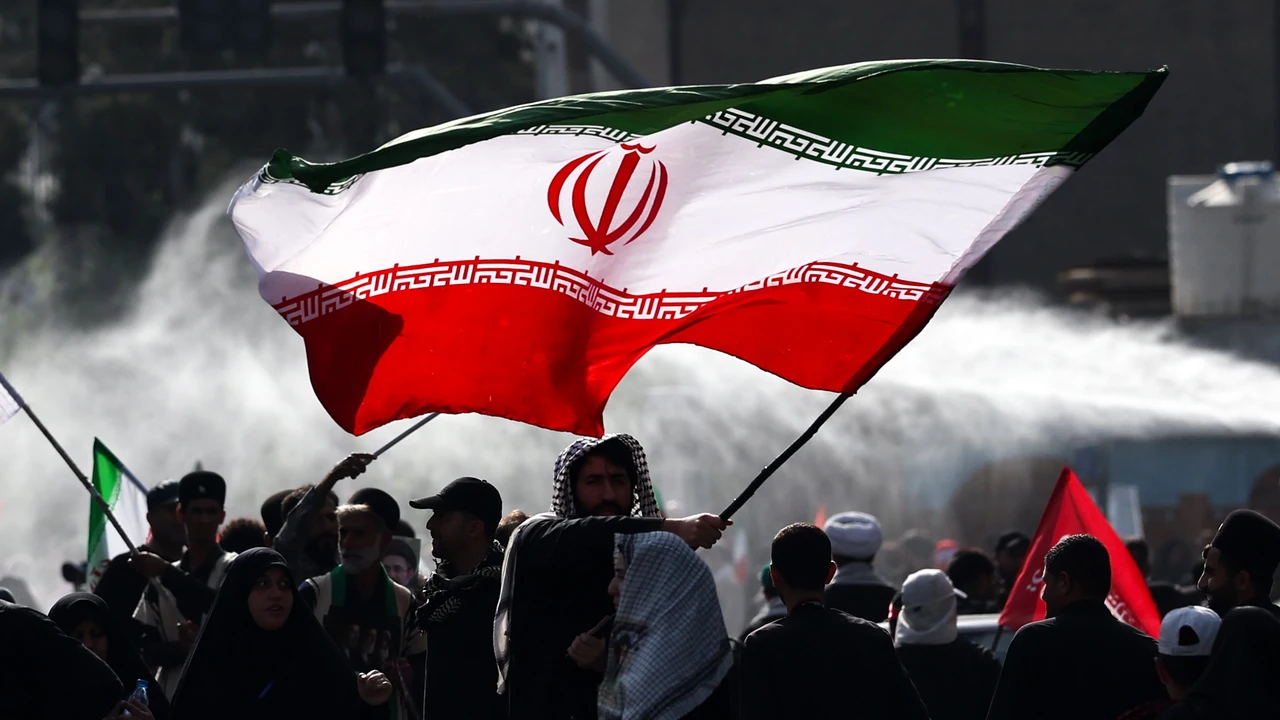
The Minister of Foreign Affairs of France, Jean-Noël Barrot, assured this Monday that Iran is behind the attacks against the cold rooms of several French supermarkets and has warned that this action “will not go without consequences.”
Barrot stressed that “it is an attack of unprecedented breadth and aggressiveness.” “It is the first large-scale sabotage cyberattack on French territory and a serious attack against the interests of the nation and against the security of French men and women.”
In this regard, he recalled that the disturbances affected nearly 700 distribution group facilities on October 11 and 12 and resulted in machinery breakdowns, large quantities of damaged merchandise and fires.
For this reason, he assured that this operation “will not remain without consequences” and that, in addition to having summoned the Iranian ambassador in France to “protest very strongly”, “sanctions at European level will be applied against all those responsible.” He added that “any other proportionate and necessary measure, whether public or not, will also be adopted to respond to this attack and dissuade those who would like to repeat it.”
Prosecutor’s investigation
For its part, the French Prosecutor’s Office has launched an investigation to determine whether the cyber attacks suffered by the cold rooms of dozens of supermarkets during the night of October 11 were the work of the Iranian group Shahid Kaveh, a digital unit of the Guardians of the Revolution. This was indicated this Monday in a statement.
The investigation focuses on the leaders of that group, although it also includes “any other person who can be identified.” As part of the investigations, several international arrest warrants have been issued.
Europe also points fingers at Russia for false bomb alarms
This adds to the wave of false bomb threats directed against aircraft that the European Union has suffered in recent weeks. The authorship of these notices remains under investigation in the affected countries. On the third day of threats, France, Ireland and the Czech Republic have once again suffered its consequences.
Although there is still no identified person responsible, the first hypotheses point to Russia. As explained by Yago Rodríguez, director of Political Room and expert in geostrategy, the pattern of attacks could be related to the Kremlin’s strategic interests.
The expert acknowledged in La Brújula that, for the moment, there are not sufficient elements to directly attribute authorship to a State. However, he highlighted that several of the affected countries maintain significant support for Ukraine, something that Moscow has questioned on numerous occasions.
