
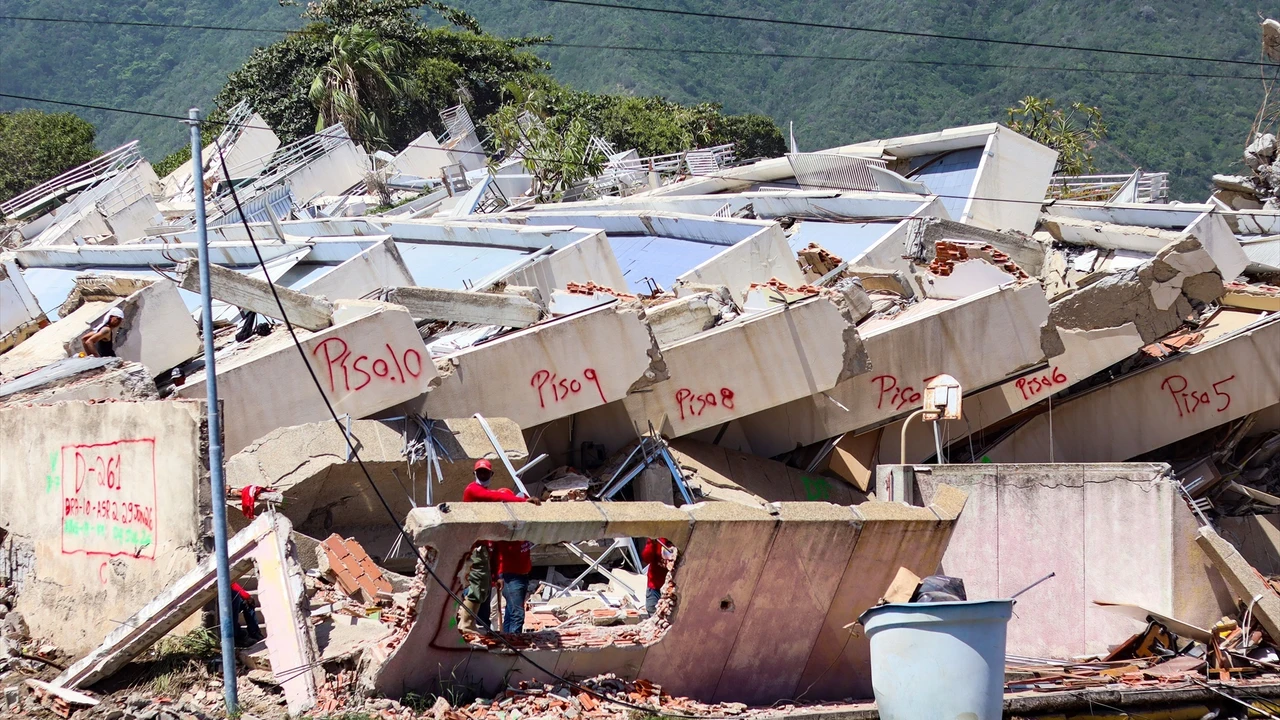
Three months after the 7.2 and 7.5 magnitude earthquakes that shook northern Venezuela, causing one of the most serious catastrophes in the country in recent decades, humanitarian organizations on the ground warn that risks persist for children, still without access to food or drinking water in the most affected areas and especially in La Guaira.
World Vision reports that temporary accommodation is also scarce for a population that has practically lost everything. And the uncertainty of not having one’s own home, warns Eloisa Molina, Director of Communication of the NGO, also endangers the educational continuity of boys and girls in Venezuela. “Three months after the earthquakes that seriously affected several states in Venezuela, families and affected individuals continue to face critical challenges related to access to drinking water, food security mainly, temporary accommodation, but also risks to the protection of children and other vulnerable population sectors.
“Educational continuity in Venezuela is in danger”
Molina explains that in addition “to this situation is added the uncertainty of not having one’s own home.” Thousands of Venezuelans remain in shelters, temporary camps and “this endangers the educational continuity of boys and girls.” The continuity of education in Venezuela is shaky. For this reason, the Director of Communications at World Vision warns of the importance of staying there. “Education in emergency situations is key, it is very important to guarantee the permanence of these boys and girls in school, and to continue supporting them so that little by little they can resume their lives before these earthquakes.”
“We cannot look the other way”
92 days later, the balance remains provisional. The Venezuelan authorities estimate that there are more than 6,500 dead, around 41,000 missing (although there is no official figure), thousands of injured and orphaned minors, 1.3 million people who – according to the United Nations – will need humanitarian aid during the next 6 months. And not only that, but there are still nearly 61,000 homes that must be evaluated, 11,000 of them considered high risk due to collapses and cracks.
