
The Kungoni Culture and Art Center has become a reference in Malawi.
In the vicinity of Lake Malawi lies a cultural, artistic and anthropological jewel that is essential to understanding the country. Inaugurated and managed by the Missionaries of Africa (White Fathers), Kungoni has been representing the ethnic and cultural variety of the southern nation since 1976.
The Mua mission, located in the Dedza district – in the Central region – was founded in 1902, being one of the first Catholic missions in the country. There arrived, with the passage of time, the French-Canadian father Claude Boucher Chisale, who founded the Kungoni Center for Culture and Art. Who died a few years ago, his successor at the head of this initiative is Fr. Brendan O’Shea, who maintains that what could have inspired the then young Fr. Boucher was the “air of change that blew through the Church” after the Second Vatican Council. For Father O’Shea, a natural anthropologist from the Irish southwest, the mission in 1902 “was more about a competition between culture and faith than about complementarity.” He adds, “Kungoni wanted to question that. “We could not go back and undo the past, but we wanted to present an alternative and a new form of evangelization, a new way of relating to the history and culture of the people.” That is why, as the Irish missionary states, much of the work carried out at the center is in matters of inculturation, dialogue between culture and faith.
Preserve and promote
The Culture and Art Center began almost as the fruit of anthropological and ethnographic work, of Father Claude and his team’s interest in immersing themselves in local culture and history, which “meant spending a lot of time with the people, collecting their stories, collecting objects and listening to how they understand their lives, their faith and their culture,” explains O’Shea. Father Boucher and his team – the priest never worked alone, but with carvers and local and traditional leaders – collected many objects until they gave shape to what would later be the Chamare Museum, which would become the central axis of the Kungoni. The museum, whose name is inspired by Jean-Martin Champmartin, a missionary who spent many years in Mua, is not only a place where this heritage is preserved, but is also, as Fr. O’Shea points out, an “educational tool for future generations of Malawi.”
However, the philosophy that inspired the center was not limited to its walls, as another of Kungoni’s central themes, according to Father Brendan, “was the real freedom to experiment in matters of liturgy, song and dance, and how all this can relate to our traditional ways of celebrating the liturgy.” The truth is that a brief visit to the mission church is enough to realize the symbology that breathes in every corner of the temple, from the elements of the altar, the walls or the lamps. As the current director of the Center for Culture and Art summarizes, “I could say that the central theme of Kungoni is to preserve and promote.”
From Malawi to Malawi
Although Kungoni was originally a renovation in many ways, it has never stopped evolving. One of the most obvious changes, and one of which Fr O’Shea is most proud, is the increasing number of Malawians who visit his facilities each year. Although previously the profile of visitors was tourists or European workers in Malawi, in the last five years there has been an important change that, as the director highlights, is the result of the promotion and collaboration work that has been done with educational centers – from primary school to university – and with government institutions, such as the Ministry of Tourism. For Brendan O’Shea this constitutes “a wonderful development”, because, “in reality, Kungoni is for Malawi, for its Church and for its people. “We are delighted that more and more Malawians are coming here to appreciate their history and culture.” This increase in local visitors undoubtedly has a great impact on the younger generations.
This, in addition to the eternal financial challenge of sustaining this type of initiative, is one of the main challenges that the Irish anthropologist detects: the appreciation of one’s own history and culture. «We live in a very digital, very modern world. One of the challenges that I see beyond the center, and that is one of our main concerns, has to do with the school groups that come here. It worries me that schools have so little contact with their own history and culture,” argues this missionary of the White Fathers. To this it adds another internal challenge: the care and continuous maintenance required by both the museum’s objects, the archive center – which has a multitude of documents, as well as sound and visual records – and the environment itself. In the words of the Kungoni director, “we try to keep it as green and lush as possible so that, when young people come, they can see the benefits of taking care of the environment.”
Return to the community
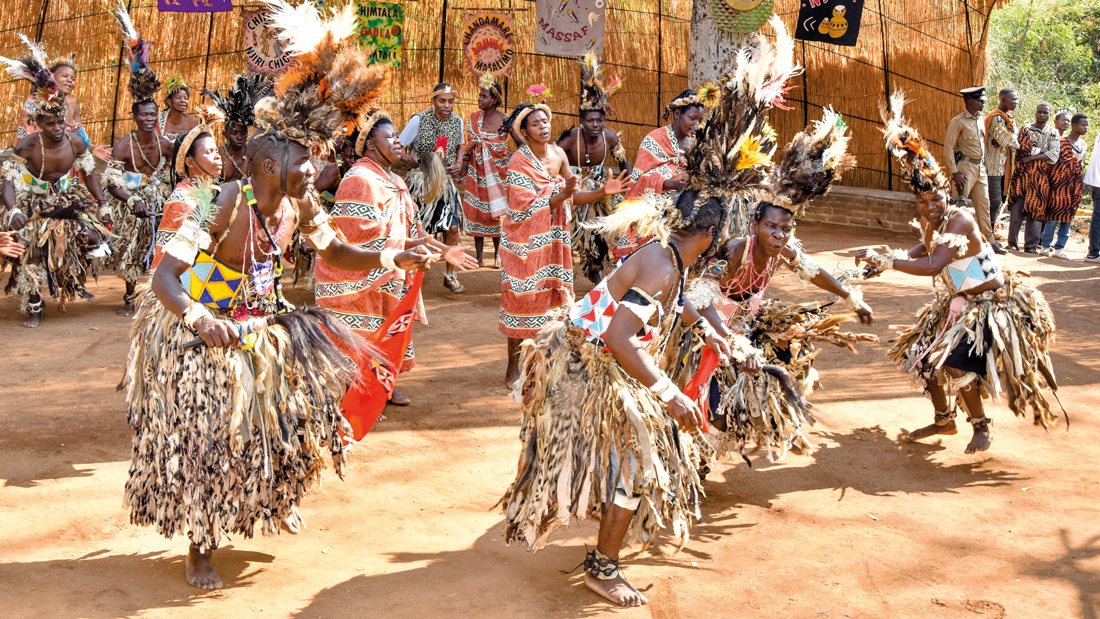
The center generates dozens of jobs. In addition to the museum itself, it has a shop, an art exhibition and a hotel. To do this they need between 25 and 30 full-time people, a figure that varies depending on whether it is high or low season. To them are added more than a hundred people associated with the center, including carvers and artists, the women’s group and the dance company. But the return to the community is not only monetary. Every year they organize a cultural festival that they consider the highlight of the course. The organizers understand this event, above all, as a show of gratitude to the local community, which is why they do not charge admission to the thousands of people who come to Kungoni. Each year, the event takes place around a specific theme. In 2025, in the context of the presidential elections in the country, the theme was “Having vision”, and the dances, songs or plays revolved around that idea.
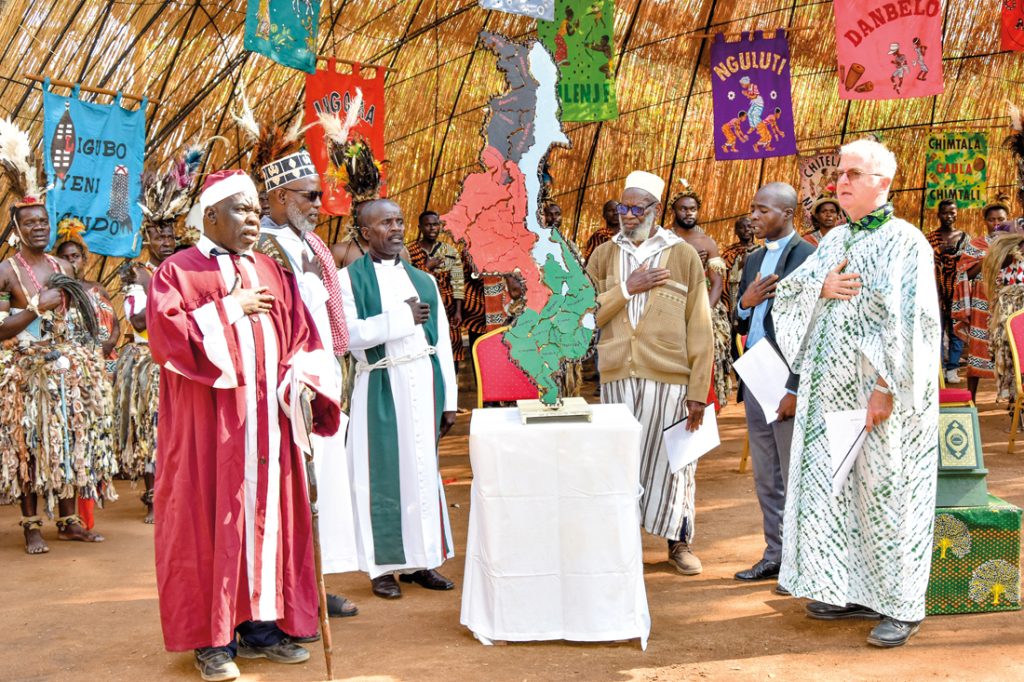
But the festival is also understood as a space for dialogue between people with ethnic differences – they have even invited Tumbukas, from the north of the country –, religious – interreligious celebrations are organized with Muslim and Protestant leaders –, or even citizenship, since the participation of inhabitants of the Dzaleka refugee camp has also been promoted (see pp. 36-41), as a way of demonstrating that in Malawi everyone is a citizen who can participate and contribute.
The last part of the festival, and the highlight, is the Gule Wamkulu, a collective dance of the Chewa people in which, as in the rest of the initiatives in the program, they incorporate the theme of the festival.
Between traditional and contemporary
The Kungoni Culture and Art Center, which has become a historical and ethnographic approach to three of the main ethnic groups in Malawi – the Chewa, the Ngoni and the Yao – also reflects the tension between tradition and contemporaneity. Fr Brendan O’Shea believes that good values are useful and valid in any society and that when they show young generations the rites of passage from 30 or 40 years ago, they are not doing so to encourage people to return to the past, “but rather we show that those rites of passage existed to promote good principles.” The Irish missionary considers that, although modern education “has been a wonderful gift”, it “should not go to the detriment of the traditional knowledge” of indigenous peoples. For him, it is a shame to break the link with that wisdom, because “we should also look at these traditional ways of transmitting knowledge through song, dance, storytelling, riddles and prose. They were beautiful ways to share information to the next generation. “There can be an incredible dialogue between traditional and contemporary knowledge and wisdom.”
In this context, however, they face the future with enthusiasm. The director’s first plan of action is to create a team of young Malawians to lead the center’s future. Together with him, he assures that they would like to get much more involved in schools, through, for example, cultural clubs or camps for children and young people. And finally, he considers it important to dedicate more time in the future to research, return to the towns and resume part of that ethnographic and anthropological work.
The Kungoni is an example of the importance of investing in culture. Father Brendan O’Shea is clear about this commitment. In his opinion, “we should not discard it to focus only on the economic aspects of life. (…) It is as valuable as anything else, because if we become a monolithic society, we will have lost an incredibly rich part of our identity. And he adds: «We talk about the construction of identity, and the construction of identity is the construction of trust. Building trust helps people to be forward-thinking, to look ahead. “I think that’s why it’s worth investing in.”
