
Nepal continues to face one of the largest disasters recorded in the region. On August 26, a devastating flood affected multiple areas in the north of the country, especially the Trishuli River Valley and the districts of Rasuwa and Nuwakot, causing flash floods, landslides and enormous accumulations of water, mud, rocks and debris.
A flood that has already left more than 1,200 dead and more than 4,000 missing. Nepal’s emergency services continue to work in the area with the aim of finding possible people who are still alive.
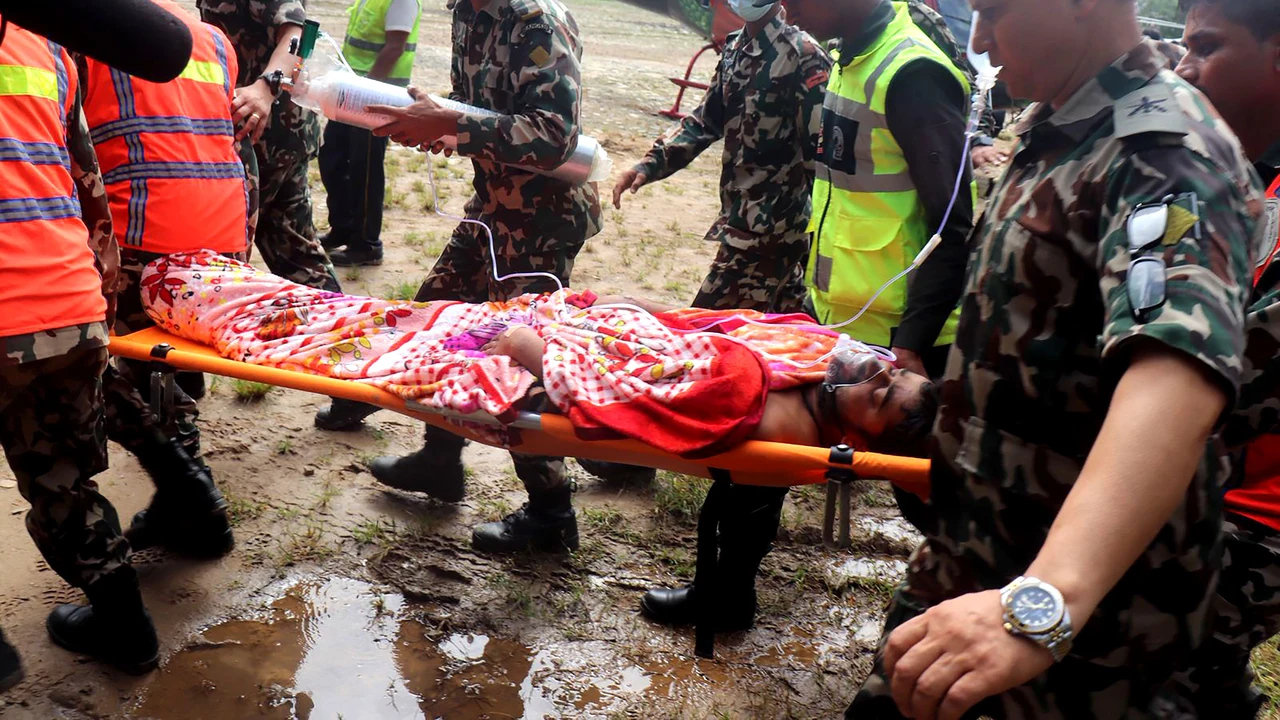
In this exercise, Nepalese rescue teams have managed to locate two workers alive who were trapped under a tunnel 10 days after the flood. The two people were found in a tunnel of the Trishuli 3A hydroelectric project, in the north of the country.
A complex rescue
After beginning rescue work in the tunnel, the teams managed to extract two workers who had been trapped. One of the survivors was taken out of the tunnel on a stretcher, although he was conscious and with his hands in a sign of prayer when he was rescued. However, he is currently in critical condition and receiving intensive care in a military hospital in Kathmandu.
The second of the individuals, with his face and body covered in mud, was lifted to his feet by the rescuers, to whom he gave a small gesture with his hand, and is stable.
According to those responsible for the operation, voices were heard inside the tunnel, which has increased hopes of finding more people alive. It is estimated that there could be around a hundred people trapped.
“The rescue team has received information that human voices can be heard from inside. The rescue teams of the Nepal Army and the Armed Police have entered the tunnel and have intensified the operation,” explained Ram Neupane, a deputy and engineer participating in the operation.
Satellite data to find the tunnel
After the flood, the power plant was unrecognizable due to the flooding of the entire facility. Rescue teams had trouble finding the entrance, so they were forced to use satellite data and power plant plans to narrow down the location of the tunnel.
The authorities dug through the rubble and found water, which they had to drain and then found the path blocked by rocks that fell scattered by the flood.
“The tunnel was full of rocks the size of cars, mud and so on, so it was necessary to cause explosions inside, which is incredibly dangerous because we are inside and there may be people on the other side,” explained Arnold Dix, a geologist working on the ground.
