
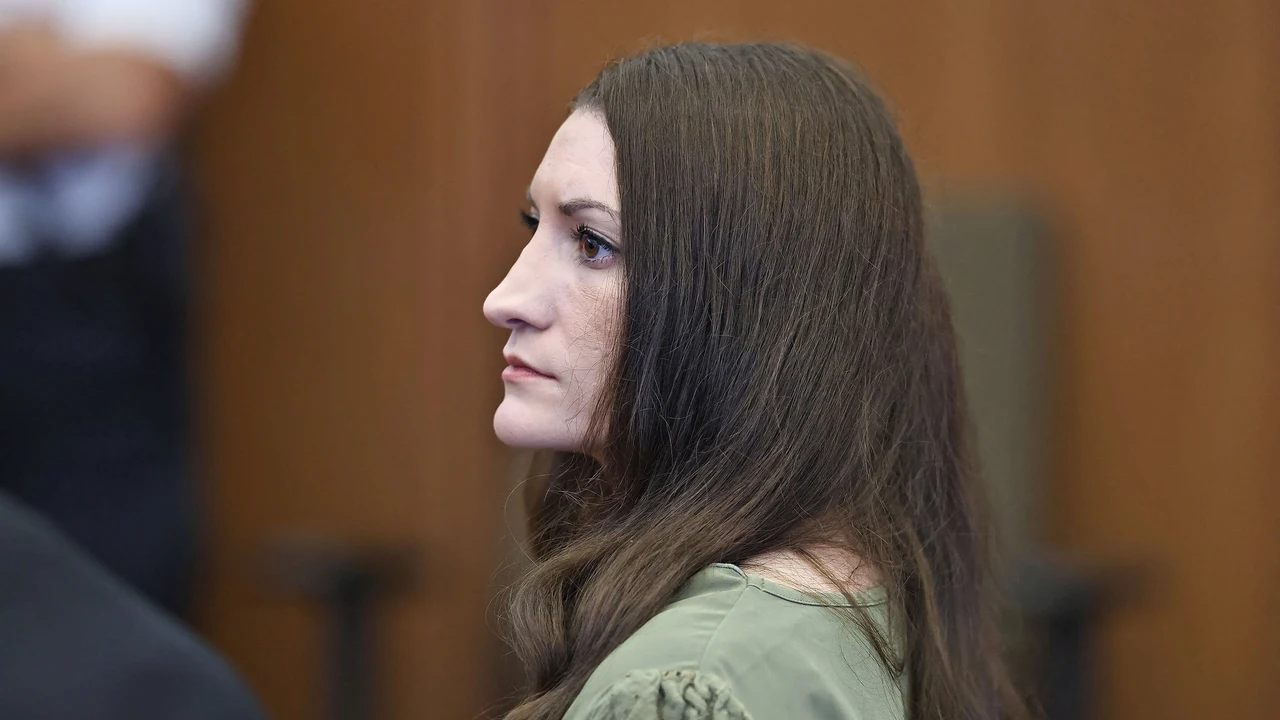
A federal judge announced this Friday that he plans to declare a mistrial against Lindsay Clancy, the American woman from Massachusetts accused of killing her three children in an alleged psychotic break. Although, according to US media, the judge has given his lawyer time to appeal the decision.
The decision was made on the seventh day of jury deliberations in a Plymouth court, after they sent the judge a note stating for the third time that they were deadlocked and could not reach a unanimous verdict. “We regretfully report that we cannot reach a unanimous decision and we will not be able to do so,” the jury said, according to CNN.
However, minutes after his announcement, the magistrate gave Clancy’s attorney, Kevin Reddington, one hour to file an emergency appeal of his order to the state Supreme Court, effectively staying its effect.
The consequences of any possible outcome of the appeal are unclear, and experts pointed out to the media the unusual nature of such a quick request following the declaration of a mistrial, although it is common for lawyers to make appeals to higher authorities during murder trials.
The lawyer’s move comes after this Thursday he asked the judge to withdraw a member of the jury who supposedly refused to follow the rules of deliberations, and to whom he attributed the blockage to a unanimous verdict.
Three counts of murder for the deaths of his children
Clancy, a 36-year-old former nurse, faces three counts of murder in the strangulation deaths of her children Cora, 5; Dawson, 3, and Callan, 8 months, on January 24, 2023 at their home in Duxbury, Massachusetts. Afterwards, she attempted suicide and was partially paralyzed.
The jury had the options of finding her guilty of first or second degree murder, of involuntary manslaughter, and of finding her not guilty, or of acquitting her due to mental health problems. In practice, the case was about whether Clancy would serve a life sentence or be proposed for psychiatric confinement.
