
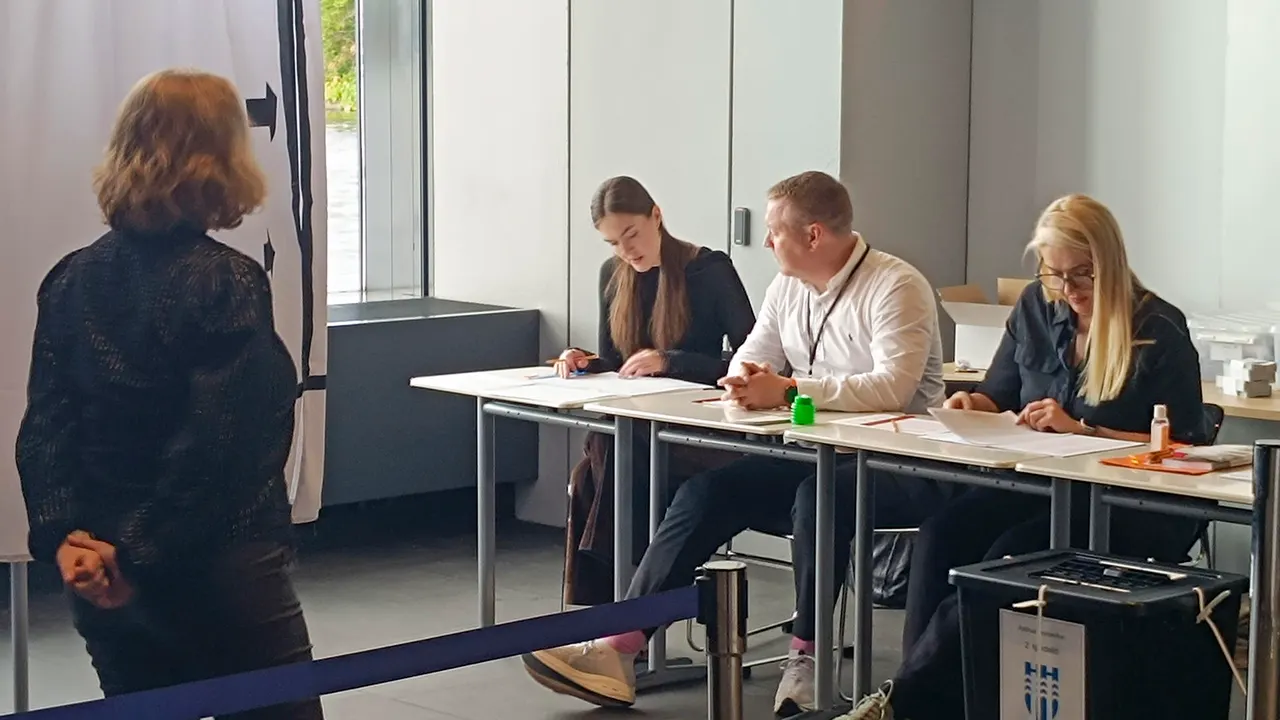
In the absence of a final result, and with 90% of the votes counted, the “no” has been imposed in the Icelandic referendum on the resumption of accession negotiations to the European Union (EU). Although those in favor of resuming negotiations were in the lead during much of the count, the “no” began to prevail in the final hours, prevailing in the final result by 52.5% to 47.5%.
With an advantage of more than 8,598 votes, 188,496 already counted, in the absence of the latest results from the southwest Iceland constituency, the most populated and which brings together the towns in the Reykjavík area, and in which those opposed to negotiating with Brussels lead the partial count, the “yes” would have to get 65% of the votes to overcome, something that is “almost impossible.”
The “yes” would have to achieve 65% of the votes to overcome
As previous polls predicted, the “yes” won in the two Reykjavík constituencies, but not with a sufficient difference to compensate for the expected victories of the “no” in the three corresponding to the rural areas (south, northwest and northeast). The polls of the last week indicated a tie or gave a slight advantage to the “yes”, although two polls released last Friday offered different results.
If the “no” vote wins, the Government has promised that it will respect the popular will; If the “yes” vote were to win, Iceland would resume negotiations with Brussels and another new referendum would have to be held once a hypothetical agreement was closed.
Since 2009, Iceland has been fighting to join the EU
Iceland requested membership in 2009 with the economic crisis that shook the country in the background, but paralyzed it four years later in the midst of an adverse climate due to internal divisions, the euro crisis and the conflict with several EU countries over compensation to foreign savers due to the bankruptcy of the Icesave bank.
In 2015, the then conservative government informed Brussels that Iceland was no longer a candidate, but the European Commission (EC) considers that a formal withdrawal of the candidacy never occurred. The coalition that has governed since 2024 included in its pact calling for a referendum to decide whether to continue the process, arguing that there was never a consultation.
Iceland has a small and dispersed population over a relatively large territory (less than 400,000 people in 100,000 square kilometers) and all ballot boxes must be transported to the counting centers of the constituency, which in some cases involves a transfer of up to 400 kilometers. Around 273,000 Icelanders were called to the polls and provisional figures pointed to a turnout similar to that of the legislative elections, which was close to 80%.
