
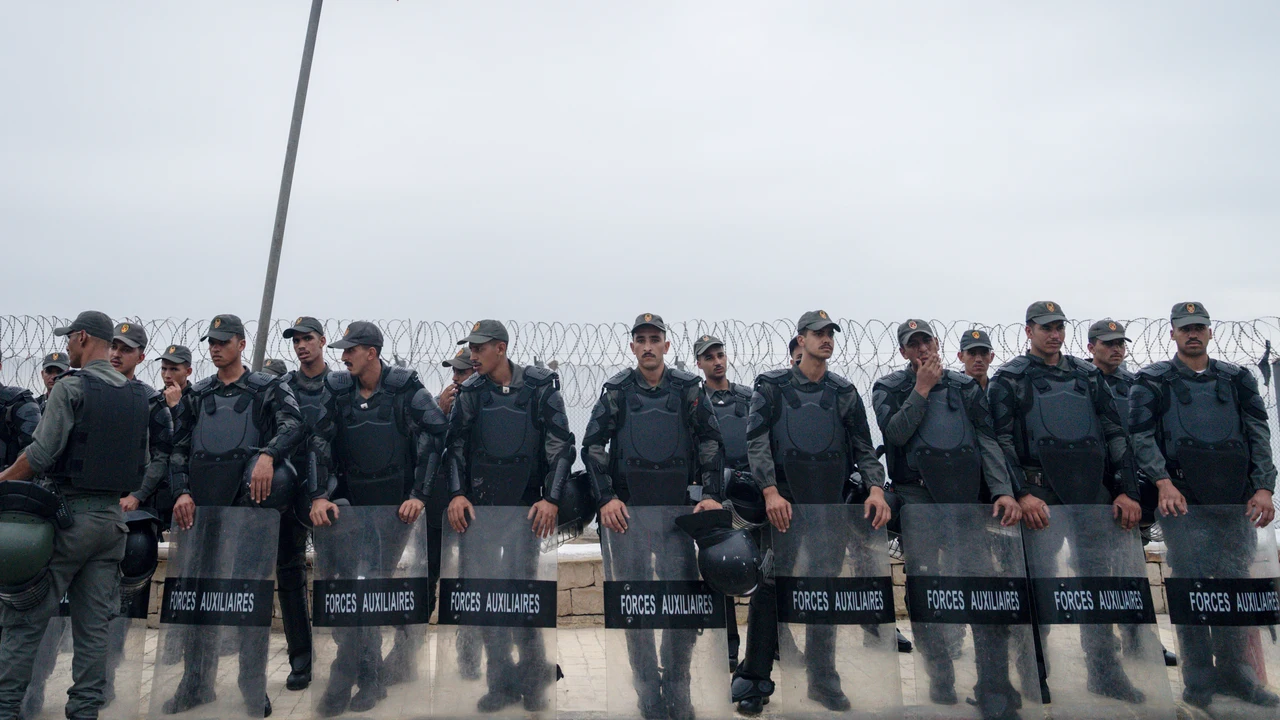
The Moroccan authorities have categorically denied that their information systems or security databases have suffered a computer intrusion after the Jabaroot hacking group this week released personal information of more than 70,000 agents who would have allowed the massive entry of migrants into Ceuta.
The General Directorate of National Security (DGSN) and the General Directorate of Territorial Surveillance (DGST) maintain that their systems comply with cybersecurity standards and that they have not been subject to a breach. Specifically, the DGST assures that the data released does not come from an attack against its systems, but from old databases managed by insurance companies and health and social security organizations.
Rabat denies that its systems have been breached
In a statement released through social networks, the DGST has rejected any “violation” of its systems and has insisted that its security databases are not connected to open Internet networks, in response to the information released in recent days about the alleged cyberattack.
The organization has also questioned the authenticity of some of the material distributed by hackers. According to Moroccan authorities, in recent days manipulated photographs and falsified documents have circulated that supposedly show members of the country’s security services.
The DGST maintains that some of these documents contain uniforms and military ranks that do not exist in Morocco or are used by the DGSN, in addition to presenting errors in their visual identities and “flagrant grammatical errors.”
The Moroccan authorities have also announced that they will keep their investigations open to identify those behind the preparation and dissemination of this material, while warning about the circulation of information that they consider false.
Jabaroot claims to have accessed data from more than 70,000 agents
As Onda Cero already announced, the hacker group Jabaroot would have disseminated a database that, according to its own version, contained personal and professional information of some 70,000 members of the Moroccan security and intelligence services. Some information raises the figure to 70,381 records.
The group claimed that those affected included members of the DGSN and DGST, including senior officials, and presented the leak as part of an operation called #OP_CEUTA. Jabaroot also maintained that the publication constituted a “message addressed to Spain”, in a context marked by the migratory crisis registered at the end of July in Ceuta.
The hackers even claimed that they had information related to those responsible and orders issued during that migration crisis, something that the Moroccan authorities have flatly rejected.
