
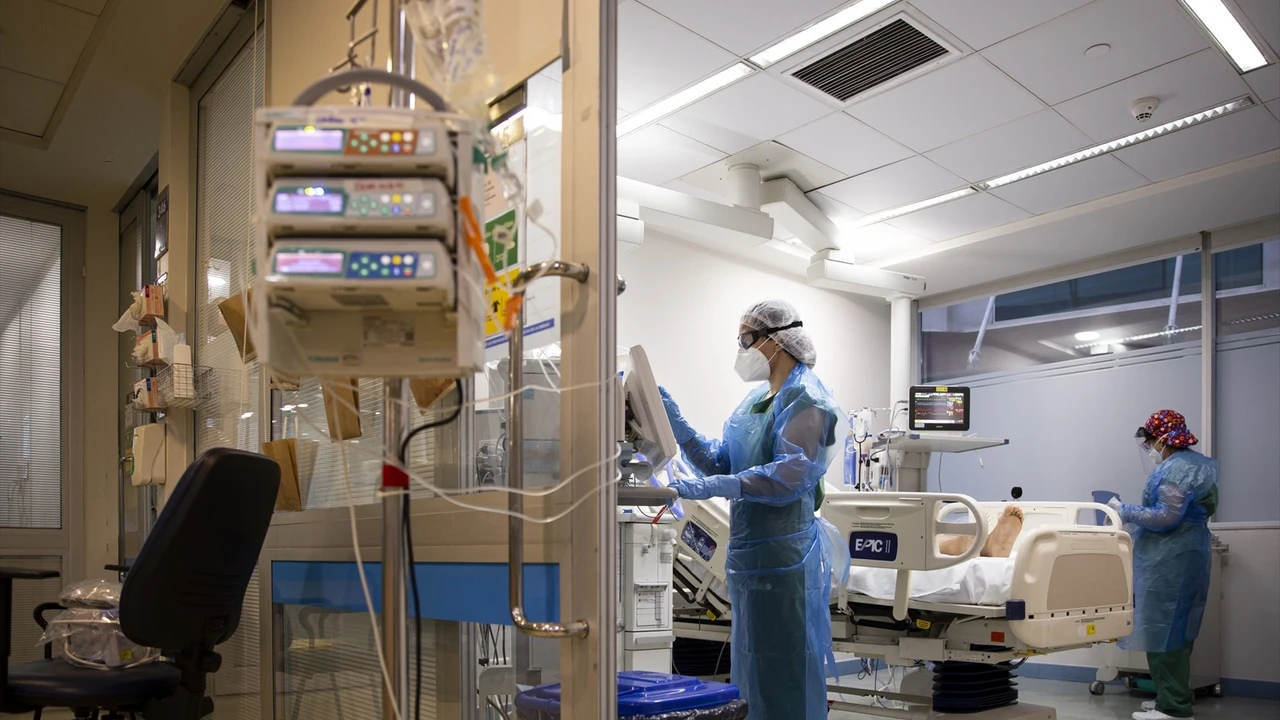
It has been more than six years since the first case of coronavirus was known (China, December 2019) and confinement was decreed in Spain (March 2020). The WHO declared it a pandemic and an unprecedented health emergency began that called globalization into question, demonstrated the power of the State, promoted anti-system currents and highlighted the difficulties of the international community in facing a common challenge. More than five years later, many of those consequences continue to define the global scenario.
The experts from El Orden Mundial, Eduardo Saldaña and Fernando Arancón, analyze in JELO in summer with Arturo Téllez the legacy left by COVID-19 and the lessons that still need to be drawn in the face of the possibility of a new health threat of that magnitude.
The last great moment of cooperation between countries
Fernando Arancón recalls that Covid-19 was the first health threat in a century that had such a high impact and truly global reach. The most comparable precedent would be the so-called Spanish flu of 1918, which coincided with the end of the First World War.
The spread of the virus generated an enormous demand for cooperation and coordination between countries, although it did so in an international context that was already moving towards unilateralism and the protection of national interests. For this reason, COVID-19 could represent “the last romantic moment” of the recent world order.
One of the biggest fears in Europe was that this health crisis would replicate the response given after the 2008 financial crisis (cuts, austerity, individualism at the country level when facing its own problems). But this was not the case because the European Union, they explain, opted for a more coordinated exit from the crisis based on cooperation, also supported by common funds and public policies that helped cushion the economic impact.
The power of the State
What the COVID-19 pandemic made clear was the power of the State. As Eduardo Saldaña tells it, the main consequence was the recovery of the role of the State. After the 2008 crisis, society began to demand greater public intervention in those sectors essential to guarantee the functioning of the economy: “The pandemic brought neo-Keynesianism,” explains Saldaña, alluding to the recovery of policies that defend a more active presence of the State.
The crisis also forced Europe to reflect on its dependence on products manufactured thousands of kilometers away, such as masks, medicines and other essential goods, demonstrating the fragility of offshore supply chains. This made the population aware that the existing model of liberal globalization and absolute interconnection could stop working when each country worked to meet its own needs.
However, this demand for a stronger State also has “risks” because “you can have a more present liberal State, but also a more present authoritarian State.”
Conspiracy theories and loss of credibility
The pandemic also reinforced the anti-establishment currents that already existed before the appearance of the virus. It is true that Trumpism and the radical right were already part of the political landscape, but the confinements and restrictions encouraged and favored the spread of conspiracy theories and speeches contrary to the official ones given by the institutions.
All this added to the discontent of countries in Africa, Asia or Latin America, which saw how the West was hoarding vaccines and resources to fight COVID-19 while publicly defending the need to provide a solidarity response to the crisis. That attitude caused part of the credibility that Europe and the United States had in much of the world to be lost.
“Sooner or later we will have another scare”
But even though we have left the COVID-19 crisis behind, global health threats have not disappeared. Arancón has warned that climate change, the transformation of ecosystems, population growth and growing international mobility increase the risk of new diseases appearing. Among the main risks, zoonosis, that is, the transmission of pathogens from wild animals or livestock to humans. These may be favored by global warming and the alteration of the natural habitats of these animals.
But this does not mean that a new pandemic will occur immediately or that it will necessarily have apocalyptic dimensions. However, he considers that another serious health episode will end up coming: “Sooner or later we will have another scare.”
The big question is whether, when it arrives, countries will be able to recover the lessons learned during COVID-19 and respond quickly, effectively and cooperatively. An especially complicated task in a world that is increasingly protectionist, divided and accustomed to understanding international relations as a competition.
