
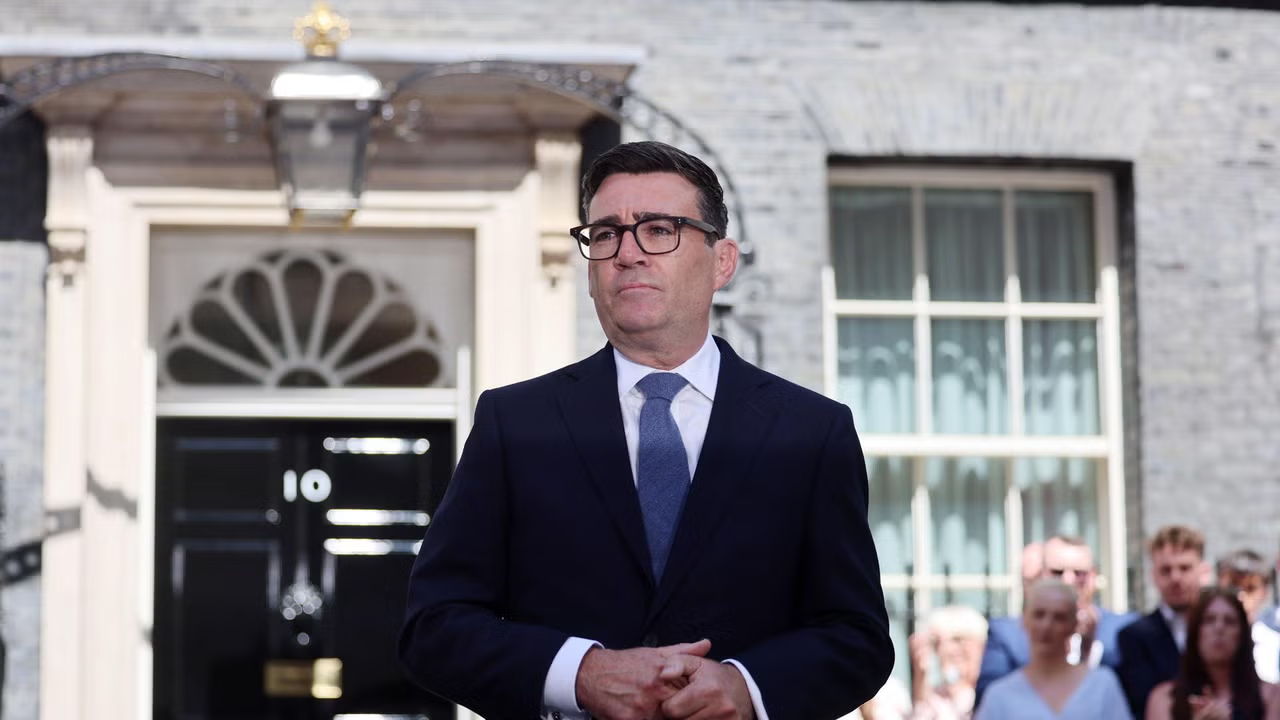
The new British Labor leader, Andy Burnharm, has assumed his position as Prime Minister of the United Kingdom after being commissioned by King Charles III to form a government. The Labor Party had an audience with the monarch at Buckingham Palace after Keir Starmer formally presented his resignation to Charles III.
Burnharm was declared prime minister last Friday as leader of the Labor Party after receiving broad support from his party’s deputies, without the need to hold internal elections.
We haven’t been good enough, and we have to do better
In his first public appearance he promised “a new political model and a new economic model” for the United Kingdom. Without making any promises, and without yet having announced his government team, he has communicated his ten-year action plan in which the focus will be on “giving people some respite and some help with the cost of living.”
Likewise, he has recognized a defect of the previous Labor government: “We have not been good enough, and we have to do better (…) We are going to bring the biggest changes in the last 40 years.” And he has promised that those changes will include changing the education system, strengthening mental health and building more subsidized housing, all “while respecting fiscal discipline and our defense commitments to our international partners.”
More taxes
Another measure that has been announced is the possibility of its citizens paying “a little more” in taxes, because the country has to face significant spending pressures derived from the aging of the population and the need to rebuild its armed forces.
It expects tax revenue to rise to 37% this year – its highest level since 1948 and higher than that of the United States or Japan, although lower than that of other large European countries with a more generous public pension system.
Burnham has said she will maintain Chancellor Rachel Reeves’ fiscal rules, which require her to balance current spending with tax revenue within three years. He has also backed Labour’s “pre-election manifesto” for 2024, which ruled out numerous tax rises. Last week, the International Monetary Fund said the government should rethink current spending priorities before raising taxes further.
