
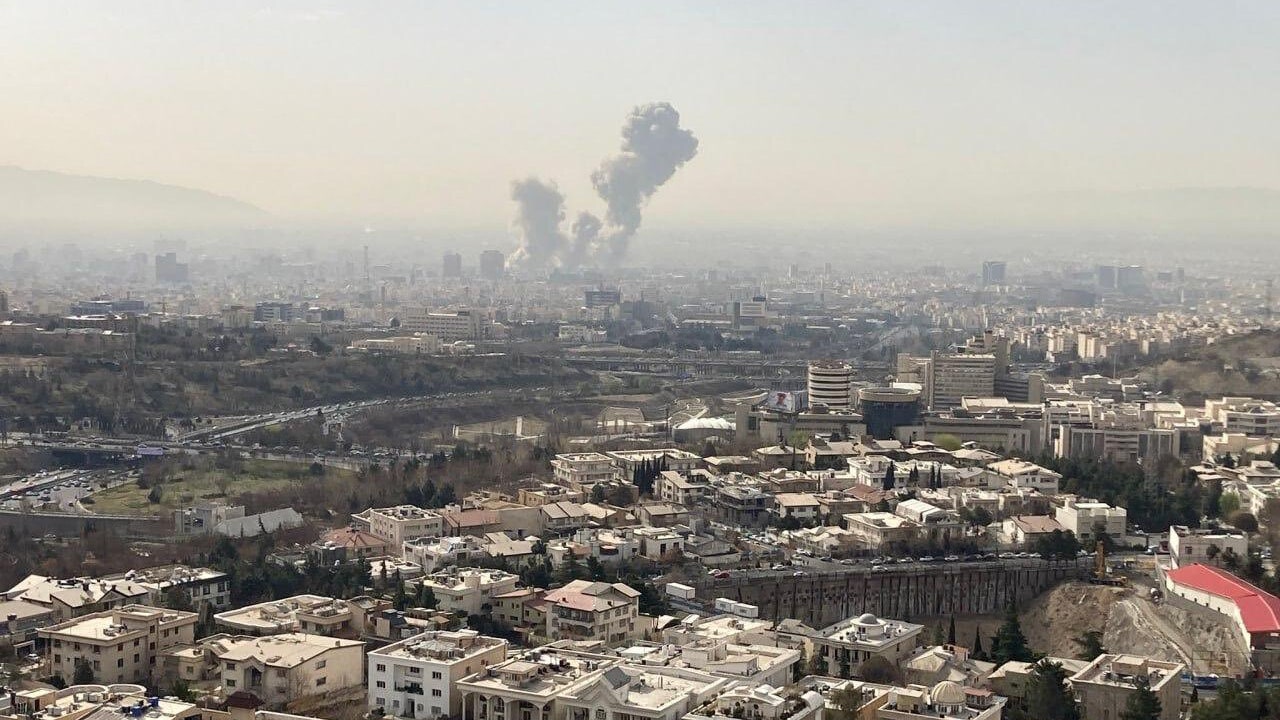
The United States has launched one of its largest military offensives in the Middle East in decades. Under the name ‘Epic Fury’, Washington has attacked strategic targets in Iran in a coordinated operation with Israel that has triggered tension and the threat of a conflict that spreads throughout the region after Iran’s response with attacks on several surrounding countries such as Qatar, Kuwait, the United Arab Emirates and Bahrain.
The operation represents the largest concentration of US military power in the region in decades, according to CENTCOM itself.
The campaign began in the early hours of February 28, 2026, according to the US Central Command (CENTCOM). The objective is to dismantle Iran’s military infrastructure and neutralize threats linked to its missile program and defense structure.
What is Operation ‘Epic Fury’?
‘Epic Fury’ is a large-scale military offensive targeting Iranian military facilities. The operation was launched after an ultimatum from President Donald Trump, who gave Tehran ten days to comply with Washington’s demands on its nuclear program.
Coordinated attacks by the US and Israel have been launched against key facilities such as naval bases, command centers, air defense systems, missile and drone launch nodes, and complexes associated with the Islamic Revolutionary Guard Corps.
Phases of the offensive
The operation was structured in several stages. The first phase consisted of neutralizing the Iranian integrated air defense systems and command and control centers. Precision missiles launched from air, land and sea were used. For the first time in combat, the US used low-cost attack drones inspired by Iranian Shahed models.
In parallel, Israel launched its own offensive. According to Israeli sources, it was the largest operational sortie in the history of its air force: around 200 fighter jets attacked nearly 500 targets, mainly air defense infrastructure and ballistic missiles.
What was the objective?
The main targets were Iranian military facilities: missile depots, naval bases, weapons production centers and command structures. At least one of the attacks took place in the vicinity of the office of the supreme leader, Ayatollah Ali Khamenei, in Tehran, who was killed in the offensive.
Washington maintains that the objective was to reduce the immediate threat against US forces and allies in the region, in addition to sending an unequivocal message about the Iranian nuclear program.
Iran’s response
Tehran responded with missile and drone attacks. The Iranian Revolutionary Guard launched projectiles at US bases in Qatar, Kuwait, the United Arab Emirates and Bahrain.
There were also attempted attacks against civilian infrastructure in the United Arab Emirates. In Abu Dhabi, debris from an intercepted drone killed one person and injured several others. Dubai reported minor damage after another incident.
The escalation forced the closure of airspace in Iran, Israel, Qatar, the United Arab Emirates, Bahrain and Iraq. Several international airlines have suspended flights to and from the region. Emirates, Etihad and Qatar Airways announced temporary cancellations, while thousands of passengers were affected by diversions and rescheduling.
Trump has defended the offensive as a necessary action in the face of Iran’s refusal to curb its nuclear program. From Tehran, the regime maintains that it maintains the right to enrich uranium and accuses Washington and Tel Aviv of direct aggression.
