
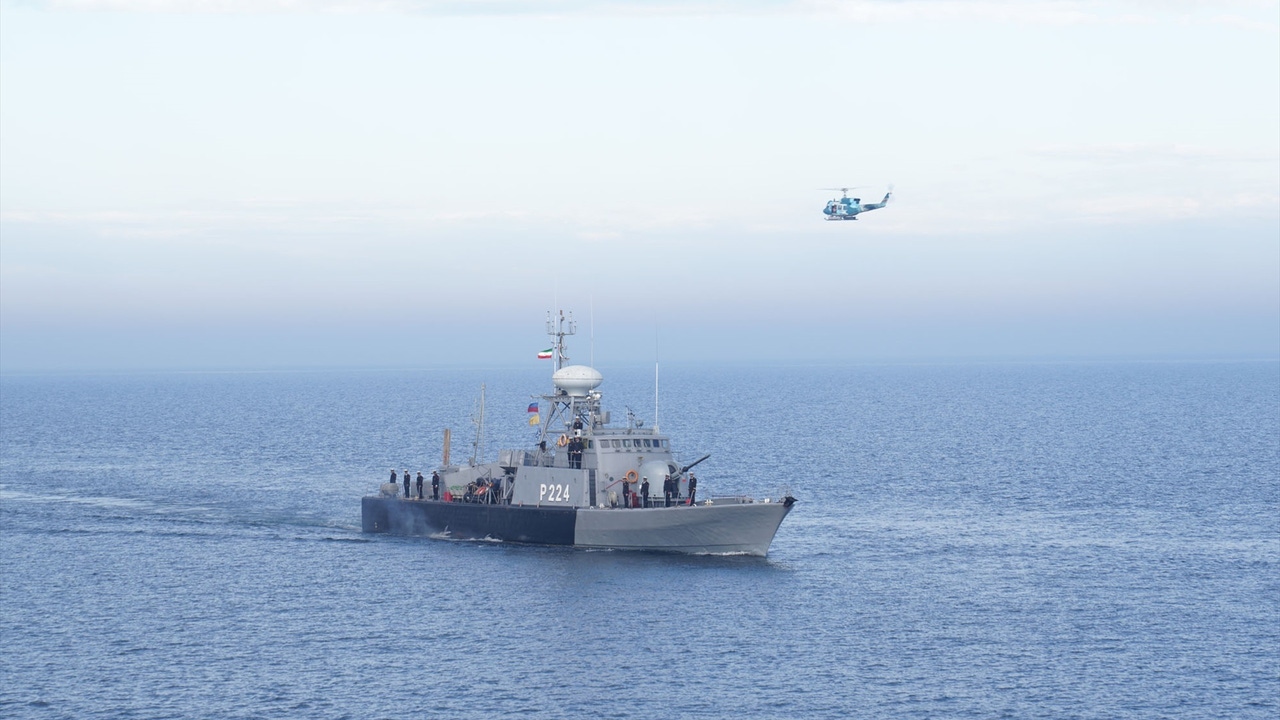
What if Iran, aware that it was going to be attacked by the United States and Israel, had designed a response plan in advance? What if that scenario was not contemplated by Donald Trump? The latest movements in the Strait of Hormuz are fueling all kinds of theories.
One of the interpretations that is beginning to gain strength is that the war could be generating an unexpected effect that could strengthen China’s global position. While the Strait of Hormuz remains practically blocked since the start of the conflict, Tehran is allowing the passage of some oil tankers linked to Beijing, as long as trade is carried out in yuan and not dollars.
Maritime tracking data shows that a Pakistan-bound oil tanker managed to pass through the strait over the weekend. The ship, the ‘Karachi’, a tanker transporting crude oil from Abu Dhabi, crossed the area without incident with its identification system activated. It is the first non-Iranian tanker to do so since the war began.
For more than two weeks, Iran has attacked several ships in the Persian Gulf, which has caused the de facto closure of the strait, a key route through which nearly 20% of the world’s oil and liquefied natural gas circulates. The interruption of traffic has sent energy prices soaring and increased tension in international markets.
The decision to allow passage to certain ships points to a broader strategy. According to analysts, Iran would be using control of the strait to favor countries willing to trade in currencies other than the dollar, which could open a crack in the international financial system that the United States has dominated since the oil crisis of the 1970s.
China has been trying for years to boost the use of the yuan in global energy trade, and the current situation could accelerate that process. For Beijing, the possibility of paying for oil in its own currency represents a geostrategic and financial advantage of the first order.
Trump asks for help and Europe says no
At the same time, the situation leaves Donald Trump in an uncomfortable position. The US president has asked other countries to send warships to ensure the safety of maritime traffic and reopen the strait. “There are many countries that have told me that they are on their way,” he assured, although he also criticized the lack of enthusiasm of some allies whom, as he recalls, the United States has protected for decades.
However, the main European powers have shown little interest in participating in a military operation in the area. Several governments consider that the attack against Iran was carried out without adequately calculating its consequences.
Meanwhile, the partial blockade of Hormuz continues to hit the global economy and also the US economy, with an increase in fuel prices.
