
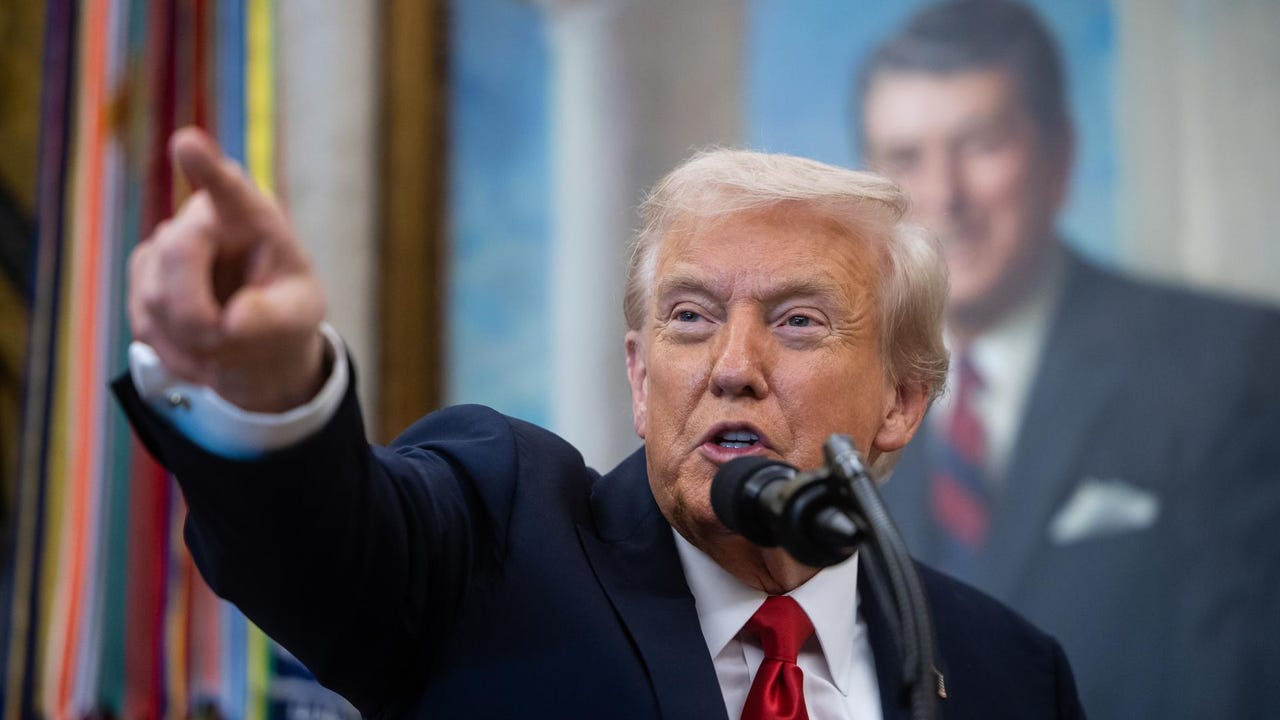
In the midst of international turbulence due to Donald Trump’s statements about the possibility of “acquiring” Greenland, Onda Cero’s La Brújula spoke with Ignacio Molina, principal researcher at the Elcano Royal Institute. In dialogue with Rafa Latorre, Molina reviewed both the historical background of US territorial expansion and the consequences that an attempt to redefine sovereignty in the Arctic would have, in the current context.
A threat to Atlantic cohesion
The expert recalled that NATO is not based only on military commitments, but on a political alliance based on trust and shared values.
“When that is eroded in this way, we are not talking about anything more and nothing less than the country that promoted the Alliance itself,” said Molina, who underlined the paradox that “the security guarantor itself is now threatening an ally.”
According to him, this type of gesture calls into question not only the future of the North Atlantic Treaty, but also Washington’s credibility as a reliable partner in other security scenarios, such as Ukraine.
The American constant of expanding borders
In the researcher’s opinion, interest in Greenland is neither new nor improvised. “Since the time of Thomas Jefferson, the United States has maintained the idea of manifest destiny and territorial expansion,” Molina recalled.
He cited examples such as the purchase of Louisiana, Florida or Alaska, highlighting that the logic of acquiring or conquering new territories marked the entire 19th century. However, he added, “what is new is not the idea, but rather the anachronism of recovering it in the 21st century.”
Molina described this attitude as an ideological inheritance from another time, hardly compatible with the current structure of alliances and the sovereignty of the States involved: “Today it is absurd to recover territorial debates typical of the 19th century.”
Greenland, a coveted piece of the Arctic board
Regarding the strategic relevance of the island, the researcher from the Elcano Royal Institute highlighted three factors: natural resources, maritime routes and geopolitical position.
“Greenland is a huge repository of rare earths,” he explained, in addition to occupying “a privileged situation” due to the melting of ice that opens new navigation routes in the Arctic.
But, above all, he highlighted its military importance within what geostrategists know as the GIUK gap—Greenland, Iceland and the United Kingdom—a vital corridor during the Cold War.
“From there very short distances between Russia and the United States, and even with China, are controlled,” he noted.
However, he insisted that Washington already has sufficient presence and influence without the need to claim sovereignty over the island: “This seems more like a daydream or megalomania of the current president.”
