
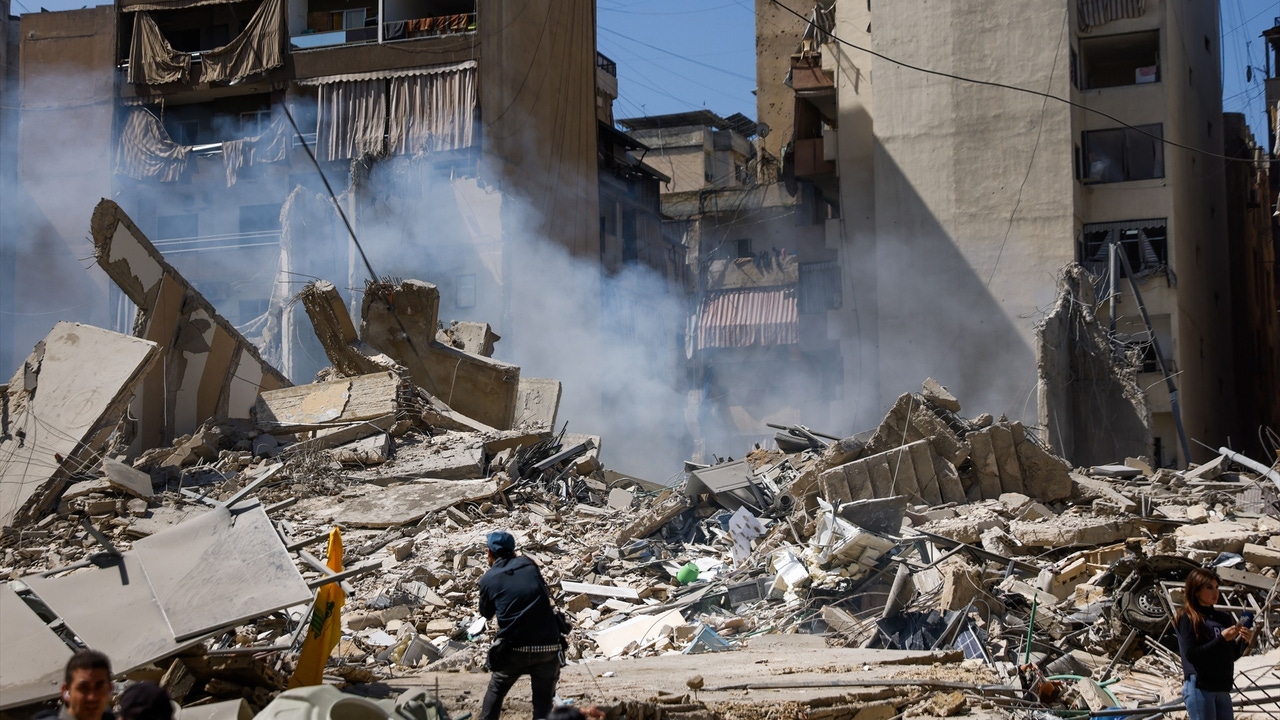
The escalation of the conflict in Iran continues to worry world authorities who must be prepared for the worst. This is the case of the WHO, which has already warned in recent days that the risk of attacks reaching nuclear facilities is increasing.
And, in the words of WHO Director General Tedros Adhanom Ghebreyesus, any damage to any of these facilities could have “serious consequences for public health”, which is why the institution is monitoring the health impact in the region in real time.
The WHO, which is currently in the active surveillance and alert phase, has already reported attacks on health infrastructure in the region and pressure on local health systems.
That is why they are already working on training their staff to be prepared when it comes to providing a quick response to an emergency of this magnitude. “The worst possible scenario is a nuclear incident, and that is what worries us the most,” the regional director of the WHO in the Eastern Mediterranean, Hana Balkhy, has declared in recent hours.
WHO plans
The WHO protocols include a series of actions in response to a radiological crisis, since the institution will be in charge of coordinating care for acute irradiation syndrome, the distribution of stable iodine, the control of contaminated food and water, evacuations and confinement recommendations or long-term epidemiological surveillance.
These protocols come from experiences such as the Chernobyl Accident in 1986, after which the WHO developed guides on the effects of radiation on the civilian population.
Concern about the latest attacks
The objectives of the countries involved in the conflict seem to have changed in recent hours, in which Israel and the United States have attacked energy facilities in Iran, to which they have responded by attacking infrastructure in the Gulf.
Israel has bombed South Pars, considered the largest gas field in the world and where approximately 12% of Iranian gas is produced. For its part, Iran has attacked gas and oil facilities in Qatar, the United Arab Emirates and Saudi Arabia.
The alarms went off after a projectile hit a few meters from the Bushehr nuclear power plant. No damage to the reactor has been confirmed, but a serious radiological risk has been warned.
