
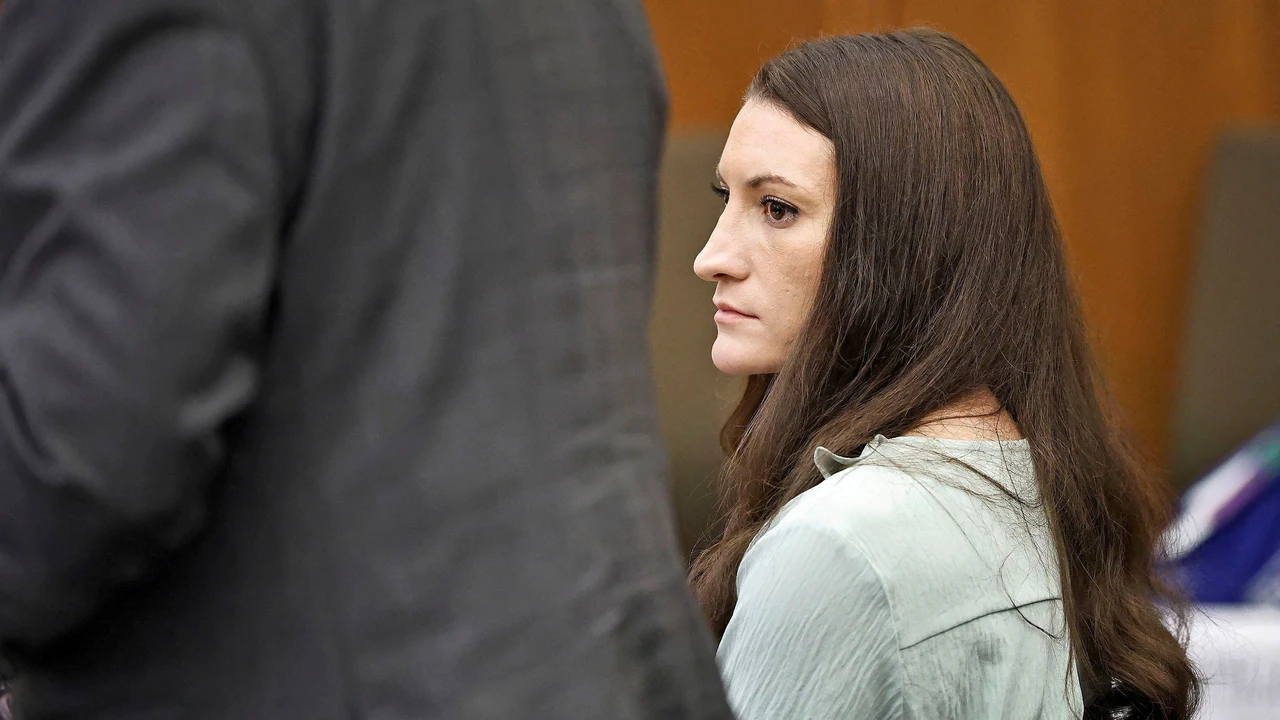
The Lindsay Clancy case returns to the Massachusetts courts these days. The former labor and delivery nurse faces three counts of first-degree murder for the deaths of her children, Cora, five years old; Dawson, three; and Callan, just eight months old.
There is a great plurality of opinions about the status of the accused and how the events occurred in this fateful case. While Clancy herself acknowledges having caused the children’s deaths, but declaring herself not criminally responsible due to her mental state, the Prosecutor’s Office maintains that the murders were deliberate. On the other hand, the defense assures that the woman acted in the midst of a serious postpartum psychosis.
From delivery nurse to mother of three
Lindsay Clancy, 36, worked as a nurse specializing in childbirth and maternity care. In addition, she was married to Patrick Clancy and together they had started a family with three children: Cora, Dawson and Callan.
Those who knew her described her as a mother very involved with her children. However, after the birth of little Callan, his mental state began to deteriorate. In the months before the tragedy, anxiety, sleep problems, intrusive thoughts, paranoia and episodes of suicidal ideation appeared.
Her family claims that Lindsay came to ask for help and that she was having more and more difficulty being left alone with the children. His mother and sister have recounted during the trial how they observed a progressive worsening of his behavior during the months before the deaths.
Increasingly deteriorating mental health
Defense attorney Kevin Reddington maintains that Lindsay suffered from bipolar disorder and severe postpartum psychosis, in addition to the adverse effects of various psychiatric medications. The defense argues that she received numerous treatments and that the lack of coordination between the professionals who treated her prevented them from detecting the extent to which she had deteriorated.
During the trial they have also used their internet searches on depression, hallucinations, postpartum psychosis, side effects of medications and methods of suicide. For the defense, these searches are an example of the mental crisis he was going through. On the other hand, for the Prosecutor’s Office they are part of the evidence that shows that he was aware of what he was doing and that he had prepared the crime.
The afternoon that ended the lives of his three children
On January 24, 2023, Lindsay spent most of the day with her children. The family had gone to the pediatrician and had also gone out to play in the snow. Hours later, at the family home in Duxbury, Massachusetts, Lindsay strangled the three children.
Cora, Dawson and Callan died as a result of the attacks. After the events, Lindsay attempted suicide by jumping from a window on the second floor of the house, managing to survive, but remaining paralyzed from the waist down.
At the time the events occurred, Patrick Clancy had left home in search of takeout. The Prosecutor’s Office maintains that Lindsay sent him away deliberately to be alone with the children and carry out the crime. When she returned, she found her children and called emergency services.
The role of Patrick Clandsay, Lindsay’s husband and father of the victims
Patrick has also testified during the trial and his testimony has been one of the most relevant moments of the process. The Prosecutor’s Office has used his story to reconstruct the hours before the deaths and defend that Lindsay acted deliberately. However, Patrick has publicly offered a much more complex view of what happened. After the tragedy he came to defend that Lindsay was not an evil person, but rather someone who had become seriously ill.
The marriage later ended in divorce. Both Lindsay and Patrick have taken legal action against health professionals who were involved in her treatment before the deaths, focusing on the psychiatric care she received during the previous months.
A little-known disease but that can be very serious
This is the question that the jury must resolve. The defense does not deny that Lindsay caused the deaths of her children, but maintains that she cannot be held criminally responsible because her mental illness had seriously altered her perception of reality.
Her lawyers claim that she suffered from postpartum psychosis, a rare but very serious psychiatric disorder that can appear after the birth of a baby and cause hallucinations, delusions, confusion, extreme mood swings, insomnia and loss of contact with reality. Its appearance requires urgent medical attention.
In Clancy’s case, determining whether he actually suffered from this illness and what its impact was on his ability to understand his actions will be essential to deciding his criminal responsibility.
The defense maintains that Clancy experienced thoughts and perceptions that did not correspond to reality and that his psychiatric treatment as well as the medication he received contributed to aggravating his situation. However, prosecutors maintain that Lindsay planned the murders and then attempted suicide.
The trial enters its decisive phase
The trial is currently in its fourth week. More than 70 witnesses have already taken the stand during the presentation of the Prosecutor’s case, including Patrick Clancy, family, friends, co-workers, agents, health workers and mental health experts. For its part, the Prosecutor’s Office finished presenting its evidence on Monday and the defense then began calling its own witnesses.
Among the first testimonies of the defense, those of Lindsay’s mother and sister have stood out, who have described the progressive deterioration of her mental health before the deaths. Both have spoken about their suicidal thoughts, their paranoia and their fear of being alone.
In the coming days the jury will finally have to decide between two competing versions: that of a mother who, according to the Prosecutor’s Office, consciously planned the death of her three children, or that of a woman who, according to her defense, was suffering from such a serious mental illness that she had lost contact with reality.
