
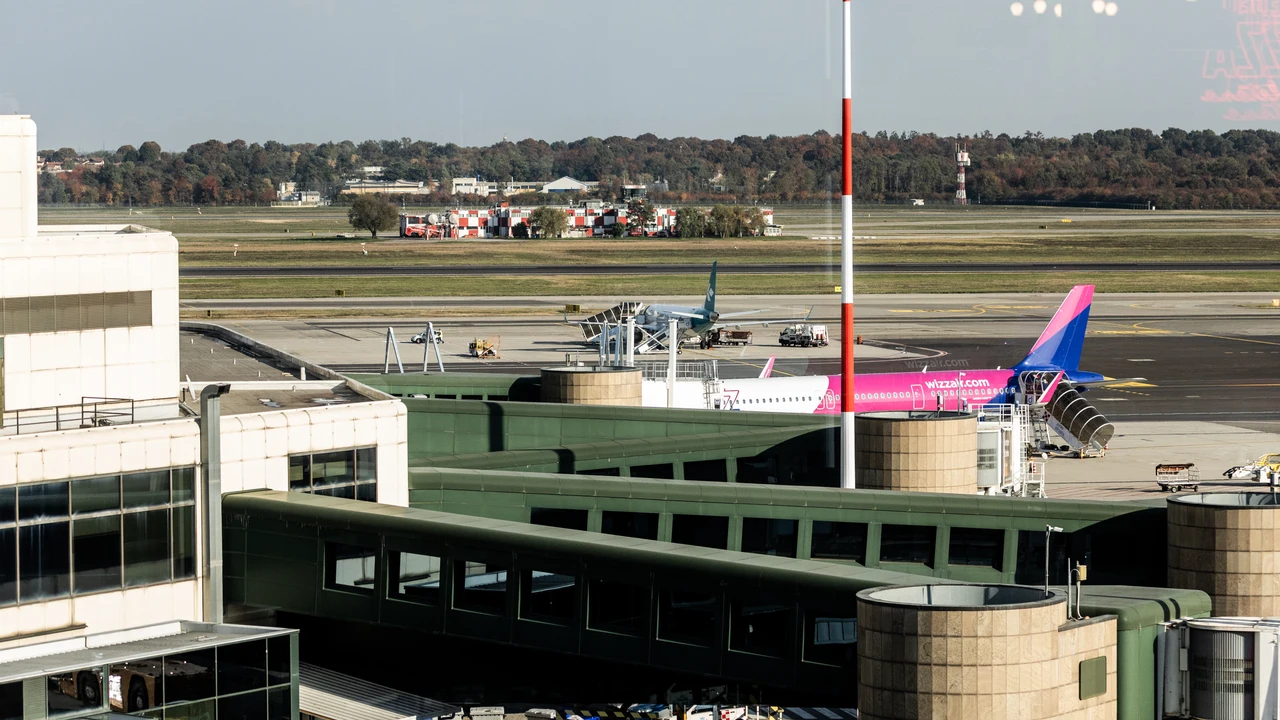
Europe has experienced a rather disturbing week because, on the one hand, there has been a wave of cyber attacks against refrigeration systems and supermarket freezers, which reached up to 50 degrees. And, on the other hand, we have suffered dozens of false bomb threats against flights in at least ten countries, forcing emergency landings. No explosives have been found and no one has claimed anything.
Are we immersed in a hybrid war?
To what extent can we talk about hybrid war? Blas Moreno explains in The World Order of Julia in the wave that we are “absolutely” already at that point and the goal is to “get nervous.” In his conversation with Julia Otero he explains that in addition to the attacks against refrigerators and threats on airplanes, there is another “more chilling” thing and that is that there has also been a cyber attack against blood refrigerated warehouses. That is, “the health and safety of the population is endangered.”
“We have been insisting for some time on the importance of understanding international politics to understand our daily lives and it was difficult to get people convinced of that, but when it already goes against your bread, your supermarket, your air security and your hospital, that already begins to show that this is more serious than we can think,” he says.
Insecurity, confusion, nervousness and responsiveness, the objectives
Everything has the same objective: to generate insecurity, confusion, nervousness and measure the response capacity of the different European states to these types of situations characteristic of a hybrid war. Furthermore, there is a “very low” cost for the countries or terrorist groups behind these attacks because “simply by alerting that there is a bomb on a plane, even if there is not one, they already generate a series of alarms and security protocols.”
Julia Otero explains that, in some of the cases of recent bomb threats, Army fighters had to go out to escort the plane, which has a cost because there is a foreign power measuring the European reaction to the threat: if 20 fighters leave, none leave, where do they leave, under what conditions, etc.
Blas Moreno explains that there are two more elements of what we know as hybrid war:
- The great psychological impact it generates: because the population can no longer trust whether their supermarket will have well-chilled meat or whether their flight will be able to take off.
- Plausible deniability: that is, since it is so difficult to attribute this threat or attack to any country, anyone who is accused of it can say that it has nothing to do with it because there is no evidence.
Therefore, a lot of chaos is generated and it is very difficult to “attack that ghost that is attacking us”, which generates a feeling of uncertainty and nervousness that “no one in Europe right now dares to attribute to anyone.”
“There is no proof that it was Russia”
“Everyone looks at Russia because it is the country that is best at doing this type of thing and that continues to attack us all the time, especially in the eastern part, but throughout Europe. And we have no proof that it was them. But the feeling is that Europe has to respond because, if not, we are left exposed,” he reiterates.
“Welcome to hybrid war,” says Julia Otero, who then reflects on the feeling that this situation gives her: “That war, as we have read about it in history books, we may never see again. But it won’t be necessary because they can destroy a country with these hybrid wars by entering hospitals or supermarkets. In the end it will not be necessary to launch a bomb to destroy entire countries.”
“Breeding ground for chaos and conquest”
“Or, at the very least, when they shoot it, they will have done all this before, which will make it much easier when it comes to really attacking. It is the breeding ground for chaos and conquest,” concludes Blas Moreno.
