
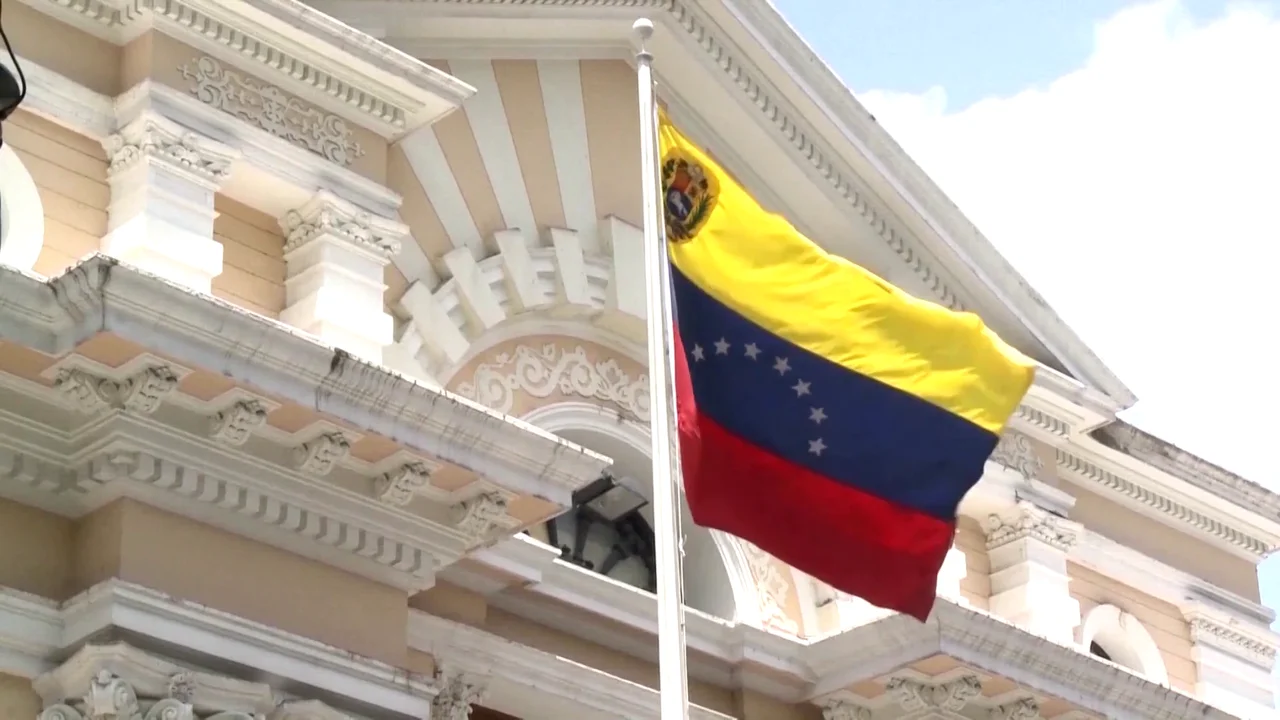
The announcement that the president in charge of Venezuela, Delcy Rodríguez, made this week before the UN General Assembly, promising, without date, the future holding of elections in the country immediately generated a reaction from the opposition demanding that she transform words into actions. And also many doubts about the viability of the process. Because, although some things have apparently changed in Venezuela since the departure of Nicolás Maduro, we cannot speak of a real transformation of the machinery of repression.
That is precisely the conclusion of Amnesty International. This is explained by its head of campaigns for the Americas, Clara del Campo, in an interview with Onda Cero. “Specific and selective changes in some behaviors do not indicate that there has been a change in the system.” And he adds: «The power structures, the people who have perpetrated crimes against humanity and the practices and violations of human rights have had a very evident continuity. There are more people detained than before July 28, 2024”, the date on which the last elections were held, those that according to the international community Edmundo González won.
Added to this, according to Amnesty, is a universe of thousands of people who continue to be subject to judicial processes, precautionary measures and restrictions on rights. The organization demands that all people arbitrarily detained for political reasons be released immediately and without conditions, in addition to the repeal of the laws that, in its opinion, make up the Venezuelan repressive architecture, among them the Anti-NGO Law and the Law against Hate.
The dialogue does not include all the opposition
In August, a dialogue process was opened between the Government and a sector of the opposition, promoted by the United States, whose declared horizon is a transition and future elections, but Edmundo González himself and María Corina Machado, in addition to other critical sectors, have been excluded from this negotiation. Del Campo avoids commenting on this negotiation, but he does establish what, for Amnesty, are the conditions that should change. “We speak out about the lack of freedom of expression and the lack of freedom of association and we ask that all laws and regulations that make up the repressive architecture be repealed.”
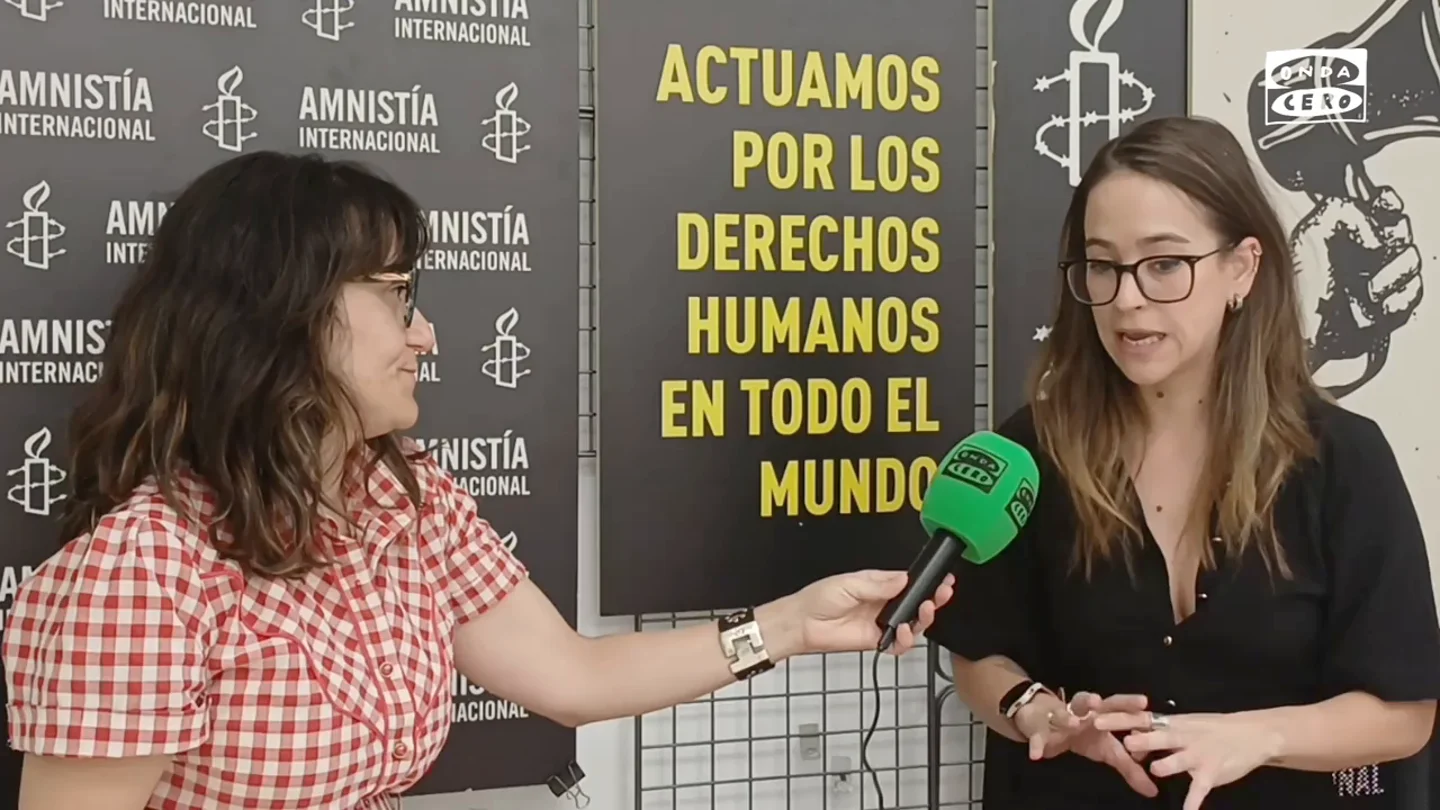
An architecture that, according to the head of Amnesty, “makes the work of all civil society impossible.” “What we demand are facts, verifiable, verifiable facts and full compliance with international human rights obligations,” he summarizes.
Freedom of the press, still reversible
Another recent gesture by the Rodríguez government has been to unblock several digital media, which it had kept under censorship for years. For Amnesty, it is a positive step, but insufficient as long as decisions continue to depend on the discretion of the authorities.
“Nothing prevents them, if they wanted to reverse that decision, from being able to reverse it in the same way that nothing prevented them from imposing those illegal controls in the first place,” warns Del Campo. The organization demands that the restrictions that still affect investigative media and journalists be also lifted.
“No sign” of a genuine justice process
The question of accountability is one of the most delicate points. Del Campo recalls that the UN Independent International Fact-Finding Mission identified on September 16 19 people previously identified as possible perpetrators of crimes against humanity who continue in their positions or have been transferred to other positions. And added to this is Venezuela’s withdrawal from the Rome Statute, which regulates the International Criminal Court, which in 2021 opened an investigation into the situation in the country and in 2023 authorized its resumption.
For Amnesty, this decision is another worrying sign. “We see all kinds of signs of wanting to evade justice and no type of sign that indicates that the authorities want to subject what has happened to scrutiny and a genuine justice process,” says Del Campo.
When we ask him about the role of former president José Luis Rodríguez Zapatero in Venezuela, he does not evaluate it, but he does urge Spain to use its international position to support the investigation and justice mechanisms. Specifically, it asks the Spanish Government to support the renewal of the United Nations fact-finding mission, to support the universal jurisdiction process initiated in Argentina and to support the investigation of the International Criminal Court.
