
Hakainde Hichilema renews his mandate for another five years with 60% of the votes.
Zambians elected president on August 13. Hakainde Hichilema beat the opponent Brian Mundubile, who received almost 40% of the votes. However, despite the calm election day, the Government’s stance against the opposition is alarming. Zambia begins a new legislature amid deep unknowns about its democratic health.
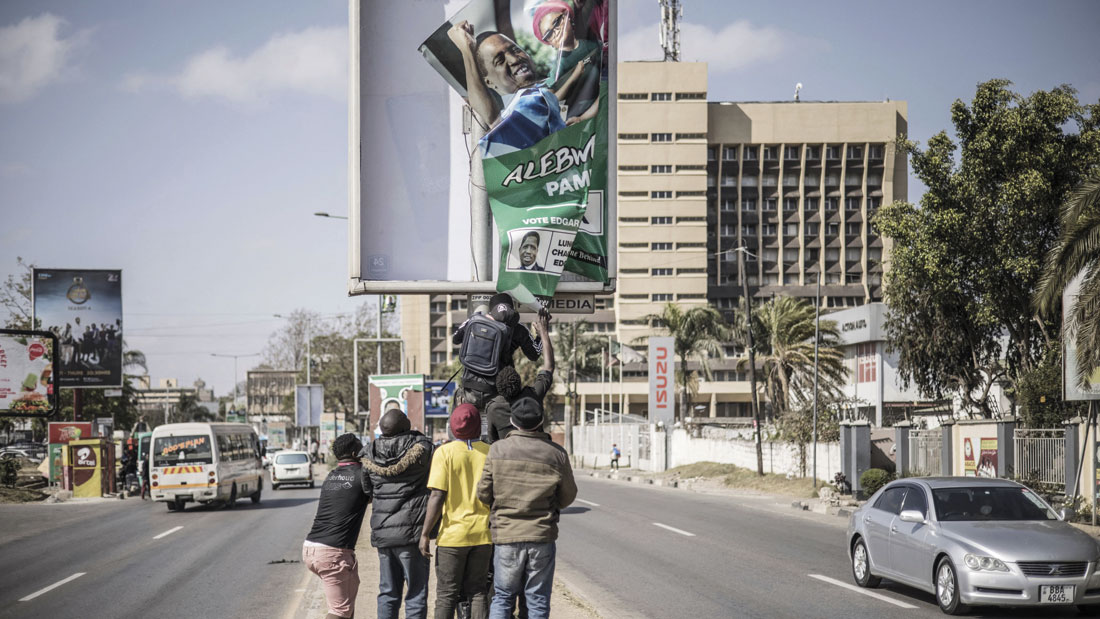
For those who were in Zambia during the pre-election period, the almost total absence of opposition propaganda was surprising. Instead, Hakainde Hichilema’s face could be seen almost on every corner. Among the explanations that have been conveyed to MN from Lusaka were those that claimed that the United Party of National Development (UPND), led by Hichilema, had bought all the advertising spaces before its opponents. Others suggested that customs officials had seized campaign materials. A third group pointed out that the opposition had not had enough time to produce and distribute the materials.
What at the beginning of the year was seen as a comfortable victory for Hichilema, gradually became more complicated, even more so after the appearance of Mundubile as an opposition candidate in May 2026. At 55 years old, he has been linked to politics in Zambia for more than a decade, where he held various positions under the Edgar Lungu Administration. Although Hichilema’s chances of victory were reduced as election day approached, in the end there was no surprise and Hichilema secured his second term by surpassing 60% of the votes of a census of almost nine million people called to the polls. While in 2021 participation exceeded 70%, it now remained around 55%.
A coffin in Pretoria
To understand the fragmentation of the opposition and the inflection that Mundubile’s candidacy represented, we must look at a morgue in Pretoria (South Africa), where former president Edgar Lungu waited more than a year to be buried until the dispute between the deceased’s family and the Government of Zambia was resolved. Lungu, who defeated Hichilema by a narrow margin, governed the country between 2015 and 2021. Becoming the main opposition leader, the latter was arrested in 2017 for treason and was imprisoned for four months, until the charges were dropped.
In the 2021 elections, amid a critical economic situation, Hichilema won over Lungu. He reported that with the new Executive he was kept under house arrest de factowhich prevented him from any political activity and which had made it difficult for him to travel to South Africa to receive medical care. However, Lungu passed away on June 5, 2025 at the Mediclinic Medforum Hospital in Pretoria. The family refused to have the body repatriated and receive a state funeral, claiming that the former president’s last wish was not to allow Hichilema to be present or near his body.
Lungu’s death left the opposition divided and with very few options for victory in the next electoral cycle. But the appearance of the figure of Mundubile changed things. After announcing his candidacy for the elections in May of this year, three months before they were held, he managed to articulate in a few weeks a large part of the opposition under the National Reconciliation Party for Unity and Prosperity (NRPUP), which included several factions of the Patriotic Front (PF), Lungu’s former party, as well as various minor formations. Mundubile nominated Makebi Zulu, a lawyer for the Lungu family, as his vice-presidential candidate and used the funeral dispute as a political catalyst to channel the discontent of certain sectors of society and to mobilize the voter base of the former PF. Although Lungu’s aura did not serve to achieve victory, it did allow the opposition to denounce state authoritarianism, reflected in the attempts to forcefully repatriate the body and the maintenance of litigation for more than a year. After a new ruling by the South African courts, Lungu’s family was ruled in favor, and he will finally be buried in South Africa.
Voting day
The post-election period has once again raised alarm bells. Although the day of voting passed without major incidents, a day later, the Electoral Commission of Zambia (ECZ) announced an interruption in the counting of votes that lasted for six hours. Although security reasons were alleged, suspicions of manipulation and alteration of the results were immediate.
Along with the stoppage in counting, in the moments after election day, security forces broke into Brian Mundubile’s residence in Lusaka. The operation resulted in several people being arrested and the shooting death of Mutotwe Kafwaya, who had been Transport Minister under Lungu and a PF MP. Official and opposition accounts disagree about what happened, but Mundubile and fellow candidate Makebi Zulu sought refuge at UN headquarters in Lusaka. Days later, on August 27, they surrendered to the Police and were transferred to the Mukobeko maximum security prison under the same treason charges that landed Hichilema in prison a decade ago. Thus, while he was sworn in, Mundubile entered prison.
Added to these episodes is that on August 24, the last day on which the opposition could challenge the electoral results before the courts, the security forces cordoned off and closed the country’s main courts and the Constitutional Court, citing security reasons. Civil society organizations have denounced that it was a move to prevent the opposition from appealing the results.
Macro and microeconomics
Shortly before the 2021 elections, Zambia was in default, with debt exceeding €11.2 billion and inflation of more than 24%. Hichilema’s first legislature managed to turn these figures around. After an initial restructuring of the debt, the UPND reduced it by almost 800 million euros and managed to distribute future payments over a longer period. The reorganization process, which was completed in June 2024, allowed Zambia to emerge from default by the end of 2025, improving its position with credit rating agencies and thus allowing it to more easily access the international credit market. This restructuring and reduction of debt was accompanied by a sharp decrease in the weight of debt in GDP, which went from a peak of 133% in 2023 to 86% two years later.
The relief of the debt burden brought a significant reduction in inflation along with the strengthening of the local currency, the Zambian kwacha. In the five years of the Hichilema Government, inflation has gone from 24 to 6.5%. Although all this macroeconomic data has restored the confidence of investors and international markets, the situation of families is far from rosy, as there is a disconnection between macroeconomics and day-to-day life.
In the same period in which these macroeconomic successes have been recorded, the price of the basic basket increased by 43%, while essential products, such as cooking oil, have had increases of more than 70%. This rise in basic food prices is explained, above all, by the impact of successive droughts, which have affected both agricultural production and energy generation in a country whose supply depends, to a large extent, on its hydroelectric plants. This situation explains why the country has suffered persistent blackouts, some lasting more than 20 hours a day, which has had a strong impact on commercial and industrial activity.
In an article published in Deutsche Welle, Analyst Ngobola Cengelo Muyembe makes an analogy of this situation with the image of a reservoir: «When it is full, you will have stabilized your macroeconomic system. But if the pipes that bring water to the little towns and the little houses in those little towns are clogged and clogged, then you haven’t really solved the problem, because people need to have water in their own homes.” And the reality is that Hichilema begins his second term in a country where 70% of the population still lives on less than three dollars a day.
The social impact
In addition to economic measures, the Government of Zambia has also taken several social measures. Among them are the implementation of free education in Primary and Secondary, the hiring of teachers and health workers to strengthen public services, the abolition of the death penalty, social protection programs for vulnerable households, initiatives to alleviate the effects of droughts or the expansion of the Constituency Development Fund, a tool launched to allocate public funds to local administrations, so that they can finance community projects and infrastructure.
In parallel, there has been a deterioration in basic freedoms in the country, according to human rights organizations and international observation missions. Among them, the Cybercrime Law and the Public Order Law stand out, both used to control and restrict dissent. For Amnesty International, both the promulgation of these regulations and the increase in criminal charges against critics of the Government influence or restrict freedom of expression at the political level. In addition, several journalists and opponents have been detained since 2021, which has attracted the attention of the United Nations High Commissioner for Human Rights, Volker Türk. The Austrian lawyer urged authorities last August to “stop arbitrarily detaining people and fully respect the procedural rights of all detainees.” For electoral observation missions, such as that of the European Union and SADC, the regional association, the elections were held in a “restricted democratic space”, as there had been a ban, for almost five years, on the opposition holding political rallies.
And now what?
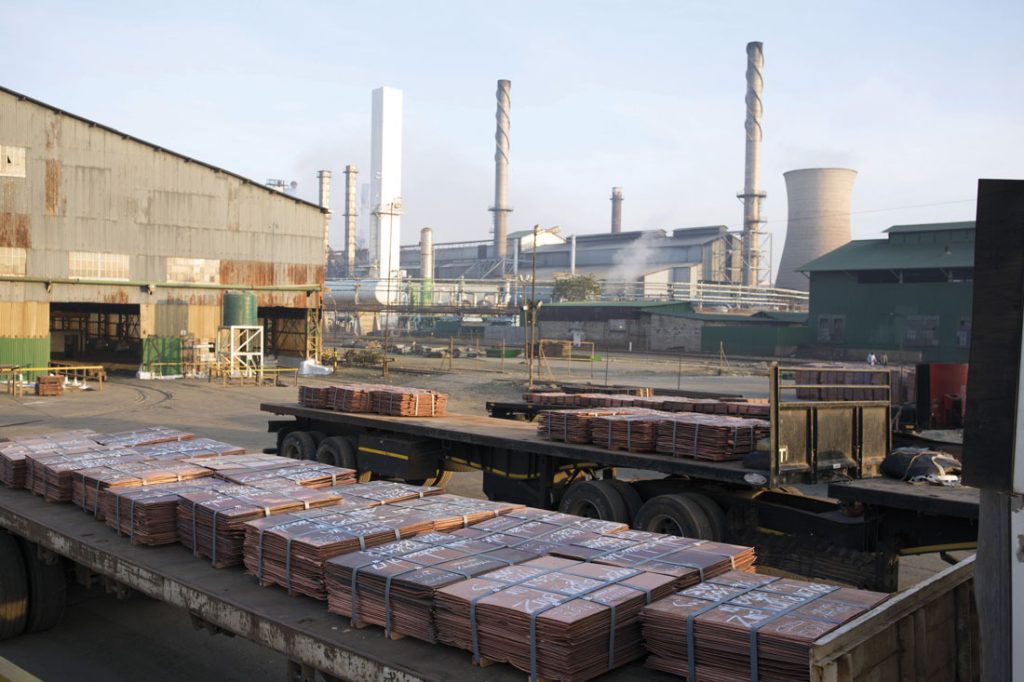
After a campaign in which the UPND opted for “continuity”, certain shadows loom over the future of the southern country. Although economic indicators and the implementation of certain social measures portend that Zambia can continue on the path of recovery and growth – supported by a growing global demand for copper, the nation’s main resource, whose extraction and sale represents around 15% of GDP – the democratic deterioration of the country is of concern. Particularly because Zambia has been one of the paradigmatic examples in the region, since the 1990s, of peaceful democratic transitions between Governments of different colours.
From Lusaka, they share with MN some lessons that can be drawn from this situation: «Peaceful elections are possible in Africa; political and regional loyalties continue to influence voting patterns; it is important to maintain the independence of electoral commissions; The power of social media is an opportunity and a challenge for democracy on the continent, and finally, elections must lead to tangible economic and social development in people’s lives. Time will tell how many of these lessons Hichilema will approve at the end of his term.
