
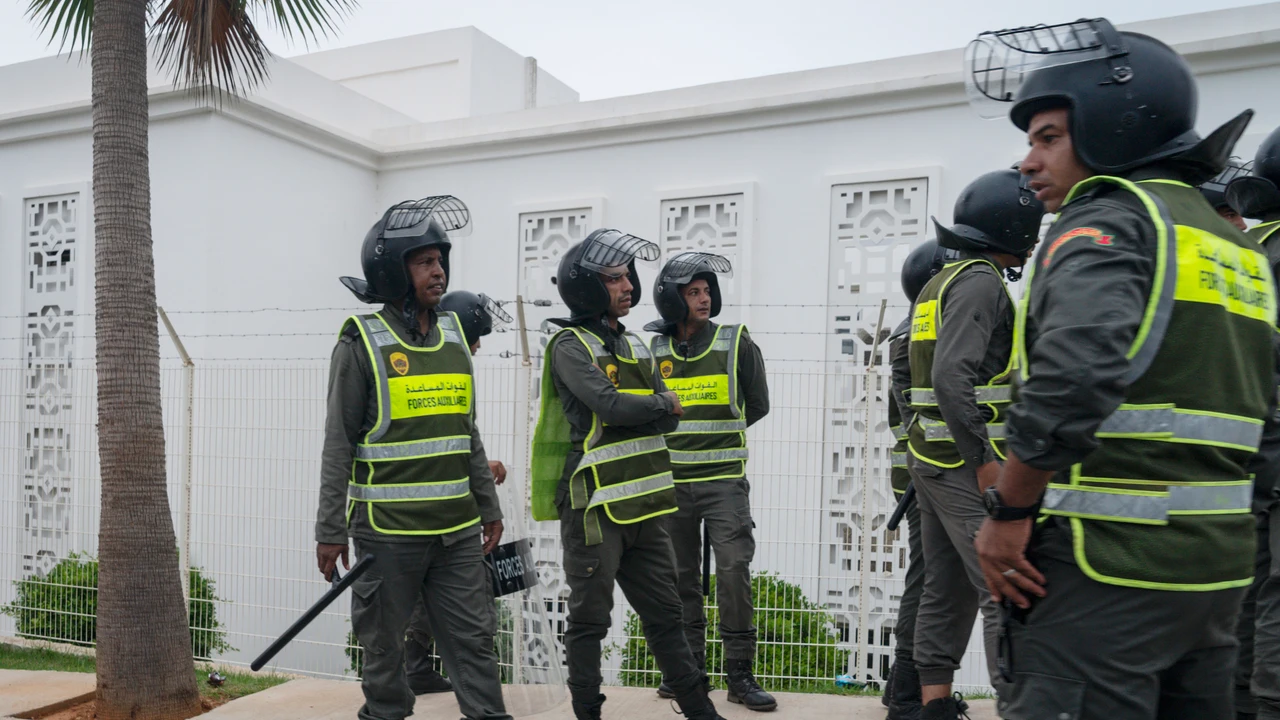
Yesterday, Monday, August 24, 2026, the hacker group Jabaroot kept its word and published the list feared by the Moroccan Government. Names, national identification numbers and other sensitive data that put the Moroccan Executive in a bind, as it confirms that certain agents actively participated in the massive entry of migrants into Ceuta on July 30 and 31.
The autonomous city continues without returning to normal and the Government of Pedro Sánchez, almost a month after what happened, has decided to take action on the matter and convene the National Security Council.
Jabaroot links the leak to the Ceuta migration crisis
The Jabaroot hacker group has released a database that, as confirmed The Confidentialcontains personal information of some 70,000 members of Morocco’s intelligence and security services, in a new escalation of its offensive against the security apparatus of the neighboring country. The group presents the leak as a “gift to Spain” and maintains that among the documents are data related to the operation that led to the massive entry of migrants into Ceuta at the end of July.
The leak would have been published this Monday and affects, according to the hackers themselves, members of the General Directorate of Territorial Supervision (DGST), responsible for Moroccan internal intelligence, and the General Directorate of National Security (DGSN), the country’s police force.
The files would contain names, dates of birth, identification numbers and data related to the incorporation of the alleged agents into the security agencies. In a second list, additional data of around 1,400 people would also appear, according to the information published about the leak.
According to this version, the hackers would have copies of mission orders from agents who were deployed to Castillejos (Fnideq) before and after the events. In addition, they have announced that they could publish a specific list with the names of those who, according to them, “directed and coordinated” the plan.
The statement, however, comes from the hacker collective itself and does not imply that it is independently accredited. The leak does not in itself prove that all the members of the database are active agents nor that the identified people participated in the massive entry into Ceuta.
More than 70,000 people entered Ceuta
The Jabaroot offensive comes after one of the largest migration crises experienced in the autonomous city. At the end of July, some 72,000 people entered Ceuta from Morocco, according to data later provided by the Ministry of the Interior.
The magnitude of the arrival caused the deployment of emergency services and the State Security Forces and Bodies, while Spain demanded Morocco’s collaboration to contain the situation.
In the following days, numerous information and publications also emerged on social networks about the circumstances surrounding the massive arrival and others that even promoted a second entry into Ceuta on August 15.
A new threat against Morocco
Jabaroot has been carrying out a leak campaign against Moroccan security structures for months. The group had previously threatened to make public the data of tens of thousands of agents and has finally released the database that it claims contains some 70,000 names.
The operation has been presented by the group as a revelation of great importance for Spain and Europe. Among the names they claim to have identified would also be members of the leadership of the Moroccan security services, including Abdellatif Hammouchi, director of the DGST and the DGSN.
The group has gone further and has threatened with new publications related to Pegasus and the alleged spying on Pedro Sánchez’s phone, ensuring that it has original files linked to that case.
The leak opens a new front between Spain and Morocco
The publication of these data adds a new element of tension to the relationship between Spain and Morocco, precisely when the Ceuta crisis has once again placed border control and bilateral cooperation at the center of the debate.
For now, Jabaroot’s accusations about the involvement of Moroccan agents in organizing the mass entry into Ceuta should be treated as assertions by the group and not as proven facts. What has occurred is the dissemination of an enormous amount of information that the group attributes to members of the Moroccan security services.
Jabaroot has also announced that the leak has not ended and that it is preparing new documents focused specifically on those who, it claims, were behind the Ceuta operation.
