The resurgence of the conflict between the federal government and the Tigray region marks the future of Ethiopia.
Just four years after historic peace agreements, Ethiopian Prime Minister Abiy Ahmed is entering a new war with the northern region of Tigray. The conflict, with deep historical roots, runs the risk of becoming international, involving several countries in the region.
When the plane approaches Addis Ababa and the city begins to take shape, the large illuminated commercials, some skyscrapers illuminated with the Ethiopian flag and the large avenues that cross the urban fabric are mesmerizing. As the aircraft approaches the ground, you can even see the characteristic streetlights inspired by the flower that gives its name to the country’s capital, which, according to what the Ethiopian News Agency published on social networks, are “a luminous tribute to the name of Addis Ababa itself.” Once on land, the enormous Bole International Airport presents itself for what it is: one of the main air route links to the African continent. The bet has been redoubled, since a larger one with more passenger capacity is already under construction, with an investment of more than 10 billion euros. A little over a year ago, the Ethiopian Government inaugurated the Great Renaissance Dam (GERD), a colossal construction on the Blue Nile that has multiplied the country’s energy production and has caused misgivings in other countries in the region bathed by the Nilotic waters. Added to all this is that Ethiopia is one of the first countries in the world to ban vehicles with combustion engines, having already begun a rapid transition towards the electrification of its vehicle fleet.
Ethiopia is also the headquarters of the African Union (AU), as it was of its predecessor, the Organization of African Unity, since its creation in 1963. Ancient Abyssinia has the aura of being the African country that was not colonized and that, at the beginning of the last century, was one of the few African countries that were full members of the League of Nations -precursor of the United Nations-, which did not prevent it from being invaded and occupied by Mussolini’s fascist Italy despite Haile Selassie’s calls for help at Geneva headquarters. Easily exceeding 100 million inhabitants –135 million according to the World Bank–, of which 40% are under 14 years old, Ethiopia is, in short, a human, cultural, political and even economic power, with an annual GDP growth rate that is already close to 10%, the highest on the continent in recent years.
The eternal war
One would expect that a country led by a Nobel Peace Prize winner, with an immense historical and cultural heritage, a young and numerous human force and enviable growth projections, would be one of those countries that arouse the admiration of the international community. The reality is far from this hope. Although the forecasts of those who follow the Ethiopian reality more closely in particular – and that of the Horn of Africa in general – had already been warning since the beginning of 2026 of a worrying growth in tensions between the federal government of Ethiopia and the Tigray region, in the north of the country, the elections held last June (see MN 725, pp. 8-9) only confirmed the analyses. Along with part of the Oromia and Amhara regions, Tigray was excluded entirely from the elections, citing security risks.
On September 20, 15 days before Ethiopian Prime Minister Abiy Ahmed was sworn in to renew his position, seven armed groups announced the Coalition of Ethiopian Popular Survival Forces, led by the Tigray People’s Liberation Front (TPLF), the Fano militias of Amhara and the Oromo Liberation Army, which have been joined by the Ogaden National Liberation Front, the Afar Revolutionary Democratic Unity, the Benishangul People’s Liberation Movement and the Gumuz People’s Democratic Movement. This unprecedented coalition – some of whose members had clashed with each other until now – has once again placed Ahmed in a very delicate position. Two years after the end of the war with Eritrea in 2018, which earned him the Nobel Peace Prize in 2019, a conflict broke out in Tigray that left more than 600,000 dead, according to the AU, and which ended with the 2022 Pretoria Peace Agreement that has lasted less than four years.
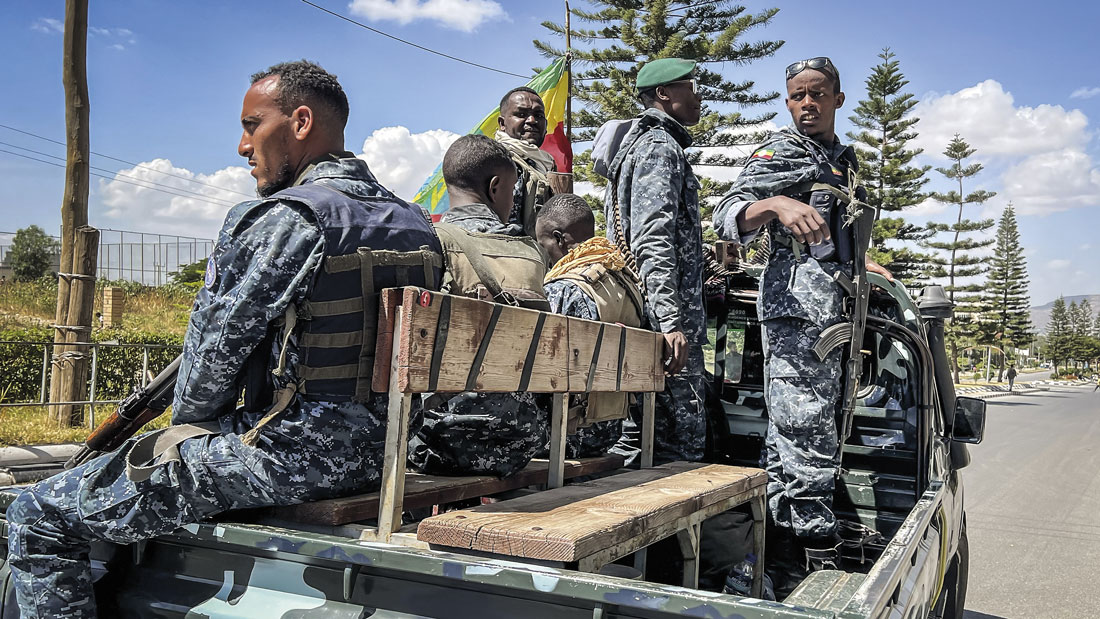
In one of the most turbulent regions on the planet, clashes between regional militias and the federal Army risk expanding and involving surrounding countries. On October 4, Egypt, Eritrea, Somalia and Sudan organized a summit in Egyptian territory that ended with a declaration in which, in addition to addressing the issue of the war in Sudan, they denied the accusations of the Ethiopian Government that Egypt, Eritrea and Sudan are supporting the militias, called for dialogue and the end of armed confrontations, warned against the danger for other countries of “unilateral measures” – in reference to the management of the GERD -, and stressed that control of the Red Sea falls to the coastal states, in response to the demands of the Ethiopian prime minister for access to the sea, access that the country lost after the independence of Eritrea in 1993.
Is there a solution?
The conflict that once again devastates Ethiopia has its roots in political, historical and even geographical issues. Researcher Samiya Mohammed places emphasis on the issue of water as a central element to understand the conflicts in the region. In an article published in Horn Review indicates that “geography determines who has the advantage and who is vulnerable,” while “politics decides whether the result is technical management or a prolonged confrontation.” However, it is also necessary to highlight that the country’s territory responds to a myriad of peoples and ethnic groups that are far from forming a unitary identity.
In an analysis for Africa World On the ethnofederal model in Ethiopia, the historian and international analyst Nacho Ibáñez explains the importance of the 20th century to understand the country’s current problems. After the centralizing policies of Haile Selassie, the arrival of the Derg that followed the 1974 revolution recognized Ethiopian multi-ethnicity, but without giving up the construction of a strong State that maintained territorial integrity. This led to the emergence of ethnofederalist armed groups that, over time, united in the Ethiopian People’s Revolutionary Democratic Front (EPDRF) to defeat the Derg in 1991. Among the groups that formed the Eritrean Popular Liberation Front, led by Isaias Afewerki, which, after the independence of Asmara in 1993, taking advantage of the right of secession present in the Transitional Charter –predecessor of the current Ethiopian Constitution–, became head of state of a country that today is one of the most secretive dictatorships in the world.
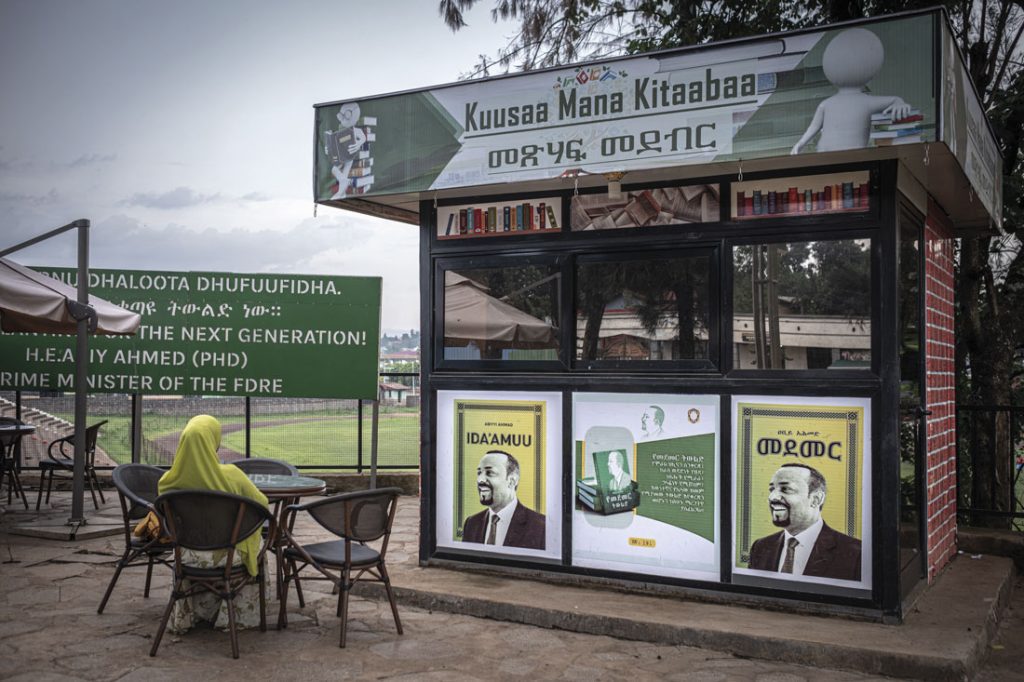
Another key element of the FDRPE was the TPLF. Although the Tigrins are a minority in the country, the Front held the main positions in the state administration until the arrival of Abiy Ahmed in 2018. The prime minister, of Oromo origin, the majority group in the country, broke with the tradition of Tigrin rulers and with the historical marginalization of the Oromos from the organs of power, in which the Amhara culture has also had a lot of weight and influence. If during Selassie’s time the construction of an Ethiopian identity was done “from the Amhara image, language and culture”, as Ibáñez points out, Abiy Ahmed “has separated himself from ethnicism and has promulgated the concept of medemerwhich is based on the idea of building a prosperous Ethiopia through the unity of its entire population. This political philosophy was collected in a book published in 2019 titled, Medemer –in Amharic it translates as ‘to unite’ or ‘synergy’–, and Ahmed has tried to put it into practice by taking advantage of previous projects such as the GERD.
External agents
The solution, therefore, is far from being simple and short-term. Added to the internal complexities are regional and international scenarios that make a peaceful resolution of the conflict difficult. The interests of countries such as Eritrea, Djibouti, Somalia, Sudan, Egypt, the United Arab Emirates, China, Saudi Arabia, plus the United States and European countries, converge in a country that demonstrates privileged potential on the African continent. The international dimension of the conflict is therefore increasingly important to understand the Ethiopian conflict. In fact, the Armed Conflict Location and Event Data Project (ACLED) reported the presence of Eritrean troops in Tigray, although many of them withdrew to the other side of the border following the advances of the Ethiopian federal army.
Professor and researcher at Indiana University, Alemayehu Fentaw Weldemariam, analyzes in an article for The Conversation four reasons why it is so difficult for peace to be sustainable in the Horn of Africa country. In addition to regional rivalries that reinforce internal conflicts, Weldemariam points out the controversy surrounding the foundations of the Ethiopian State, the confusion between ceasefires and political agreements, and armed force as a way to achieve political power. The Ethiopian researcher maintains that “the problem is not that Ethiopians of different ethnic origins hate each other and cannot coexist peacefully, but that successive political agreements have failed to establish widely accepted norms for managing disagreements.”
At the close of this edition, news about the conflict in Ethiopia is cascading through Ethiopian and international media, announcing confrontations, advances and setbacks by the different parties involved. After the capture of Mekele, the capital of Tigray, by the armed wing of the TPLF, the federal Army, with the support of other groups, managed to recover the city and advance positions in the north of the region, controlling the city of Aksum and other enclaves near the border with Eritrea, such as Adua. Despite the advance of government forces, the situation does not seem to be resolved in the short term.