
Malawi’s mining sector is growing amid rare earths, growth opportunities and global rivalries.
By Jack McBrams from Lilongwe
Deep in Malawi’s red earth lies a geological promise that could change the fate of one of the world’s poorest countries or deepen its dependence on volatile global markets and foreign capital.
As major global economies compete to secure supplies of minerals essential for electric vehicles, renewable energy systems and advanced defense technologies, Malawi has quietly appeared on the strategic resources map. However, the gap between geological potential and economic transformation remains wide and fraught with political connotations.
The Malawian economy, with a GDP of around €13 billion, remains heavily dependent on agriculture, development aid and external debt. Mining currently only contributes around 1% of GDP, but Government forecasts suggest that figure could rise significantly if a host of large-scale projects enter production in the coming years.
At the center of this scenario are minerals extracted from rare earths, graphite, rutile, niobium and uranium, considered essential for the energy transition and which are increasingly being treated as strategic assets in geopolitical competition.
In the Balaka district, in the south of the country, the Kangankunde project is one of the most advanced. Managed by the Australian company Lindian Resources, the deposit is estimated to contain 261 million tonnes of ore with significant quantities of neodymium and praseodymium, used in high-performance magnets for electric vehicles, wind turbines and defense systems. This project has aroused international interest not only due to its size, but also due to the chemical composition of the deposit, which has low levels of uranium and thorium, which simplifies subsequent processing. Production is expected to begin this year and a purchase agreement has already been signed with Australian company Iluka Resources, pointing to early integration into global supply chains, which remain heavily dependent on Chinese processing capacity.
Further north, near Lilongwe, the capital, another project has sparked great interest in the sector. The Kasiya deposit, developed by Sovereign Metals and backed by mining giant Rio Tinto, is considered one of the largest rutile deposits in the world as well as a major graphite deposit. Rutile is a key raw material for the production of titanium, basic in the aerospace, defense and high-performance industrial manufacturing sectors, while graphite is essential for battery technologies.
In the Phalombe district, the Songwe Hill project, managed by Mkango Resources, is Malawi’s most strategic rare earth asset. The deposit is rich in heavy rare earth elements, much rarer globally than light ones and central to high-end electronics and defense applications. The project has received support linked to European industrial interests, although funding and infrastructure constraints remain major obstacles.
These projects are emerging at a time when global supply chains for critical minerals are being restructured. China currently dominates the refining and processing of rare earth elements, controlling, according to estimates, between 80 and 90% of global capacity. Western governments and companies in the sector have responded by seeking alternative sources, to which the Malawi deposits have been discreetly incorporated.
Mining sector analysts affirm that the attractiveness of the southern country lies not only in the magnitude of its resources, but also in the composition of the minerals. This positions the country as a potential specialized supplier in a highly controlled global market.
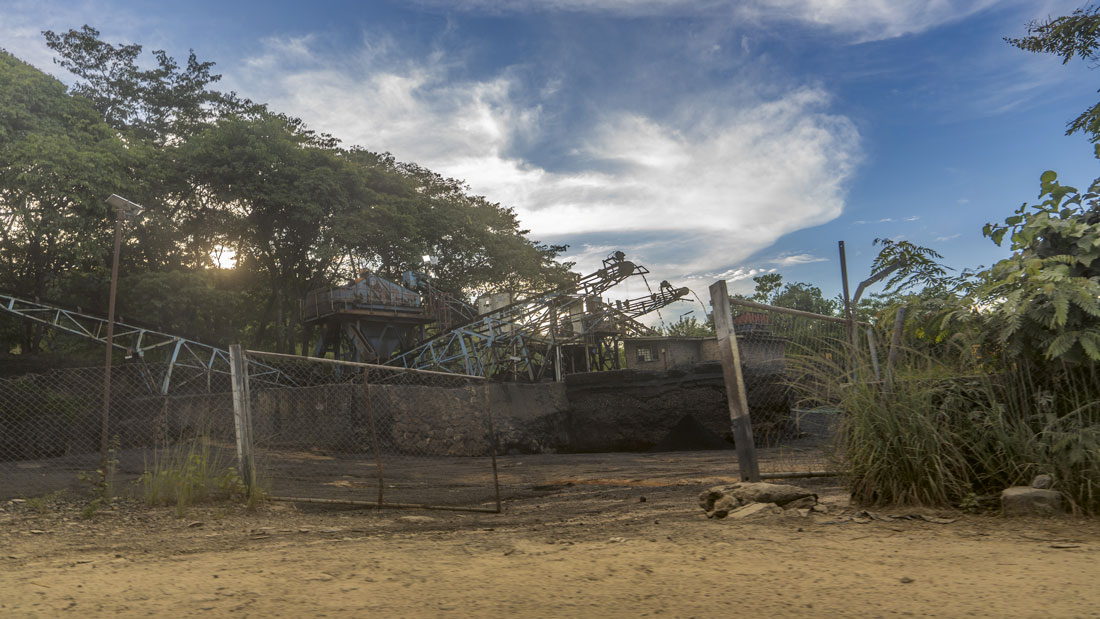
Entrance to a mining operation on the road between Mzuzu and Karonga.
Photography: Boniface Gbama/MN
Government measures
Although investor interest has grown, Malawi is tightening its grip on the sector. The Mines and Minerals Law, enacted in 2023, gives the State ownership of all minerals and establishes a regulatory authority responsible for overseeing licensing, regulatory compliance and local beneficiation requirements. The Government has also taken steps to suspend the granting of new mining licenses, audit existing agreements and restrict exports of raw minerals, in an effort to increase their value in the domestic market. Officials maintain that the reforms are designed to ensure that Malawi is not limited to exporting raw materials and importing finished products. The objective is to develop the capacity for local transformation and increase the participation of the State in strategic projects through shareholders or future mining entities linked to the State.
However, this policy change has created uncertainty in a sector that depends on stability. Investors must now navigate a constantly evolving regulatory environment, while assuming the risks associated with infrastructure limitations and weak institutional capacity. In addition, they continue to assess whether the balance between state control and commercial viability is sustainable in a sector that requires billions of euros in long-term capital investment.
The limitations of the sector
Malawi, being landlocked, must channel its bulk mineral exports through Mozambique or Tanzania, through long and expensive corridors. The national power grid, which relies heavily on hydroelectric generation, is already overstretched, with frequent outages and insufficient capacity to support energy-intensive, large-scale mining operations. At the same time, the country faces a shortage of qualified technical labor in geology, metallurgy or mining engineering, increasing dependence on foreign experts.
These structural limitations condition the economic viability of the country’s large projects. Even the most important fields are at risk of becoming unusable if substantial investments are not made in roads, railways, ports and power generation. Analysts warn that infrastructure, not geology, is likely to determine the pace and magnitude of Malawi’s mining development.
Issues related to governance are also raised. In Africa, resource-rich countries have struggled to convert mineral wealth into sustainable development, as revenues are concentrated in the hands of elites or lost due to weak tax systems. The Government of Malawi has taken steps to strengthen its legal framework and increase transparency requirements, but the ability to enforce the law remains a key challenge.
The external factor
The corporate structures of the mining sector in Malawi reflect the globalized nature of this industry. Companies listed on the Australian Stock Exchange dominate several key projects, while subsequent transformation processes and financing agreements are often linked to Australian, European and Asian partners. In the case of rare earths, much of the planned production will be exported for processing abroad, as Malawi lacks separation and refining capacity. This creates structural tension at the core of the country’s mining ambitions. While the Government aims to increase local enrichment, the global rare earth supply chain remains highly concentrated, with China leading the way in processing infrastructure. Therefore, Malawi’s role in the value chain could initially be limited to extraction.
Despite these conditions, policy makers and actors in the sector maintain that mining represents one of the most realistic ways for the country’s economic diversification. Forecasts from mining groups suggest that exports could increase substantially over the next decade if major projects enter production and global demand for critical minerals continues to grow.
A bet with risks
But the risks of this diversification are also evident. Commodity price volatility, infrastructure bottlenecks, policy changes and funding constraints pose significant threats to the timelines of ongoing initiatives. In newly exploited mining areas, delays are common and cost overruns are usually considerable.
For Malawi, the stakes are unusually high. The country is trying to develop a modern mining sector from a very low level, while renegotiating the conditions of resource ownership and state participation. It does so at a time when global competition for essential minerals is intensifying and geopolitical interests increasingly influence investment flows.
Whether the mineral wealth of the southern country becomes the basis of a structural transformation or another example of the resource curse that affects many African nations will depend less on what is underground than on what happens on the surface. For now, the country is at a turning point. Beneath its soil lie resources that the world urgently needs. Above it, there is a system that continues to struggle to take full advantage of them.
