
The fragility of Malawi’s economy conditions the opportunities that the future offers.
By Bertha Bangara Chikadza from Blantyre
Malawi, a landlocked country, has seen its economic growth conditioned by structural vulnerabilities, ineffective policies, poor governance and external shocks. Despite its natural resources, the country’s development has not been consolidated nor poverty has been eradicated.
Malawi’s economy is closely linked to the country’s political context, where governance systems, institutions and public policies prevail that have performed far below expectations. Corruption continues to be a structural challenge, illustrated by large-scale scandals such as Cashgate in 2013, in which around 26 million euros were stolen without those involved having yet been prosecuted. This depletes resources that would otherwise have been allocated to productive investments, while causing a loss of confidence among foreign donors, who withdraw aid and trigger an increase in domestic debt.
Political interests have promoted programs such as subsidies for agricultural inputs or the continuous capitalization of state companies, despite the proven low performance of these investments. Poor governance and certain policies have forced the country to take on more debt to finance its projects. Furthermore, we must not forget the dependence on foreign aid, which aggravated the pressures on the exchange rate in the country in 2025 and has affected the provision of health services, especially after the reduction in foreign aid since the United States suspended USAID (see MN 725, pp. 20-25). This has forced us to promote the generation of national income, as well as to absorb or dismiss workers who had contracts dependent on foreign aid. All of this has increased pressure on the Government of Malawi and its economic policies.
Volatility
The macroeconomic framework has remained volatile with brief periods of stability. The growth rate has been low, going from 0.9% in 2022 to 2.7% in 2026, which is explained by the low industrial and agricultural production – the sector was affected by the drought caused by El Niño –, the shortage of key inputs such as fertilizers and the continued lack of foreign currency.
The general context of the country has also been unfavorable due to its structural weakness and the high official interest rate – between 24 and 26%. To this we must add the collateral effects caused by the pandemic, the war between Russia and Ukraine, the impact of Cyclone Freddy and the devaluations of the kuacha, which reached up to 44% in 2023. Inflation, which was above 30% in 2024 and 2025, moderated to 24% at the beginning of 2026 due to the drop in corn prices and a restrictive monetary policy. The global situation marked by rising oil prices may once again negatively affect the Malawian economy.
Despite some improvements in macroeconomic data, Malawi continues to struggle with exchange rate instability. In 2019, it stood at around 800 kuachas per euro, while currently it has fallen to around 2,000 per euro, despite having received the Extended Credit Facility of the International Monetary Fund (IMF) in 2023, which expired in mid-2025. The persistent shortage of foreign currency has been a major obstacle to the import of essential goods for the country, such as fuel, corn or fertilizers. Another element that Malawi continues to struggle with is the current account deficit. Despite diversification efforts, the changes have been insufficient. If in 2024 this deficit was 2,016 million euros, 20% of GDP, in 2025 it increased to 2,367 million euros. Added to this is a fiscal deficit that, between 2020 and 2025, reached an average of 8.5% of GDP.
Macroeconomic conditions have affected the labor market due to domestic public debt – at high interest rates – which has displaced the private sector and limited investment and job creation. The weakening of the macroeconomic environment has meant that demographic growth (2.6%) has been higher than economic growth until this year, which has reduced GDP per capita, which went from growing by 1.9% in 2021 to falling by 0.9% in 2024, falling in that period from 500 to 484 euros. Added to this is the fact that the increase in inflation has considerably increased the cost of living and the shopping basket, which places a burden on households when it comes to meeting their consumption needs, leaving little room for savings and investment.
These conditions create an environment in which escaping poverty is very difficult. Currently, 50.7% of Malawi’s population lives below the poverty line and more than four million people face severe food insecurity. Limited agricultural commercialization and low primary sector returns perpetuate this cycle, so that most households barely survive rather than prosper.
The economic sectors
In a country with limited economic diversification, impacts on the agricultural sector significantly affect production and economic growth. This sector is being increasingly conditioned by the growing vulnerability to climate crises that affect crop yields year after year. The Food and Agriculture Organization of the United Nations (FAO) revealed that the El Niño-induced drought in 2023 caused an estimated crop yield loss of 459,845 tonnes.
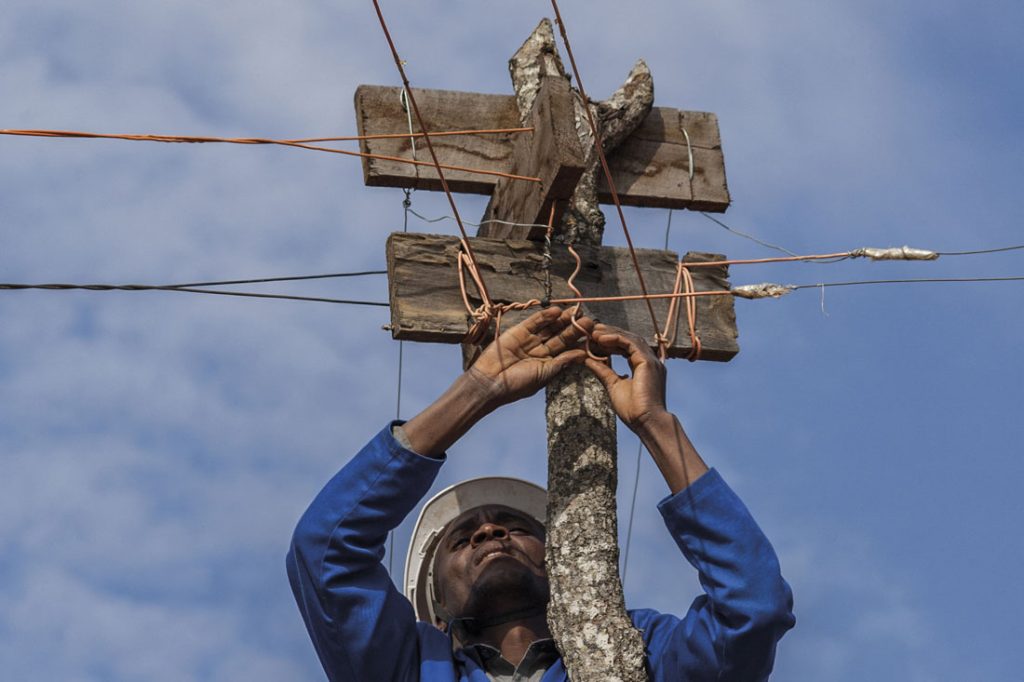
The industrial sector has been weakened by poor macroeconomic conditions, in addition to structural barriers such as lack of access to the sea, which limits trade in goods, or deficits in infrastructure and energy, which increase the costs of private sector investments. In fact, in 2025, most companies reported producing below 50% of their capacity, particularly due to frequent blackouts, fuel shortages, and lack of foreign currency. These shortages limit the ability of manufacturing companies to import and export raw materials and finished products. The performance of the secondary sector has been conditioned by this context and has grown by only 0.3%.
Meanwhile, the services sector is increasingly important, driven by retail and wholesale trade, tourism, transportation and telecommunications. Despite a decline in industrial activity in 2025, the sector remained resilient, driven by growth in financial services and ICT, contributing 44% of GDP in 2024 and employing more than 30% of the population. Mining is another promising sector showing high growth following the discovery of gold, uranium, coal, rutile and rare earth minerals.
Links with the outside
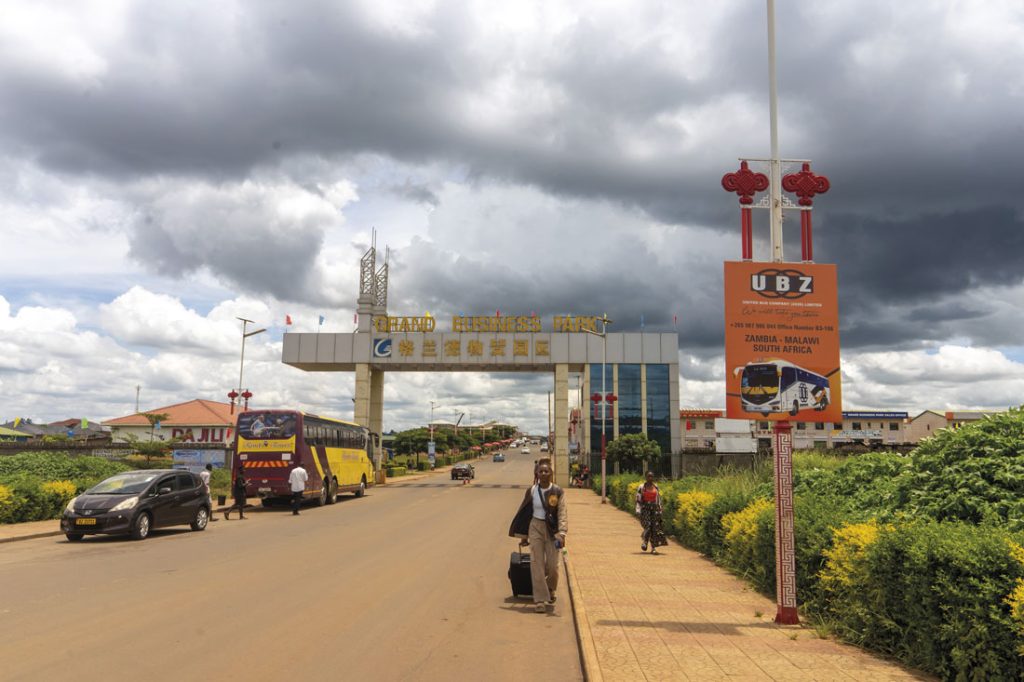
Malawi’s sectoral challenges make the country’s participation in regional blocs crucial. In its efforts to promote trade and geopolitical relations, the country is part of important economic blocks and trade alliances that are essential for development. At the regional level, Malawi is part of the Southern African Development Community (SADC) and the Common Market for Eastern and Southern Africa (COMESA). In addition, it has bilateral trade agreements with China, South Africa, Zimbabwe, Mozambique and Botswana. Through these links, Malawi has access to preferential treatment for marketed products if they meet the standards established at origin.
At the continental level, Lilongwe signed the African Continental Free Trade Area (AfCFTA) agreement, giving it a stronger negotiating position and more easily identifying interested parties for concrete policy dialogue. As one of the flagships of the African Agenda 2063, the AfCFTA largely determines Malawi’s trade orientation, as the agreement is expected to help remove barriers and promote intra-African trade.
At the global level, Malawi participates in the World Trade Organization’s Trade Facilitation Agreement (TFA), although it has yet to ratify it. Being landlocked, Malawi could benefit from the Agreement as it relies on neighboring countries for access to seaports. Through it, coastal countries will be required to adopt transparent and predictable transit systems to ensure that goods are shipped from landlocked countries.
Foreign investment
Beyond trade agreements, attracting investment from abroad is another key dimension to facilitate development. Foreign direct investment (FDI) has remained at modest levels. Although it has been reducing, going from 16.6% of GDP in 2021 to 7.6% in 2023, in 2024 it registered an increase of 3%, which represented an arrival of nearly 220 million dollars more than in the previous year. The sectors that attract the most FDI are agriculture, mining, energy and manufacturing. However, macroeconomic conditions have limited it by eroding investor confidence. Poor infrastructure is a key obstacle to transport because it increases production costs and discourages investment.
However, the country’s vast mineral resources offer great potential for foreign investors. The mining sector has become an important destination for money coming from abroad, despite contributing less than 1% to GDP. The abundance of uranium, graphite, titanium and rare earths has attracted investors. In this field, the Kayerekera uranium mine, the Kasiya rutile and graphite project and the Kanyika niobium project stand out. In addition, agricultural products such as soybeans, peanuts and macadamia nuts also have good export potential and can attract FDI, provided conditions are stable.
A rebound?
Forecasts for the next five and ten years indicate that the macroeconomic situation can improve. Economic growth is expected to reach 4.9% in 2027 and inflation is expected to drop to 15% this year. Although the tax reforms introduced in the mid-year budget review provide the country with the opportunity to broaden its tax base, they also pose the risk of significantly reducing disposable income, which would affect economic activity. However, the persistent shortage of foreign currency, climate crises or the increase in fiscal pressure if the electoral promises of the new Government are fulfilled, can limit access to inputs, slow economic growth and job creation.
It could be argued that Malawi’s economic prospects combine light and shadow. Its evolution points to a modest economic recovery, although achieving the pending progress will continue to be fragile and will depend on external factors such as climate crises or the global context. The promotion of economic development must be linked to investment in infrastructure and energy, in the creation of added value and the industrialization of key sectors. Only in this way can we foster an environment conducive to economic activity that is attractive to both FDI and the private sector.
Malawi is a country with assets, including its young population, its minerals and increasing access to regional trade. However, translating all this into economic growth will require policies that move from short-term benefits to long-term structural transformation.
