
During this night, northern Venezuela suffered two earthquakes, with a magnitude of between 7.2 and 7.5, causing the death of 32 people so far. According to the United States Geological Survey, deaths could be between 10,000 and 100,000 dead in total.
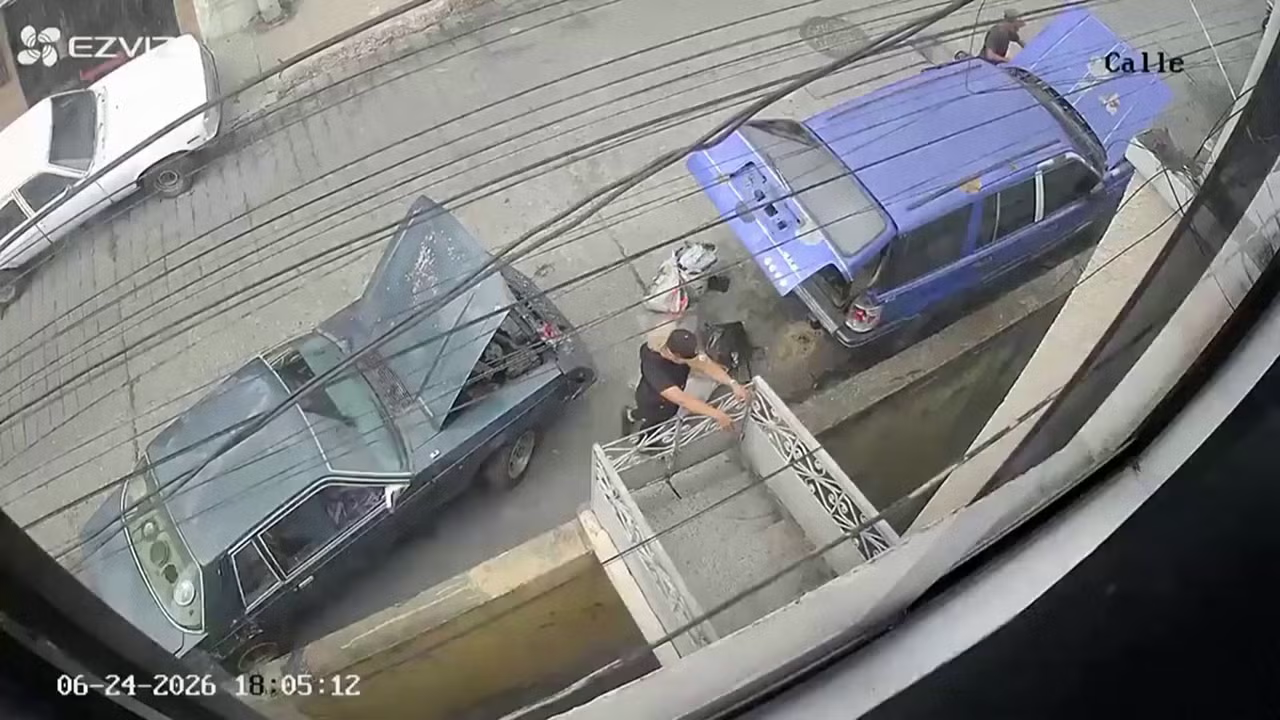
Numerous videos spread on social networks show massive evacuations, damaged buildings and clouds of dust after the partial collapse of some structures. One of them has been captured by this security camera, in Caracas.
The recording shows the exact moment when the earth begins to shake, while objects fall to the ground, cars sway violently and people try to get to safety in a matter of seconds. The images reflect the magnitude of the disaster that has left considerable material damage and keeps the country in a state of emergency.
A historic double earthquake
Venezuela has been hit by two strong earthquakes recorded just about 40 seconds apart. Various international organizations placed the magnitudes between 7.2 and 7.5, in what experts have described as an unusual “seismic doublet.” The epicenter was located in the central-northern area of the country and the tremor was strongly felt in Caracas and other regions.
The Venezuelan authorities decreed a state of emergency after evaluating the first damage caused by the earthquakes. Among the affected infrastructures are residential buildings, roads and the Maiquetía International Airport, which had to suspend operations due to damage to its facilities.
In addition, several areas of Caracas recorded collapses and structural damage, while rescue teams continue working to locate possible victims among the rubble.
The video that shows terror in seconds
The security camera recording has quickly gone viral because it allows us to clearly observe the panic and stupefaction of the people who suffered the consequences. In just a few seconds, the vehicles begin to sway and people react by trying to protect themselves while the building structures vibrate intensely.
While the country tries to recover normality, emergency teams continue to be deployed in the most affected areas to assess damage, assist the victims and deal with possible incidents resulting from the aftershocks. The situation continues to evolve and authorities maintain active emergency protocols in much of the national territory.
