
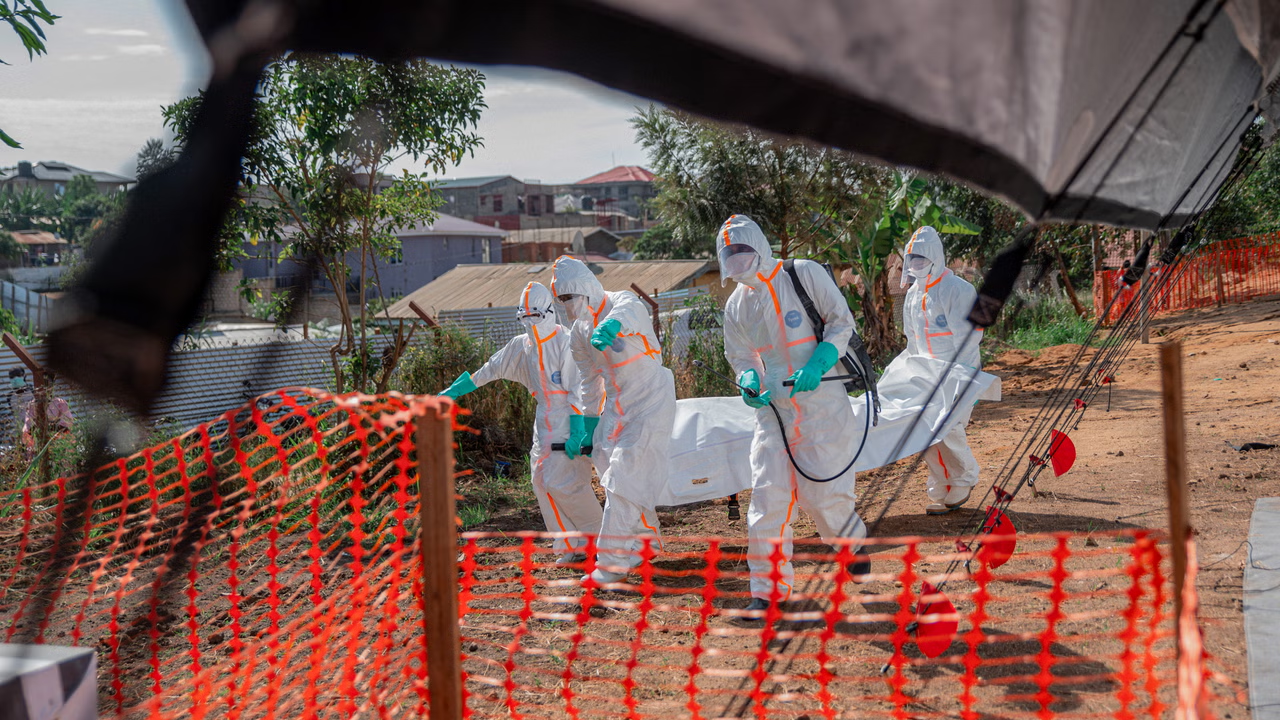
This Wednesday, France registered its first case of Ebola in the territory. The Ministry of Health has explained in a statement that this is a doctor who was returning from a humanitarian mission in the Democratic Republic of the Congo, where an outbreak is active that has already accumulated 1,048 confirmed cases, with 267 deaths and 112 people recovered.
As the French Government points out, the infected man had been in one of the areas where the virus circulates in the Democratic Republic of the Congo, caring for a patient. After detecting the contagion, the doctor has been admitted to a specialized center and is stable.
And this new variant of the virus endangers the health of citizens due to its lethality. 25.4% (one in four people) die if they are infected, and in addition to this there is no treatment.
The dangers of Ebola
The disease has been active for several months and represents a serious health problem, in addition to being potentially fatal. Transmission from person to person occurs through direct contact with bodily fluids, with people who have died from this disease, or through objects contaminated with fluids from infected individuals.
For its part, the disease is characterized by high fever and hemorrhages that can be lethal, with an incubation period that varies between two and 21 days, although infected people are not contagious as long as they do not present symptoms.
The WHO warns of almost 80 infected health workers
In addition to the infected doctor in France, the WHO has warned that almost 80 health workers have been infected since the start of the outbreak in the Democratic Republic of the Congo, which “reflects the pressure on the health system and the risks faced by response teams in affected areas.”
Ghebreyesus, director general of the World Health Organization (WHO), has noted that the French case “recalls the exposure faced by those working in the field” to the virus and has called on countries to support the safe deployment of health personnel.
For its part, the WHO has insisted that “the risk to the rest of the world remains low.” However, it has acknowledged that the response continues to face significant challenges in the DRC, including insufficient treatment and isolation capacity, difficulties in contact tracing, insecurity and the impact of a prolonged humanitarian crisis in the affected areas.
