
The war in Iran continues while the international community observes the effects, especially economic ones, that countries may suffer after a conflict that has already lasted more than four days and that could last for “several weeks,” according to Donald Trump himself.
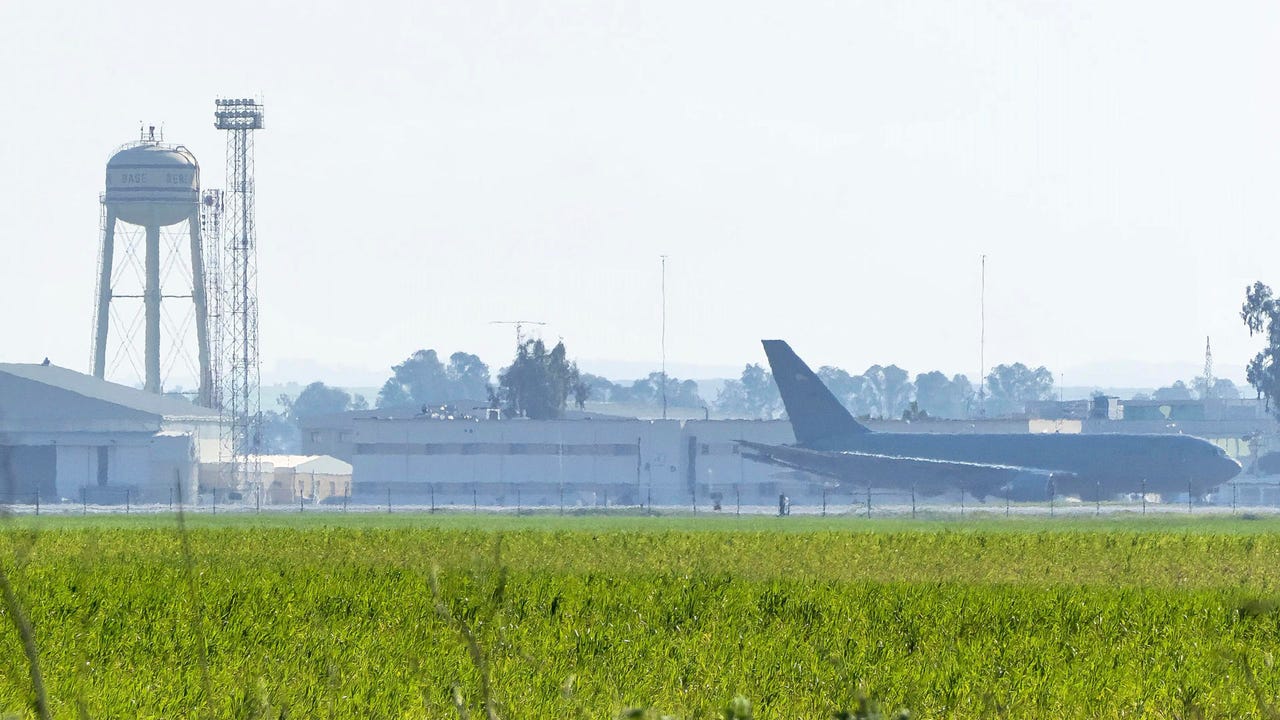
The United States plays a key role in the conflict by leading the joint attack with Israel on Iran, although the distance between the two countries has led to their bases located in other areas gaining importance. Among them is Spain, where the US has two bases.
The Rota naval base, located in Cádiz, is used for operations of this type and logistical support for NATO, although it also has, for example, five destroyers of the US Navy. On the other hand, the Morón de la Frontera naval base, located in Seville, serves as support in air actions and is used as a logistical support point.
Why Spain does not allow the use of bases for the conflict in Iran
The use of these bases in the conflict that currently occupies Iran has currently been the subject of debate due to the possible use that the US could make of them when transferring ships or other types of weapons or material destined for war. In this sense, the Minister of Foreign Affairs, José Manuel Albares, has been categorical and has rejected the use of these bases for the deployment of means involved in the offensive.
In an interview with Bloomberg TV and later at a press conference after the Council of Ministers, Albares said that they are bases of “Spanish sovereignty” that have a “framework within the US treaty and within that premise they can be used.” “There is nothing strange or surprising,” commented the minister, to which he added that they do not expect any “consequences” for this position and highlights Spain’s “commitment” to “Euro-Atlantic security.”
Thus, Albares warns that the treaty between Spain and the United States establishes the mechanism and details for the operation of these facilities. “We will not allow our base to be used for anything that falls outside the scope of the treaty and does not have the support of the Charter of the United Nations,” he said, while at the same time not giving importance to the position of France and the United Kingdom: “Each country has the right to carry out its own analysis and its own foreign policy.”
Pressure and criticism of Spain’s position
He has also clarified that they are not receiving “pressure” from Washington about the position regarding the offensive in Iran, and has alleged that “we are allies, we are together in NATO.” The minister argues that “we are one of the most committed allies of NATO and one of those that contributes the most to Euro-Atlantic security”, and also focused on the Spanish military deployment in Lebanon with the UN, under the NATO flag in Iraq, and the nearly 20 years alongside the US in Afghanistan.
Albares asserted that the Spanish Executive’s rejection of unilateral action against Iran does not go “against anyone,” and once again defended “international law, de-escalation, negotiation, regional peace and stability in the Middle East.”
The minister maintained that Spain says the same thing “whether in Ukraine, Venezuela, Gaza or Iran,” and alleged that “we have also been very clear with respect to the Iranian regime,” condemning “every violation of human rights and the brutality of the Iranian regime against its people.”
Likewise, he explained, “we have condemned Iran’s unjustified attacks on practically all countries in the Middle East,” but at the same time, he noted, “we want military actions to always be based on the Charter of the United Nations and on collective effort.”
