
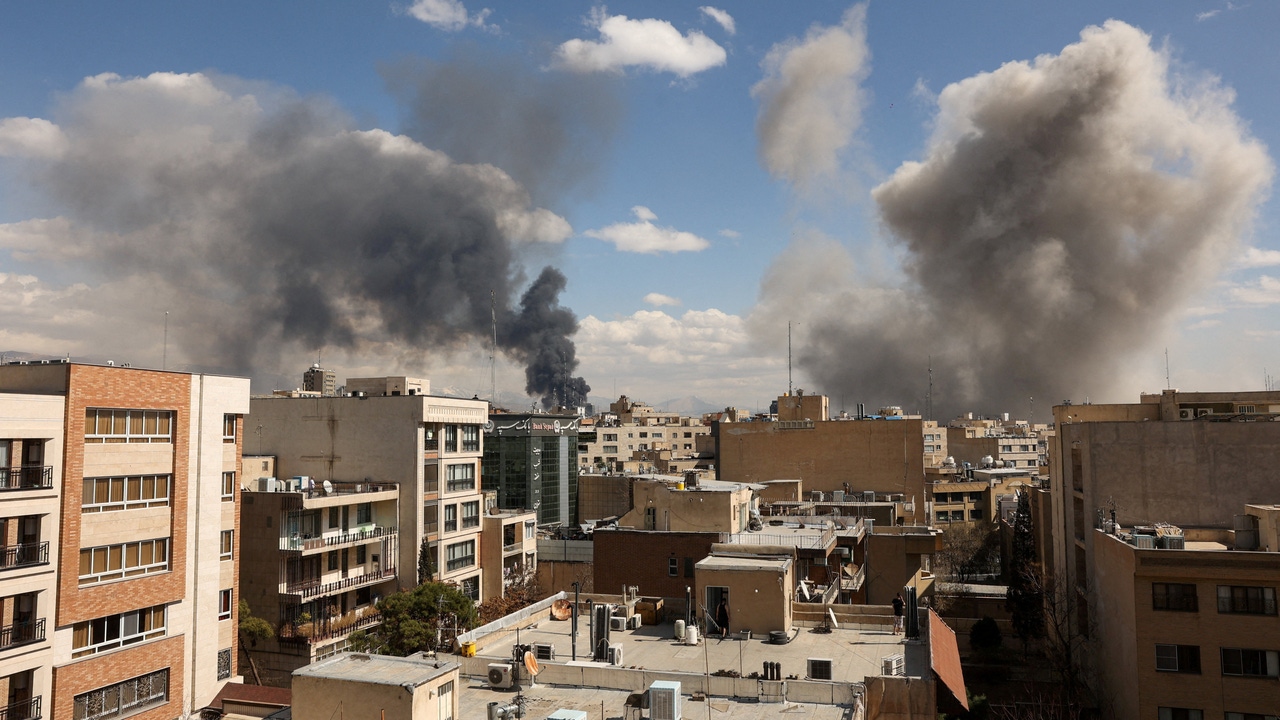
The current scenario in Iran since the beginning of the joint offensive by the United States and Israel is vaguely reminiscent of what happened in Venezuela on January 3. Not because of the magnitude of the conflict, but because of the hope of the people.
In Venezuela, many celebrated the capture of Nicolás Maduro because they believed it would result in a change of course for their country outside of the dictatorship. In Iran, many celebrate the death of the ayatollah and the attack because it could mean the fall of the regime.
However, Spanish-Iranian political scientist Anahita Nassir warns that it will not be “imminently”: “He has been preparing for his own survival for 47 years,” she details in At last. “And he has demonstrated it with this capacity for resilience.”
According to Nassir, during this almost half century “there have been internal protests, external pressures and international sanctions”, but “none have managed to weaken the power of the regime.” That is why the expert insists that “the death of the spiritual leader” Ali Khamenei “does not mean that the structure will fall immediately. It may be eroding internally, but it will not be an imminent collapse. They are trying to fill the political vacuum rather than demonstrate that there is weakness,” she denounces.
The death of the spiritual leader does not mean that the structure will fall immediately
Asked about the current situation of the Iranian people, the political scientist describes that “the population has great accumulated unrest over 47 years, from many times they have risen up in protests and have been repressed.”
Furthermore, he is forceful regarding the true intentions of the United States and Israel: “The people are very clear. The intention of Trump and Netanyahu is not precisely the liberation of a subjected people, but rather there are political and geostrategic interests.”
